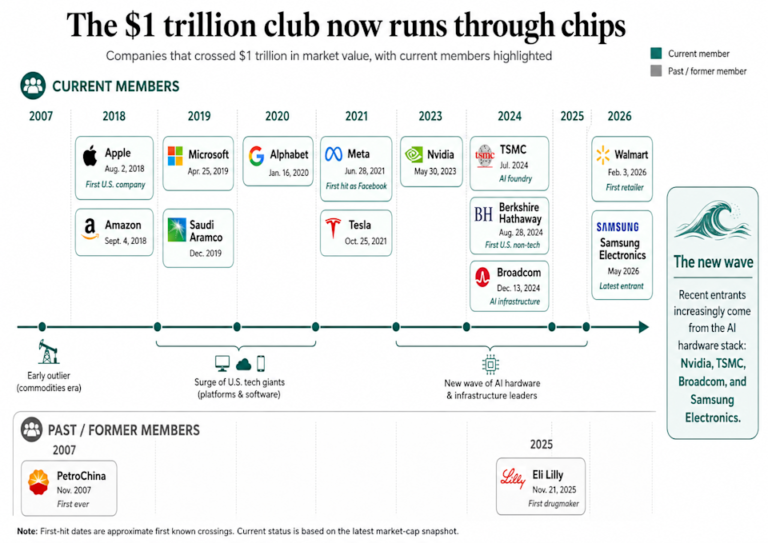
Samsung Electronics has reported an extraordinary surge in quarterly earnings, driven overwhelmingly by its semiconductor business, as artificial intelligence investment continues to reshape global demand for memory chips. The South Korean technology giant revealed that operating profit from its chip division skyrocketed nearly 50-fold, marking one of the most dramatic financial turnarounds in the company’s recent history.
The results highlight not only Samsung’s dominant position in the global memory chip market but also the rapidly intensifying strain on semiconductor supply chains worldwide. With AI infrastructure expansion accelerating across major economies and tech companies, Samsung is now warning that the industry could face an even more severe supply shortage by 2027.
Record-Breaking Chip Profits Driven by AI Demand
Samsung Electronics posted an operating profit of approximately 57.2 trillion won for the first quarter, with its semiconductor division alone contributing 53.7 trillion won. This means that roughly 94% of the company’s total profit came from chips, underlining how central the semiconductor business has become to Samsung’s financial performance.
Even more striking is the comparison to the previous year. Chip profits surged nearly 49 times higher than the same period a year earlier, when demand for memory chips was significantly weaker and inventory corrections were still impacting the global market.
The sudden spike is largely attributed to the ongoing artificial intelligence revolution. AI systems require vast amounts of high-performance memory to process data efficiently, particularly in data centers powering generative AI models. As global tech giants continue to expand their AI infrastructure, demand for advanced memory solutions has surged far beyond supply capacity.
Samsung confirmed that demand for its memory chips remains exceptionally strong across all major customer segments, especially those involved in AI computing and cloud infrastructure development.
AI Data Centers Fuel Global Semiconductor Expansion
The rapid construction of AI data centers worldwide has become one of the primary drivers of semiconductor demand. Companies such as Alphabet, Amazon, and Microsoft have significantly increased capital expenditure on AI infrastructure, accelerating orders for high-bandwidth memory and advanced chip technologies.
Samsung, along with other leading semiconductor manufacturers, has been reallocating production capacity toward high-performance chips used in AI accelerators developed by companies like Nvidia. These specialized chips require cutting-edge memory components such as High Bandwidth Memory (HBM), which offer faster data processing capabilities essential for AI workloads.
Samsung has already begun sales of its next-generation HBM4 chips, which are expected to be used in Nvidia’s upcoming Vera Rubin platform. This marks a major milestone in Samsung’s strategy to strengthen its position in the premium AI semiconductor market.
However, this shift has created an unintended consequence: while demand for advanced memory chips is surging, supply for conventional memory chips has tightened significantly. Manufacturers are prioritizing high-margin AI-related products, leaving less capacity for standard semiconductor production.
Severe Supply Shortage Expected to Worsen by 2027
Samsung executives have issued a strong warning about the future balance between supply and demand in the semiconductor market. According to the company’s memory chip leadership, current demand levels already exceed production capacity by a significant margin, and the gap is expected to widen further in the coming years.
Company executives indicated that even based solely on confirmed customer demand for 2027, the imbalance between supply and demand will be more severe than in 2026. This suggests that the semiconductor industry may face prolonged structural shortages rather than short-term cyclical fluctuations.
The underlying issue is the long lead time required to build and expand semiconductor fabrication facilities. Even as companies invest heavily in new production capacity, it can take several years for new fabs to become fully operational. As a result, supply growth is lagging significantly behind demand growth driven by artificial intelligence.
Samsung emphasized that continued advancements in AI technology will ensure sustained demand growth for memory chips. However, supply constraints are expected to persist, reinforcing upward pressure on pricing across the semiconductor industry.
Strategic Contracts and Market Stabilization Efforts
To manage the volatility of supply shortages, Samsung has reportedly entered into multi-year binding supply agreements with key customers. While the company did not disclose specific names or contract terms, these agreements are designed to secure long-term demand visibility and stabilize revenue streams.
Such contracts are increasingly common in the semiconductor industry, especially for critical components used in AI systems. They allow major technology companies to lock in supply in advance, reducing the risk of shortages disrupting their infrastructure expansion plans.
For Samsung, these agreements provide financial predictability while also strengthening long-term customer relationships in a highly competitive market.
Strong Financial Performance Reflects Broader AI Investment Cycle
Samsung’s overall revenue for the quarter rose by approximately 69% year-on-year, reaching 133.9 trillion won. The company’s performance reflects a broader global investment cycle centered around artificial intelligence and advanced computing technologies.
The semiconductor business alone has effectively become the backbone of Samsung’s financial structure. With nearly all profits concentrated in chips, the company’s performance is now closely tied to the trajectory of global AI spending.
This trend also highlights a broader shift in the technology industry, where hardware infrastructure—particularly semiconductors—has become just as critical as software innovation in driving the AI revolution.
Geopolitical Risks and Operational Stability
Despite global geopolitical tensions, including conflicts in the Middle East, Samsung reported no significant disruption to its chip production operations. The company stated that it has secured sufficient inventory of critical manufacturing gases and diversified its supply sources to reduce dependency risks.
However, Samsung acknowledged potential indirect risks, particularly rising transportation costs due to increasing oil prices. Higher logistics expenses could affect overall margins if global energy prices continue to rise.
In addition, the company is working closely with the South Korean government to ensure stable power supply for its large-scale semiconductor fabrication facilities, which are highly energy-intensive.
Conclusion: AI Boom Reshapes Semiconductor Industry Landscape
Samsung’s record-breaking earnings underscore a fundamental transformation in the global semiconductor industry. The explosive growth of artificial intelligence has triggered unprecedented demand for memory chips, pushing production systems to their limits and reshaping long-term supply dynamics.
While Samsung is currently benefiting from this surge, the company is also warning of structural challenges ahead. With supply shortages expected to intensify by 2027, the semiconductor industry may continue to experience elevated pricing, constrained availability, and aggressive competition for advanced manufacturing capacity.
As AI technology continues to evolve, memory chips have become one of the most critical components of the global digital economy—positioning companies like Samsung at the center of one of the most important industrial shifts of the decade.
About The Author