G7 Leaders Unite Behind Ukraine as Battlefield Momentum Shifts
The latest G7 summit marked a significant turning point in Western support for Ukraine, with leaders presenting a more unified front as Kyiv gains momentum on the battlefield. Meeting in the French resort town of Evian-les-Bains, the heads of the world’s leading industrialized democracies reaffirmed their commitment to supporting Ukraine while increasing pressure on Russia through additional sanctions and diplomatic measures.
A major theme throughout the summit was the growing belief among Western leaders that Ukraine has improved its strategic position and may now hold greater leverage in any future peace negotiations with Moscow. Ukrainian President Volodymyr Zelenskyy arrived at the gathering seeking to convince allies that Ukraine’s military efforts continue to produce results despite the prolonged nature of the conflict.
The summit concluded with a joint statement emphasizing continued support for Ukraine’s sovereignty and territorial integrity. The declaration represented one of the strongest collective positions adopted by G7 nations in recent years and highlighted a renewed determination to counter Russian aggression.
Trump’s Position on Ukraine Appears to Evolve
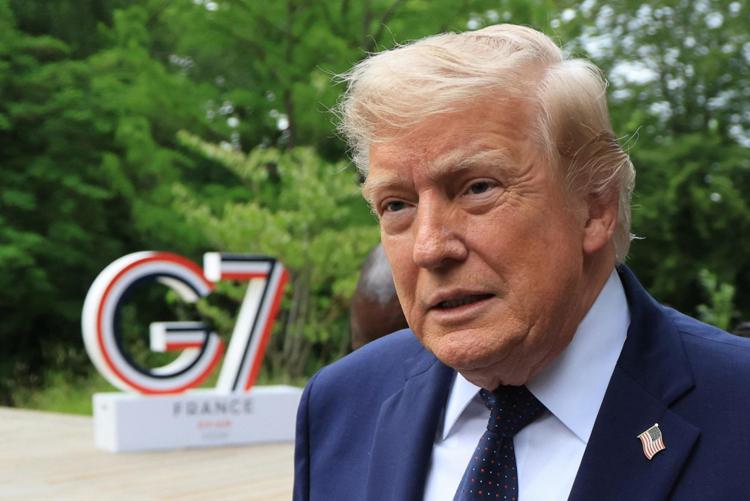
One of the most closely watched aspects of the summit was the stance of U.S. President Donald Trump, whose views on the war have often differed from those of several European allies.
During discussions with fellow leaders and journalists, Trump made remarks that suggested a more favorable assessment of Ukraine’s position in the conflict. He acknowledged that Russian forces are suffering substantial losses and described Moscow as the side carrying out offensive operations in the war.
These comments were interpreted by several European officials as evidence of a shift in Washington’s approach toward the conflict. French President Emmanuel Macron publicly stated that he had observed a meaningful change in Trump’s perspective regarding the war and Ukraine’s strategic importance.
The American president also generated headlines when he jokingly declared, “I’m the boss,” while taking part in summit discussions. While the comment was delivered humorously, it reflected the reality that many key international decisions, particularly those involving Ukraine and global security, continue to depend heavily on U.S. leadership.
European governments have consistently emphasized that American support remains essential for maintaining pressure on Russia and encouraging meaningful negotiations toward a lasting peace settlement.
New Sanctions Aim to Increase Pressure on Moscow
A key outcome of the summit was the agreement among G7 members to continue increasing economic and political pressure on Russia. Leaders believe that maintaining coordinated sanctions remains one of the most effective tools for limiting Moscow’s ability to sustain its military campaign.
Western officials argue that Ukraine’s recent battlefield performance has weakened Russia’s negotiating position and demonstrated that continued international support can influence the course of the conflict.
Unlike previous summits where disagreements sometimes prevented a unified declaration, this year’s gathering produced a clearer consensus on Ukraine. Analysts noted that the stronger alignment among Western governments could send an important signal to both Moscow and Kyiv regarding future diplomatic efforts.
However, many observers caution that any breakthrough in peace negotiations will still depend heavily on decisions made in Washington. The United States remains Ukraine’s largest military and financial supporter, making American policy a decisive factor in the conflict’s future direction.
Iran Nuclear Talks Remain a Major International Concern
In addition to the war in Ukraine, G7 leaders devoted significant attention to ongoing diplomatic efforts involving Iran. Participants welcomed progress toward a preliminary understanding between Washington and Tehran but acknowledged that major challenges remain before a comprehensive agreement can be reached.
The proposed framework is intended to address concerns surrounding Iran’s nuclear activities while reducing tensions across the Middle East. Nevertheless, several diplomats expressed caution about the complexity of securing a durable and enforceable agreement.
European allies remain particularly concerned about issues extending beyond nuclear development, including Iran’s ballistic missile capabilities and its support for armed groups operating throughout the region.
President Trump emphasized that negotiations remain incomplete and warned that military options could return if Iran fails to comply with future commitments. His comments underscored the fragile nature of the diplomatic process and highlighted the significant differences that still need to be resolved.
Foreign policy experts note that reaching a comprehensive agreement will require extensive negotiations involving verification mechanisms, security guarantees, and regional stability measures.
G7 Targets China’s Dominance in Critical Minerals
Another major focus of the summit was the growing dependence of Western economies on China for critical minerals. These materials are essential for advanced technologies, renewable energy systems, defense manufacturing, electric vehicles, and semiconductor production.
Recognizing the strategic importance of securing reliable supply chains, G7 leaders agreed to strengthen cooperation aimed at reducing vulnerabilities linked to mineral imports.
The initiative includes enhanced coordination on stockpiling resources, sharing supply chain information, and supporting new mining and processing projects in allied countries. Leaders also discussed expanding the role of international institutions in monitoring mineral markets and improving global resource security.
Many Western governments view critical minerals as a national security issue due to their importance in military technology and economic competitiveness. As geopolitical tensions continue to rise, reducing dependence on a single supplier has become a growing priority.
The new strategy reflects a broader effort among advanced economies to diversify sourcing and create more resilient industrial supply chains capable of withstanding future disruptions.
Artificial Intelligence Emerges as a Strategic Priority
Artificial intelligence also occupied a prominent place on the summit agenda. Political leaders held discussions with leading technology executives regarding the opportunities and risks associated with rapidly advancing AI systems.
Among the participants were prominent figures from the global technology sector, including representatives from major artificial intelligence companies. Conversations focused on issues such as accountability, misinformation, autonomous decision-making, and the societal impact of increasingly sophisticated AI tools.
Leaders explored how governments can encourage innovation while establishing safeguards to address concerns surrounding transparency, accuracy, and public trust. The discussions reflected growing recognition that AI will influence virtually every aspect of economic, military, and social development in the coming decades.
Many experts believe international cooperation will be necessary to establish common standards and regulatory frameworks capable of managing the transformative effects of artificial intelligence.
A Summit Focused on Security, Stability, and Strategic Competition
The G7 summit ultimately highlighted three of the most pressing geopolitical challenges facing the international community: the war in Ukraine, tensions surrounding Iran, and the strategic competition between Western nations and China.
For Ukraine, the meeting provided an opportunity to strengthen international support and demonstrate growing confidence in its military position. For the United States and its allies, it offered a platform to coordinate policies on global security, economic resilience, and emerging technologies.
President Trump’s remarks and actions drew significant attention throughout the gathering, particularly regarding Ukraine and Iran. His evolving stance on the conflict with Russia may influence future diplomatic efforts and shape broader Western policy in the months ahead.
As global tensions continue to reshape international relations, the outcomes of the G7 summit suggest that major powers are preparing for a period of intensified strategic competition, where military security, technological leadership, and economic resilience will play increasingly important roles in determining global influence.
About The Author