Iran and the United States Agree on Core Nuclear “Principles”
Iran has announced that it reached a “general agreement” with the United States on a set of guiding principles that could form the foundation of a renewed nuclear deal. The development emerged after high-level talks in Geneva and signals a potential diplomatic opening in one of the most consequential geopolitical disputes in the Middle East.
Iranian Foreign Minister Abbas Araghchi stated that both sides agreed on a framework that will now serve as the basis for drafting a possible agreement. According to Araghchi, each delegation will prepare and exchange written proposals before scheduling a third round of negotiations. He emphasized, however, that the next phase will be “more difficult and detailed,” underscoring that significant technical and political hurdles remain.
The talks were mediated by Oman and lasted approximately three and a half hours. While no binding agreement has been signed, the acknowledgment of shared principles marks a notable shift from months of escalating rhetoric and military posturing.
What the Potential Nuclear Deal Could Include
Though specifics were not disclosed, a revived nuclear agreement would likely involve:
- Restrictions on uranium enrichment levels
- Expanded international inspections and monitoring
- Phased sanctions relief targeting Iran’s oil sector
- Clear compliance and enforcement mechanisms
Success in these negotiations could unlock substantial economic relief for Tehran. Over the past several years, sweeping U.S. sanctions have sharply constrained Iran’s oil exports and broader economy. A deal that eases these restrictions would significantly boost Iran’s fiscal capacity and reintegrate its energy sector into global markets.
Iran’s Foreign Ministry spokesperson indicated that Tehran’s delegation is prepared to remain in Geneva “for several days or even weeks” if necessary to finalize an accord. That level of flexibility suggests strategic urgency on both sides.
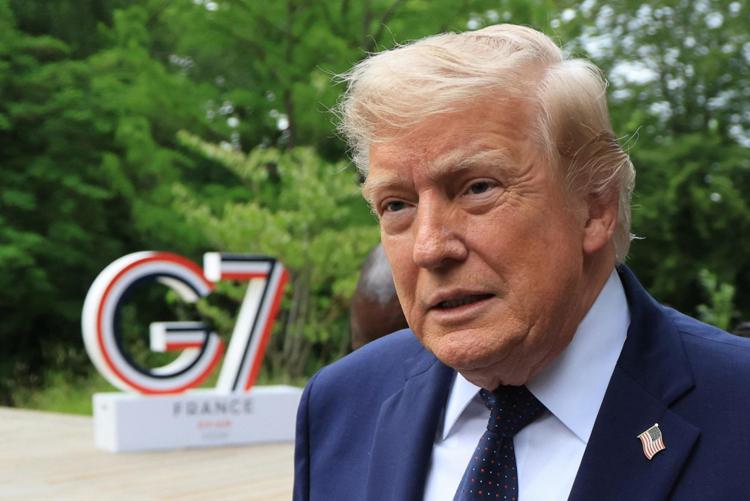
On the American side, the negotiating team is led by U.S. Special Envoy Steve Witkoff and Jared Kushner, the son-in-law of Donald Trump. Trump confirmed he would be indirectly involved in the discussions and stated that Iran appears willing to strike a deal.
Oil Markets React: Crude Prices Fall on Diplomatic Progress
Energy markets responded swiftly to the announcement. West Texas Intermediate (WTI) crude erased earlier gains, falling below $63 per barrel, while Brent crude also retreated. Traders interpreted the diplomatic progress as reducing the immediate probability of military confrontation in the Gulf region.
Brent crude remains up nearly 13% this year, largely due to persistent tensions between Washington and Tehran and the perceived risk of conflict in the oil-rich Middle East. A successful agreement could stabilize supply expectations and compress the geopolitical risk premium currently embedded in prices.
Commodity analyst Giovanni Staunovo of UBS Group AG noted that although rhetoric from both sides remains heated, markets are unlikely to price in extreme scenarios unless actual oil exports are disrupted.
This reaction highlights a central reality: the nuclear negotiations are not merely political events; they are critical drivers of global energy pricing.
Strait of Hormuz Tensions and Military Drills
Despite diplomatic progress, military maneuvers continue to shape the strategic landscape. Iran announced that it would temporarily close part of the Strait of Hormuz for several hours due to military exercises conducted by the Islamic Revolutionary Guard Corps (IRGC).
The Strait of Hormuz is one of the world’s most vital maritime chokepoints, handling approximately one-fifth of global oil shipments. Even temporary restrictions can send shockwaves through shipping markets and energy futures.
Iran has previously threatened to fully shut the strait if attacked, though it has never executed such a move. Tanker industry sources reported no immediate changes to shipping guidance and expressed skepticism that drills would disrupt oil flows in the near term.
Simultaneously, the United States has deployed a second aircraft carrier to the region, reinforcing its military presence. The juxtaposition of active diplomacy and intensified military deployments illustrates a dual-track strategy: negotiation accompanied by deterrence.
Iranian Navy commander Alireza Tangsiri stated that the IRGC continues to monitor the strait closely and plans to introduce additional military equipment to enhance defensive capabilities.
Escalating Rhetoric from Political Leaders
Diplomatic engagement has unfolded alongside increasingly sharp political rhetoric. Iran’s Supreme Leader Ali Khamenei warned that any U.S. military strike would be met with forceful retaliation. He asserted that while American warships are formidable, Iran possesses the capability to neutralize such threats.
On the U.S. side, President Donald Trump has repeatedly warned of potential military action if negotiations fail. During a visit to Tel Aviv, Republican Senator Lindsey Graham suggested that Washington may soon face a choice between diplomacy and force, describing the timeline as “weeks, not months.”
Israel has advocated for expanding negotiations to include limits on Iran’s ballistic missile program. Tehran has so far rejected missile constraints as a non-negotiable red line, signaling that the scope of any final agreement remains contentious.
The coexistence of diplomatic engagement and forceful public messaging reflects a calculated strategy by both governments to maintain leverage while testing the feasibility of compromise.
The Strategic Stakes for the Middle East
The outcome of the Geneva talks carries far-reaching implications. A comprehensive nuclear deal could:
- Reduce the likelihood of direct military confrontation
- Restore Iranian oil exports at scale
- Rebalance regional alliances
- Alter global energy supply dynamics
Conversely, failure could escalate tensions, increase sanctions, and heighten the risk of conflict in a region central to global energy infrastructure.
The Persian Gulf remains a focal point of strategic competition. Military drills, aircraft carrier deployments, and diplomatic negotiations are unfolding simultaneously, underscoring the complexity of the situation.
An Iranian analyst writing for Tasnim News Agency described diplomacy and battlefield readiness as complementary tools serving national interests. This perspective encapsulates Tehran’s approach: pursue negotiations without relinquishing deterrent capabilities.
Next Steps in the Negotiation Process
The immediate procedural step involves drafting and exchanging detailed texts outlining commitments, verification measures, and sanctions sequencing. Once proposals are reviewed, a third round of talks will be scheduled.
The technical phase is typically the most challenging in nuclear diplomacy. It requires precise language, timelines, compliance metrics, and dispute resolution mechanisms. Minor ambiguities can derail agreements, particularly given domestic political scrutiny in both countries.
Moreover, trust deficits remain substantial. Previous agreements have unraveled under shifting political leadership, making durability a central concern.
Nevertheless, the willingness of both sides to formalize guiding principles suggests that diplomatic channels are active and potentially productive.
Conclusion: A Diplomatic Opening Amid Strategic Tension
Iran’s announcement of agreement on guiding principles with the United States marks a potentially pivotal moment in efforts to resolve their nuclear dispute. Financial markets responded favorably, oil prices declined, and the prospect of sanctions relief emerged as a tangible incentive.
Yet the broader environment remains fragile. Military deployments in the Persian Gulf, stern warnings from political leaders, and unresolved disagreements over missile programs illustrate the complexity of the negotiations.
The Geneva talks represent progress—but not resolution. Whether this framework evolves into a durable nuclear accord will depend on sustained political will, technical precision, and careful management of regional security dynamics.
For now, diplomacy and deterrence continue to operate in parallel, shaping the future of U.S.–Iran relations and the stability of global energy markets.
About The Author