UK Government Triggers Regulatory Review of DMGT’s Telegraph Acquisition
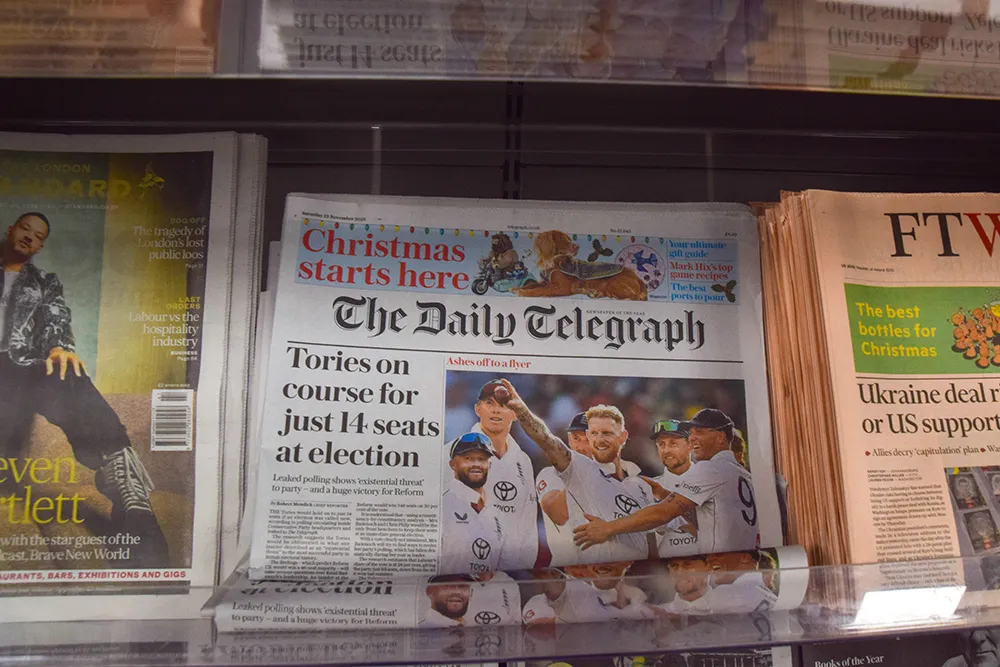
The UK government has formally launched a public-interest and competition investigation into DMGT’s proposed £500 million acquisition of Telegraph Media Group (TMG), intensifying scrutiny over media ownership concentration in Britain.
Culture Secretary Lisa Nandy issued a Public Interest Intervention Notice (PIIN), stating that the deal raises concerns regarding the “plurality of views” in the UK media landscape. The decision sends the proposed takeover to both Ofcom and the Competition and Markets Authority (CMA) for a comprehensive regulatory assessment.
If approved, the transaction would bring the Daily Telegraph and Sunday Telegraph under the same corporate umbrella as the Daily Mail, Mail on Sunday, Metro, and The i Paper—substantially expanding DMGT’s footprint in the national newspaper market.
Why the Deal Raises Public Interest Concerns
The core issue cited by the government centers on media plurality, a principle designed to prevent excessive concentration of editorial influence in democratic societies.
In her written statement, Nandy emphasized that public interest considerations may be relevant and require further investigation. In a letter published on the government’s website, she noted that the transaction could allow DMGT to align editorial positions across its newspaper titles.
Even if DMGT maintains that the Telegraph would remain editorially independent, the government argues that the mere potential for editorial alignment justifies regulatory review.
This position reflects longstanding UK policy that media mergers are not judged solely on competition metrics but also on their broader democratic implications.
Market Share Impact: A Dominant Newspaper Group
The competition dimension of the probe is equally significant.
Currently:
- DMGT controls 50.62% of Britain’s daily national newspaper market.
- The Daily Telegraph represents 5.52% of daily circulation.
If the acquisition proceeds:
- DMGT’s market share would rise to 56.14%.
Such consolidation would place more than half of the UK’s national daily newspaper circulation under one corporate group.
From a competition law perspective, this level of concentration could raise questions about:
- Advertising market dominance
- Pricing power
- Barriers to entry
- Reduced diversity in editorial voices
The CMA will evaluate whether the transaction substantially lessens competition in the relevant markets.
Role of Ofcom and the Competition and Markets Authority
Under UK law, a Public Interest Intervention Notice triggers dual regulatory review:
Ofcom’s Role
Ofcom will assess:
- Media plurality implications
- Editorial independence safeguards
- Impact on the diversity of viewpoints
CMA’s Role
The Competition and Markets Authority will examine:
- Market concentration metrics
- Advertising competition
- Consumer choice implications
- Economic impact on rival publishers
Both regulators have been given a deadline of June 10 to report their findings back to the culture secretary.
Depending on their conclusions, the government could:
- Approve the deal outright
- Impose remedies or conditions
- Block the acquisition
Background: Two Years of Ownership Uncertainty
The Telegraph’s ownership has been unsettled since 2023, creating prolonged uncertainty around one of Britain’s most prominent broadsheet newspapers.
A prior bid led by U.S. investment firm RedBird Capital Partners collapsed in November, extending the ownership saga.
Why the RedBird Deal Failed
RedBird initially partnered with Abu Dhabi-backed IMI in 2023 to acquire the titles. However, the UK government introduced legislation prohibiting foreign state investment in British newspapers.
RedBird later restructured the proposal to cap IMI’s involvement at 15%, but the bid ultimately unraveled due to:
- Slower-than-expected regulatory review
- Internal opposition from senior Telegraph newsroom figures
- Prolonged uncertainty surrounding compliance
The withdrawal left Telegraph Media Group without a clear ownership resolution, prompting renewed interest from domestic bidders such as DMGT.
DMGT’s Position and Strategic Rationale
DMGT has argued that acquiring the Telegraph would:
- Provide long-term financial stability
- Ensure sustained investment in journalism
- Preserve editorial independence
- Strengthen the commercial viability of legacy print titles
The group maintains that the Telegraph would operate independently despite shared corporate ownership.
However, regulators are evaluating not only stated intentions but structural capabilities—specifically whether ownership alignment could realistically influence editorial policy over time.
Broader Media Landscape Implications
The probe comes at a time of structural transformation in UK media markets. Print circulation has declined industry-wide over the past decade, intensifying consolidation pressures.
Large media groups argue that scale is necessary to:
- Sustain newsroom funding
- Compete with digital platforms
- Invest in subscription models
- Offset declining print advertising revenues
However, critics contend that excessive consolidation risks narrowing the diversity of political and cultural viewpoints available to readers.
The Telegraph is widely regarded as a right-leaning broadsheet with significant political influence. Combining it with the Daily Mail’s already substantial readership base raises concerns about concentrated influence within similar ideological segments of the market.
Legal Context and Additional Pressures
Separately, Associated Newspapers—the publisher of the Mail on Sunday—is currently facing legal action. Prince Harry and six other claimants are suing the company, alleging privacy violations.
Although unrelated to the takeover decision, ongoing litigation adds to scrutiny surrounding DMGT’s media practices.
Regulators may consider broader corporate governance and editorial compliance contexts when evaluating media mergers, even if legal proceedings do not directly affect competition analysis.
What Happens Next?
The regulatory process will now unfold in stages:
- Ofcom and the CMA conduct preliminary investigations.
- Both bodies submit findings by June 10.
- The culture secretary reviews recommendations.
- A final decision is made—potentially including remedies or prohibition.
Possible outcomes could include:
- Divestment requirements
- Editorial independence guarantees
- Structural separation commitments
- Complete rejection of the acquisition
The review will likely involve consultation with stakeholders, including rival publishers, advertisers, media advocacy groups, and political observers.
A Defining Moment for UK Media Consolidation
The Daily Mail–Telegraph deal represents one of the most consequential proposed consolidations in Britain’s modern newspaper industry.
With DMGT’s potential market share rising above 56% of national daily circulation, regulators face a complex balancing act between:
- Ensuring financial sustainability of legacy journalism
- Protecting competitive markets
- Safeguarding democratic media plurality
The investigation marks the latest chapter in a two-year saga over Telegraph ownership and underscores the heightened sensitivity surrounding media consolidation in the UK.
As Ofcom and the CMA begin their review, the outcome could set a significant precedent for future media mergers in Britain’s evolving publishing landscape.
About The Author