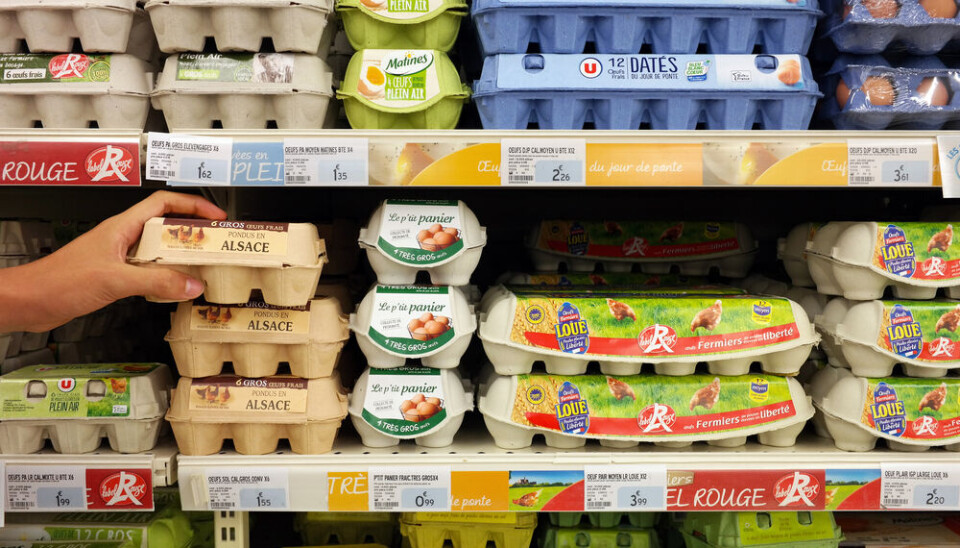
France Sets New Egg Consumption Record in 2025
France has reached a historic milestone in 2025 as egg consumption climbed to record levels, reflecting shifting dietary habits and economic pressures. According to data released by the French egg industry body CNPO (Comité National pour la Promotion de l’Œuf), the average French resident consumed 237 eggs during the year, marking a significant increase from 227 eggs per person in 2024.
The surge highlights a broader European and global trend: consumers are turning to eggs as an affordable, versatile, and protein-rich food option amid ongoing economic uncertainty. Industry experts now expect this upward trajectory to continue over the coming decade.
The sustained growth has prompted producers to accelerate expansion plans, including the construction of hundreds of new poultry facilities to accommodate millions of additional laying hens.
Why Egg Demand Is Rising in France and Across Europe
Eggs have emerged as one of the most resilient food categories in recent years. Several structural factors explain the persistent rise in demand:
1. Affordability Amid Economic Pressure
With inflationary pressures affecting household budgets, consumers increasingly prioritize cost-effective protein sources. Eggs offer exceptional nutritional density at a relatively low price compared to meat, seafood, or specialty plant-based alternatives.
Economic uncertainty often drives demand for staple foods with high versatility, and eggs fit that profile precisely.
2. Dietary Versatility and Nutritional Appeal
Eggs are widely used in:
- Traditional French cuisine
- Bakery and pastry production
- Processed food manufacturing
- Vegetarian and high-protein diets
Their adaptability across breakfast, lunch, dinner, and snack categories strengthens structural demand. Moreover, eggs align well with evolving dietary trends, including flexitarian and protein-focused eating patterns.
3. Post-Pandemic Consumption Habits Persist
Demand for eggs first accelerated sharply in 2020, when COVID-19 lockdowns kept consumers at home and boosted home cooking. While analysts initially expected a reversion after restrictions eased, the trend did not reverse.
Instead, consumption continued to grow steadily year after year.
According to market research firm Circana, the pandemic-driven boost effectively reshaped long-term consumption habits. Consumers who incorporated eggs more frequently into their diets maintained that behavior even after returning to normal routines.
Per Capita Egg Consumption and Long-Term Projections
In 2025, per capita consumption in France reached:
- 237 eggs per person annually
This includes both shell eggs and processed egg products used in food manufacturing.
Looking ahead, projections from the French technical institute ITAVI indicate even stronger growth. By 2035, annual consumption could reach:
- 269 eggs per person
- Approximately 70% of which would be shell eggs
If realized, this would represent one of the highest sustained consumption levels in Europe, reinforcing France’s position as a major egg market within the European Union.
Price Trends: Wholesale Increases, Stable Retail Prices
Strong demand has had measurable effects on the egg market’s pricing dynamics.
Wholesale Market Impact
According to data from FranceAgriMer, wholesale egg prices increased by roughly 20% over the past year. The upward pressure reflects:
- Higher feed costs
- Increased energy expenses
- Tight supply conditions
- Growing domestic and export demand
Producers have faced rising production costs, which typically transmit to wholesale markets more quickly than to retail shelves.
Retail Stability Through Government Mechanisms
Interestingly, supermarket prices for shell eggs have remained relatively stable. This stability is partly due to a government pricing mechanism that links food retail prices to farmers’ production costs.
The system aims to:
- Protect farmer margins
- Prevent excessive retail price volatility
- Shield consumers from sharp spikes
This pricing framework has moderated inflationary impacts for French households, even as wholesale markets experienced upward movement.
Production Challenges and Expansion Plans
Although French producers have increased output to meet rising consumption, production growth has struggled to keep pace with demand.
Capacity Constraints
The poultry sector faces several structural challenges:
- Limited housing capacity for laying hens
- Environmental regulations
- Rising construction costs
- Labor availability constraints
These bottlenecks have restricted the speed at which supply can expand.
575 New Poultry Houses Planned by 2035
To address the imbalance, the French egg industry plans to construct 575 new poultry houses by 2035. This expansion would support approximately 10 million additional laying hens, significantly boosting domestic production capacity.
The strategy reflects confidence that elevated egg consumption is not temporary but part of a durable long-term shift.
Rising Imports and the Role of Ukraine
Despite efforts to increase domestic output, France has relied more heavily on imports in 2025.
Import Growth in 2025
Egg imports rose 21% during the year, with the primary suppliers being:
- Spain
- Belgium
- The Netherlands
These neighboring EU countries help fill supply gaps created by France’s capacity constraints.
Ukraine’s Expanding Influence in the EU Market
Ukraine remains Europe’s leading non-EU egg supplier. EU imports from Ukraine increased by 67% in the first ten months of 2025, according to European data.
Although direct shipments from Ukraine to France remain limited, Ukrainian eggs often enter the French market indirectly through other EU member states.
This layered supply chain highlights the interconnected nature of European agricultural trade.
Broader European Context: Eggs as a Strategic Protein Source
The French trend mirrors broader European developments. Across the continent, eggs are increasingly viewed as:
- A strategic protein source
- A lower-cost alternative to red meat
- A staple ingredient in processed food sectors
- A product adaptable to evolving sustainability standards
In an era marked by fluctuating meat prices, climate debates, and dietary diversification, eggs occupy a unique middle ground: affordable, accessible, and nutritionally efficient.
This structural demand shift may reshape long-term agricultural investment strategies across Europe.
What This Means for Investors and the Agricultural Sector
The record-breaking consumption figures carry implications beyond the food industry.
1. Agricultural Investment Opportunities
Rising demand supports:
- Poultry farm expansion
- Feed production growth
- Egg processing infrastructure
- Packaging and logistics investments
Producers expanding capacity may benefit from predictable consumption growth.
2. Supply Chain Resilience Focus
As imports increase, policymakers may reassess domestic production strategies to ensure supply security, particularly in light of geopolitical uncertainties affecting agricultural trade flows.
3. Sustainability and Regulation
Expansion plans must align with environmental regulations, animal welfare standards, and carbon reduction goals. Future profitability will depend on balancing volume growth with regulatory compliance.
Outlook: A Structural Shift Rather Than a Temporary Spike
The data suggests that France’s record egg consumption in 2025 is not a short-term anomaly. Instead, it reflects:
- Persistent consumer demand
- Economic factors favoring affordable proteins
- Long-lasting behavioral changes post-pandemic
- Structural growth across European food markets
With projections pointing to 269 eggs per person annually by 2035, producers are positioning themselves for sustained expansion rather than cyclical fluctuation.
As capacity grows and imports remain elevated, France’s egg market is entering a new phase defined by long-term strategic planning, supply diversification, and steady consumer appetite.
If current projections hold, eggs may remain one of the most resilient segments of the European food sector for the coming decade.
About The Author