Greenland Emerges as a Strategic Flashpoint in the Arctic
Greenland, the world’s largest island and a sparsely populated Arctic territory, has rapidly moved to the center of international geopolitical tensions. Once viewed primarily through the lenses of climate science and indigenous autonomy, Greenland is now a strategic prize in a widening contest involving the United States, Europe, Russia, and China.
According to reports from British media, the United Kingdom is discussing plans with European allies to deploy military forces to Greenland. The proposal, still in its early stages, would involve British soldiers, naval vessels, and aircraft operating in the region under a coordinated European framework. The objective is twofold: to protect Arctic security from Russian and Chinese influence and to calm growing concerns from U.S. President Donald Trump regarding Greenland’s strategic vulnerability.
London’s Proposal: A European Military Presence
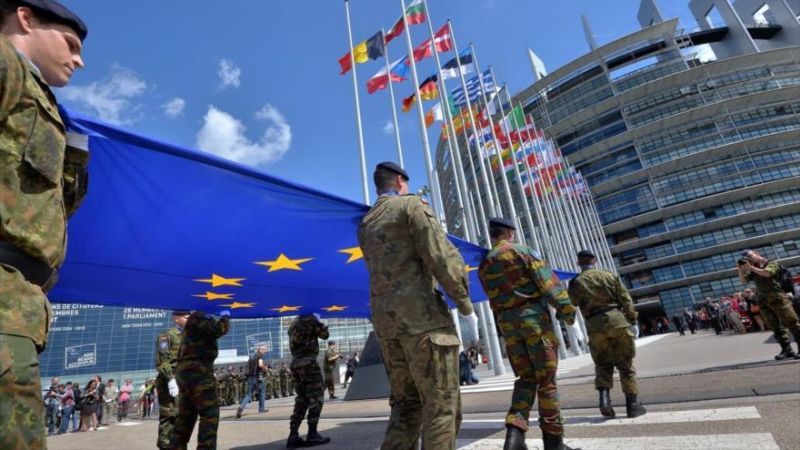
Officials in London have reportedly begun preliminary talks with counterparts in Germany, France, and other European nations to assess the feasibility of a multinational deployment to Greenland. The initiative would likely operate under the NATO umbrella, reinforcing the alliance’s presence in the High North.
The plan reflects increasing anxiety among European capitals that Greenland’s geopolitical importance—due to its location between North America and Europe, as well as its vast mineral resources—could draw aggressive interest from rival global powers. European leaders also hope that a visible EU and UK security role could discourage President Trump from pursuing his stated ambition of acquiring the island.
Greenland’s Arctic geography places it near key shipping routes, undersea cables, and missile trajectories. As melting ice opens new maritime passages, military planners increasingly view the region as essential to future defense and deterrence strategies.
Trump’s Persistent Interest and Greenland’s Response
Donald Trump has repeatedly asserted that the United States cannot allow Greenland to fall under the influence of Russia or China. While U.S. officials have sent mixed signals about the use of force, Trump has remained unusually direct, describing Greenland as vital to American national security.
Greenland’s political leadership has responded with unity and defiance. Leaders from all five political parties represented in the Inatsisartut, Greenland’s parliament, issued a joint declaration reaffirming the island’s sovereignty. Their message was unequivocal: Greenland is not for sale.
Slogans such as “Neither American nor Danish—Greenlandic” have echoed through Nuuk, the island’s capital, symbolizing a rare moment of political cohesion across party lines. The statement emphasizes Greenland’s right to self-determination and rejects any attempt to impose external control, whether economic or military.
Tensions with Denmark and the Question of Direct Talks
The growing international pressure has also exposed subtle fractures in Greenland’s relationship with Denmark, which governed the island as a colony until 1953 and granted it home rule in 1979. While Denmark retains responsibility for defense and foreign affairs, some Greenlandic leaders now argue that Nuuk should negotiate directly with Washington.
Foreign Minister Vivian Motzfeldt openly questioned the necessity of Danish mediation, asking why Greenland should not engage independently with the United States on issues affecting its future. This stance introduces a delicate political dynamic that Washington could potentially exploit, especially amid rising pro-independence sentiment on the island.
Greenland’s Prime Minister, Jens-Frederik Nielsen, has taken a more cautious approach. While acknowledging independence as a long-term goal, he has stressed that economic readiness must come first. Greenland’s economy remains heavily dependent on fishing and Danish subsidies, making abrupt political shifts risky.
U.S. Offers and Internal Political Divisions
The Trump administration has reportedly floated an array of incentives aimed at winning Greenlandic support. These include promises of investment, job creation, expanded tourism, and even direct financial payments to residents—figures as high as $100,000 per person have been mentioned in political discussions.
Such proposals have fueled debate within Greenland, particularly among opposition groups like Naleraq, which openly advocate for independence and see engagement with Washington as a potential pathway to economic autonomy.
Despite internal differences, all major parties agree on one point: the tone adopted by U.S. leadership has been disrespectful. Greenlandic leaders have called on Washington to abandon rhetoric that undermines the dignity of a population of roughly 57,000 people with a distinct cultural and political identity.
Denmark on High Alert as Public Opinion Shifts
The Greenland crisis has reverberated strongly in Denmark, where public concern is growing. A survey conducted by Voxmeter found that four in ten Danes do not rule out the possibility of a U.S. military invasion under a Trump presidency—an extraordinary sentiment between NATO allies.
Public reaction has included symbolic and economic responses, such as boycotts of American brands ranging from Coca-Cola and Heinz to Netflix and Amazon. Sales of Greenlandic flags have surged, reflecting a wave of solidarity with the island.
Danish defense officials have adopted a firm stance. Rasmus Jarlov, chairman of the Danish Parliament’s defense committee, declared that Greenland would not be ceded “even under nuclear threat.” However, he left open the possibility of pragmatic cooperation with the U.S., including expanded military bases, mining projects, and continued American presence.
NATO and the European Union Enter the Equation
The situation has placed NATO in an uncomfortable position. Any military action by one alliance member against another would represent an unprecedented internal crisis. Danish Prime Minister Mette Frederiksen warned that such a scenario would mean “the end of everything” for the alliance.
NATO Secretary General Mark Rutte has conveyed to U.S. officials the strategic importance of the Arctic for collective security. That message is expected to be reinforced by EU Defense Commissioner Andrius Kubilius during diplomatic engagements in Sweden and other Nordic countries.
The European Union is reportedly considering a range of deterrence measures. These include strengthening military posture in the High North and potentially deploying economic countermeasures using the EU’s anti-coercion instrument. This powerful tool could allow Brussels to restrict U.S. companies’ access to European service markets if economic pressure is applied against Greenland or Denmark.
A European Military Deployment: Risks and Implications
Among the most sensitive options under discussion is the deployment of European forces to Greenland under NATO auspices. Proponents argue that a visible multinational presence would deter external aggression and stabilize the region. Critics warn that such a move could escalate tensions, particularly within the alliance itself.
Deploying European troops to Greenland would mark a historic shift in Arctic security policy, signaling that Europe intends to play a more assertive role in defending its northern flank. At the same time, it would test NATO’s ability to manage disputes involving its own members.
The broader concern remains the same: preventing Greenland from becoming the stage for great-power rivalry at a time when global geopolitical fault lines are already under severe strain.
Conclusion: Greenland’s Future at a Crossroads
Greenland’s transformation from a remote Arctic territory into a geopolitical hotspot underscores the changing nature of global power competition. As climate change reshapes the Arctic and strategic interests converge, the island’s location, resources, and political status have made it a focal point for international maneuvering.
The UK and EU’s consideration of a military protection plan reflects both genuine security concerns and an effort to preserve transatlantic stability. For Greenland, the challenge is navigating these pressures while safeguarding sovereignty, unity, and long-term economic viability.
What happens next will not only shape Greenland’s future but also test the resilience of NATO, the cohesion of the European Union, and the boundaries of U.S. power within its own alliance system. The Arctic, once a frozen periphery, has become a frontline of 21st-century geopolitics.
About The Author