What Are iTraxx Indices?
iTraxx indices are internationally recognized credit derivatives indices that allow investors to gain exposure to credit risk without directly trading the underlying assets. Commonly referred to as Markit iTraxx, these indices cover major financial markets in Europe, Japan, non-Japan Asia, and Australia.
The primary purpose of iTraxx indices is to facilitate liquidity and transparency in the credit derivatives market. By standardizing the instruments used to trade credit risk, iTraxx enables market participants—including banks, hedge funds, and asset managers—to hedge or speculate efficiently. These indices function as a benchmark, providing investors with a structured framework to assess market credit conditions.
How iTraxx Enhances Market Liquidity and Transparency
Before the development of iTraxx, credit default swaps (CDS) were often fragmented, making risk assessment and trade execution more challenging. iTraxx was created to address these issues by:
- Standardization – iTraxx establishes consistent terms for credit default swaps, simplifying trading and documentation.
- Liquidity Improvement – By consolidating frequently traded entities into a structured index, iTraxx allows faster, more frequent trading.
- Transparency – The indices are updated regularly, and the list of constituent entities is publicly available, giving investors a clear view of market activity.
Market makers, including large investment banks and ETF providers, use iTraxx indices to manage their exposure when entering CDS contracts. By relying on standardized indices rather than individual instruments, these participants can execute trades more efficiently, reduce operational risk, and improve overall market functionality.
The Evolution and Development of iTraxx Indices
The roots of iTraxx trace back to the early 2000s when the credit default swap market was experiencing rapid growth. Financial institutions, including J.P. Morgan and Morgan Stanley, sought tools to standardize credit exposure across global markets. This led to the creation of credit derivative indices designed to provide uniformity and measurable liquidity.
These early indices eventually merged under the International Index Company (IIC), which implemented a rules-based system. Market makers submitted trading data, allowing IIC to rank entities by liquidity. Every six months, the index constituents were reviewed and updated, ensuring the indices reflected the most actively traded and relevant entities in the market. This rolling approach continues to maintain the relevance and credibility of iTraxx indices.
Integration with Markit and the Global Credit Derivatives Market
In 2007, the Markit Group (now part of IHS Markit and merged with S&P Global in 2020) acquired the iTraxx indices. This acquisition consolidated the management of iTraxx with similar indices in North America, known as Markit CDX. Together, these indices provide a comprehensive view of global credit derivative markets.
IHS Markit acts as the calculation agent for iTraxx, overseeing inclusion or exclusion of reference entities, setting coupon rates, and ensuring adherence to standardized legal documentation in coordination with the International Swaps and Derivatives Association (ISDA). Publicly available updates on daily prices, constituents, and rules further enhance market transparency.
Through this centralized management, iTraxx indices have become a trusted tool for investors seeking a standardized, high-quality benchmark for trading and risk assessment in credit derivatives markets.
iTraxx’s Role in Credit Default Swap Market Dynamics
The introduction of iTraxx indices has significantly impacted the dynamics of the credit default swap market. Key benefits include:
- Enhanced Tradability – Standardized indices increase the liquidity of CDS contracts, allowing investors to enter and exit positions more efficiently.
- Market Efficiency – By providing clear benchmarks, iTraxx reduces negotiation complexity and operational risks in executing swaps.
- Risk Management – Investors can hedge credit exposure using index-based products instead of individual CDS, spreading risk across multiple reference entities.
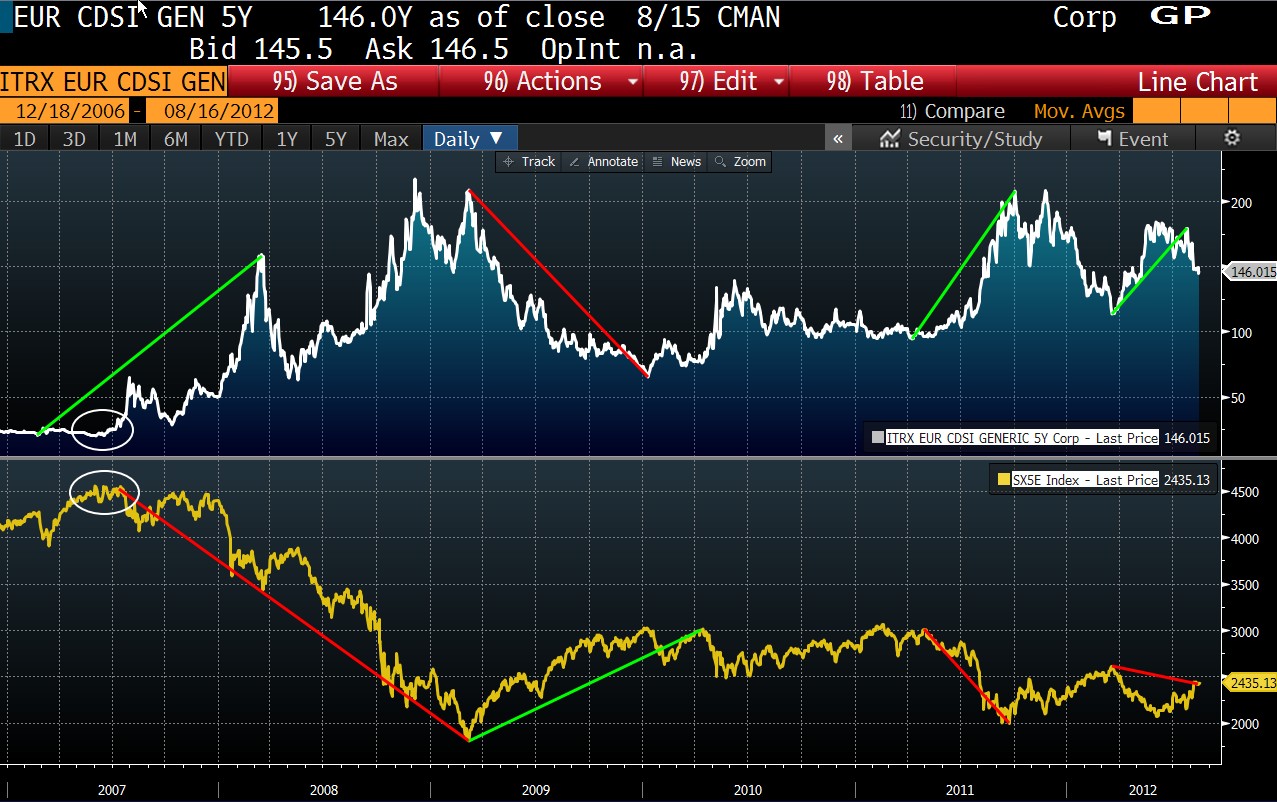
- Market Signaling – Traders use iTraxx indices as economic indicators. Comparing iTraxx movements with stock market indices, such as the Nikkei or FTSE, allows analysts to detect trends in credit conditions and overall economic health.
Because of these factors, iTraxx indices are not just trading tools—they are integral components of global financial market analysis.
Key Benefits for Investors and Traders
iTraxx indices provide several advantages for different types of market participants:
- Investment Banks – Use iTraxx to hedge large credit exposures efficiently and manage counterparty risk.
- Hedge Funds – Implement strategies based on market expectations, using iTraxx to speculate on credit market conditions.
- Asset Managers and ETFs – Employ indices to construct products that offer diversified credit exposure without holding individual CDS.
- Risk Analysts – Monitor iTraxx spreads and price movements to assess the likelihood of default and broader economic trends.
By improving transparency, efficiency, and liquidity, iTraxx contributes to the stability of credit markets while providing actionable insights to market participants.
Conclusion
iTraxx indices have transformed the credit derivatives landscape by providing a standardized, transparent, and liquid benchmark for global markets. Covering Europe, Japan, non-Japan Asia, and Australia, these indices facilitate risk transfer without the movement of underlying assets, enabling investors to hedge or gain exposure to credit markets efficiently.
Managed by IHS Markit (now part of S&P Global), iTraxx continues to play a pivotal role in market operations, investor decision-making, and broader economic analysis. Its combination of transparency, liquidity, and market signaling makes it an essential tool for professional traders, investment banks, and risk managers seeking to navigate the complex world of credit derivatives.
About The Author