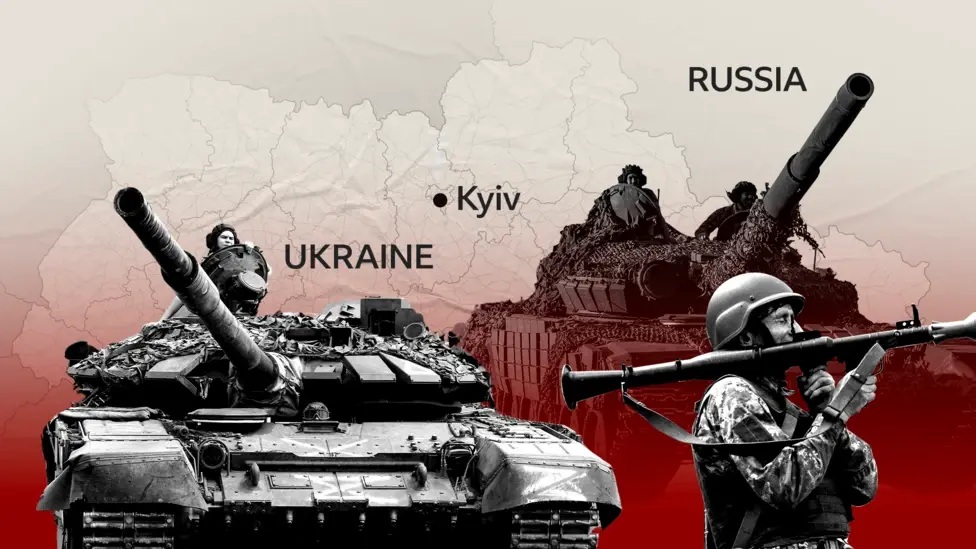
As the war in Ukraine continues into its fourth year, the world’s attention has shifted once again to Geneva—a historic hub of diplomacy now hosting urgent, high-level negotiations aimed at crafting a path toward peace. The United States, Ukraine, and major European powers have gathered to analyze and refine President Donald Trump’s newly proposed framework to end the conflict. But with contentious provisions and a fast-approaching deadline, the outcome of these talks remains uncertain.
A Pivotal Moment in the Russia–Ukraine War
Russia’s full-scale invasion of Ukraine reshaped the global security landscape, igniting the largest European conflict since World War II. After years of devastating battles, displaced civilians, and stalled negotiations, the world is watching closely as a new diplomatic window opens.
On Sunday, top officials from the U.S., Ukraine, France, Britain, Germany, and the European Union arrived in Geneva to examine a 28-point peace plan drafted by Washington. The plan—controversial from the outset—requires Ukraine to make significant concessions, including giving up certain territories, limiting military activities, and stepping back from its long-term goal of joining NATO.
Despite its bold nature, the plan has become a catalyst for renewed negotiation efforts. U.S. Special Envoy Steve Witkoff, Secretary of State Marco Rubio, and Army Secretary Daniel Driscoll are among the American officials present. Ukraine’s delegation is led by Andriy Yermak, one of President Volodymyr Zelenskiy’s closest advisers.
What’s Inside Trump’s 28-Point Proposal?
While full details have not been released, several key elements have already drawn intense scrutiny:
- Territorial Concessions – Ukraine would cede control of certain currently occupied areas to Russia.
- Military Restrictions – Kyiv would accept limitations on the size and capabilities of its armed forces.
- NATO Withdrawal – Ukraine would renounce its aim to join the NATO alliance.
- Russian Troop Pullbacks – In exchange, Russian forces would retreat from some regions they captured after 2022.
This structure positions the proposal as a major strategic compromise for both sides—but critics argue that the burden falls disproportionately on Kyiv.
Why Geneva? The Symbolic and Strategic Choice
Geneva has long been a venue for major peace efforts, from Cold War summits to modern nuclear negotiations. Its neutrality, diplomatic infrastructure, and central location make it the ideal setting for sensitive talks involving world powers.
Early Sunday morning, convoys of vehicles with U.S. diplomatic plates were seen entering the city. European representatives from France, Britain, Germany, and Italy also made their way into the negotiation zones. The presence of high-level officials underscores the gravity of the moment.
European Leaders Push for a More Balanced Agreement
Europe stands at the center of the conflict’s consequences, from economic disruption to security threats. Not surprisingly, European leaders are pushing for revisions to Trump’s plan to make it more favorable for Ukraine.
A German government source confirmed that European states have already drafted an alternative text, built on Washington’s proposal but adding new protections for Ukrainian sovereignty.
Western diplomats have emphasized the need for:
- Clear security guarantees for Ukraine
- Enforceable timelines for Russian troop withdrawals
- Economic and reconstruction assistance
- Conditions preventing future Russian aggression
European officials have described the U.S. plan as a “basis for negotiation,” but caution that it requires “additional work” before any final agreement.
Kyiv’s Dilemma: Pressure, Principles, and Survival
President Zelenskiy faces a difficult balancing act. He must protect Ukraine’s territorial integrity and national dignity, yet he cannot risk losing U.S. support, which remains essential for Ukraine’s defense and economic stability.
In remarks ahead of the Geneva talks, Zelenskiy warned:
“Ukraine cannot trade away its dignity, its freedom, or its partnerships.”
Many Ukrainians fear that agreeing to territorial concessions could embolden Russia in the future, or set a dangerous global precedent regarding the use of force to alter borders.
Moscow’s Position: Supportive but Selective
Russian President Vladimir Putin has called the U.S. plan a potential “basis for resolution,” though analysts note that Moscow may reject any element requiring retreat from newly occupied areas. Russia could also use the negotiations to cement gains it has already made.
Still, the fact that the Kremlin views the proposal as worthy of discussion indicates an opening—one that many diplomats hope can be leveraged.
The Global Impact of a Peace Deal
A political settlement in Ukraine would have far-reaching consequences:
- Energy markets could stabilize
- Global trade routes may reopen
- NATO’s long-term strategy would shift
- U.S.–Russia relations could enter a new phase
- China’s geopolitical calculations might change
For Europe, a successful negotiation could mean the beginning of long-term security restructuring.
The Pressure of the Deadline
President Trump has given Zelenskiy until Thursday to respond to the plan. This deadline has intensified diplomatic efforts but also raised concerns that Ukraine is being pressured too aggressively.
Canadian Prime Minister Mark Carney said he would speak directly with Zelenskiy about the proposal, underscoring the global concern over the pace and direction of the negotiations.
Can the Geneva Talks Produce a Breakthrough?
The Geneva discussions represent the most serious attempt in months to jumpstart peace efforts. However, the obstacles remain formidable:
- Ukrainian resistance to land concessions
- Russian reluctance to withdraw troops
- European insistence on strong guarantees
- American pressure for a rapid decision
If negotiators can align these competing interests, Geneva could become the site of a major diplomatic turning point. If not, the war may continue with no clear end in sight.
For now, the world watches as diplomats race against the clock.
About The Author