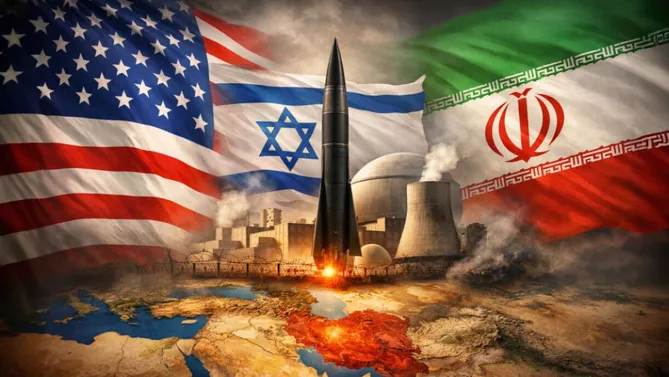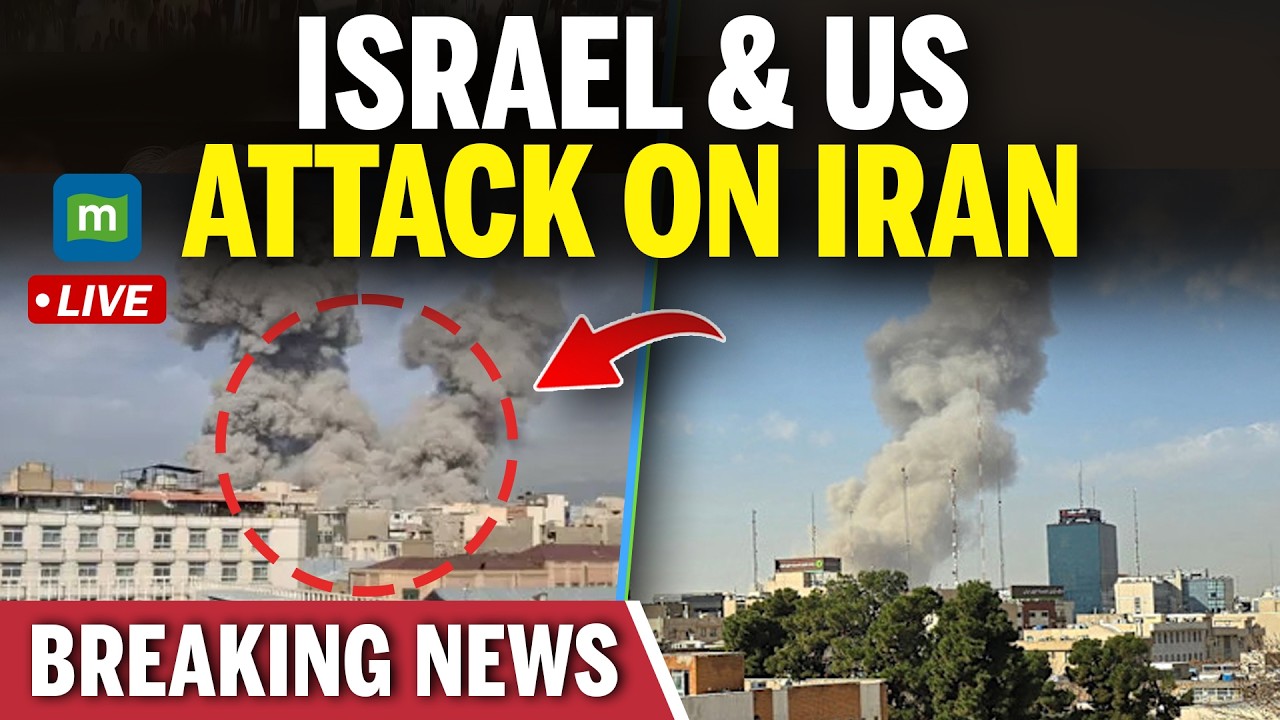
The United States and Israel have launched coordinated military strikes on Iran, marking one of the most dramatic escalations in Middle East tensions in recent decades. President Donald Trump framed the action not only as a strategic military operation but also as an opportunity for the Iranian people to “topple their rulers.”
The strikes, reportedly targeting nuclear and strategic sites, triggered immediate retaliation from Iran, missile interceptions across the Gulf, and widespread flight cancellations throughout the region. As diplomatic efforts collapse, analysts warn that the conflict could evolve into a prolonged and existential confrontation.
Coordinated US–Israeli Strikes Target Iranian Leadership and Infrastructure
According to Israeli officials, the operation included high-value targets and was intended to degrade Iran’s military and nuclear capabilities. One Israeli source indicated that Supreme Leader Ali Khamenei was among the intended targets. However, a source reported that Khamenei had been moved to a secure location prior to the strikes.
The military campaign follows renewed but stalled negotiations between Washington and Tehran earlier in the week. While diplomatic talks had resumed, tensions intensified amid mounting U.S. military deployments in the region.
President Trump described the strikes as decisive action after what he characterized as decades of Iranian destabilization efforts dating back to 1979. His rhetoric suggested a broader objective beyond deterrence, implying political transformation within Iran.
Iranian Retaliation and Regional Fallout
Iran responded swiftly, claiming it had launched missile attacks against Israeli and U.S. bases across the region. The Israeli military confirmed additional waves of missiles fired toward Israeli territory.
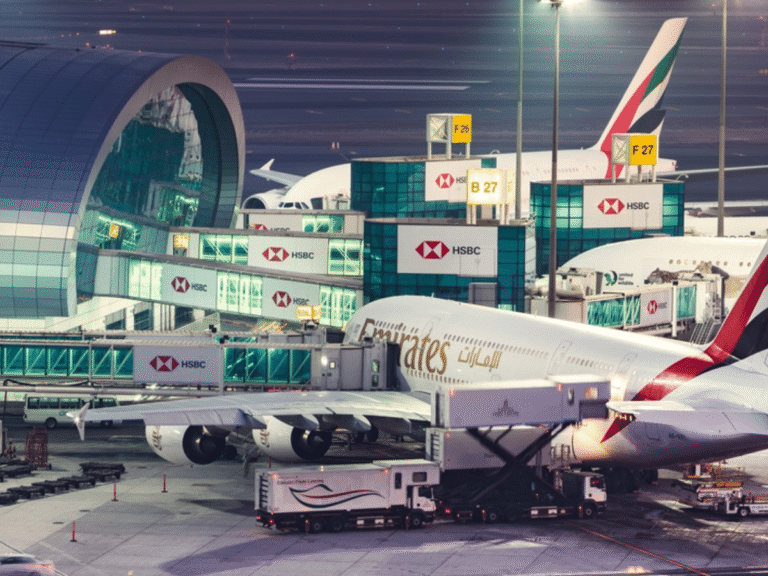
Explosions were reported across multiple locations. Witnesses in the United Arab Emirates and Qatar described hearing powerful blasts. In Dubai, windows reportedly shook from the force of intercepted projectiles, while the UAE’s defense ministry confirmed it had successfully intercepted a new wave of missiles.
In Syria, at least four people were killed when an Iranian missile struck a building in the southern city of Sweida, according to state media. Missile debris also fell in Quneitra and the Yarmouk Basin in Daraa province. Warplanes were repeatedly heard over Syrian airspace, and interceptor missiles were visible above Damascus.
The expanding geographic scope underscores the risk of a multi-front confrontation involving proxy actors and regional allies.
Global Airspace Disruptions and Market Shock
Air travel across the Middle East has been severely disrupted. Major airlines canceled flights, citing safety concerns as missile exchanges intensified.
Flight-tracking platform Flightradar24 reported unprecedented traffic to its website, with users attempting to monitor aircraft movements in real time. The surge in usage temporarily caused error messages due to overwhelming demand.
Airspace closures and rerouted flights signal broader concerns about regional instability affecting civilian infrastructure and global logistics networks.
Financial markets are also bracing for volatility, particularly in energy sectors. The Middle East remains central to global oil supply chains, and escalation could disrupt production or maritime transit routes.
International Political Reactions
Global leaders have responded swiftly.
Canadian Prime Minister Mark Carney expressed support for U.S. efforts to prevent Iran from acquiring nuclear weapons, calling Iran a principal source of instability in the region. He emphasized that Canada would take measures to protect its nationals and diplomatic missions.
In Europe, French President Emmanuel Macron called for an urgent meeting of the United Nations Security Council. Macron warned that a direct war between the United States, Israel, and Iran would have “serious consequences” for international peace and security. He urged Tehran to engage in negotiations to end its nuclear and ballistic missile programs.
U.S. congressional leadership, including members of the bipartisan “Gang of Eight,” were reportedly briefed by the administration prior to the strikes.
An Existential Phase of Conflict
Security analysts suggest that the conflict may represent more than a limited military exchange. Sanam Vakil of Chatham House characterized the confrontation as existential for Tehran, arguing that it is fundamentally about regime survival rather than short-term escalation.
Trump has framed the operation as the culmination of a 47-year adversarial relationship between Washington and Tehran. His remarks indicate that the strikes are intended not merely as coercive diplomacy but as an attempt to redefine the strategic balance in the Middle East.
Iran’s leadership faces mounting internal pressures as well. Economic sanctions, domestic unrest, and recent protest crackdowns have strained political stability. However, external military pressure could also consolidate internal support around the regime rather than weaken it.
Strategic and Nuclear Implications
At the heart of the confrontation lies Iran’s nuclear program. Washington and Israel maintain that Tehran must never obtain nuclear weapons capability. Iran denies seeking such weapons and has previously pointed to religious decrees prohibiting weapons of mass destruction.
Nevertheless, military action against nuclear infrastructure carries inherent risks:
- Potential environmental contamination
- Regional retaliatory escalation
- Activation of proxy militias
- Cyber warfare expansion
- Maritime disruptions in the Gulf
A sustained conflict could destabilize energy markets, weaken fragile regional governments, and trigger broader geopolitical realignment.
What Comes Next?
Several scenarios remain possible:
- Controlled Escalation: Limited strikes followed by backchannel diplomacy.
- Regional War: Expansion involving Hezbollah, Gulf states, or additional actors.
- Regime Consolidation: Iranian leadership tightens control domestically.
- Political Upheaval: Internal unrest intensifies amid sustained conflict.
The trajectory will depend on the scale of continued military exchanges and whether diplomatic channels reopen.
For now, the region stands at a pivotal juncture. The coordinated U.S.–Israeli strikes have shifted the strategic landscape dramatically, and Iran’s response will shape the next phase of Middle East geopolitics.
With missile exchanges ongoing and global leaders urging restraint, the coming days will determine whether this confrontation remains contained—or escalates into a broader regional war with lasting global consequences.
About The Author