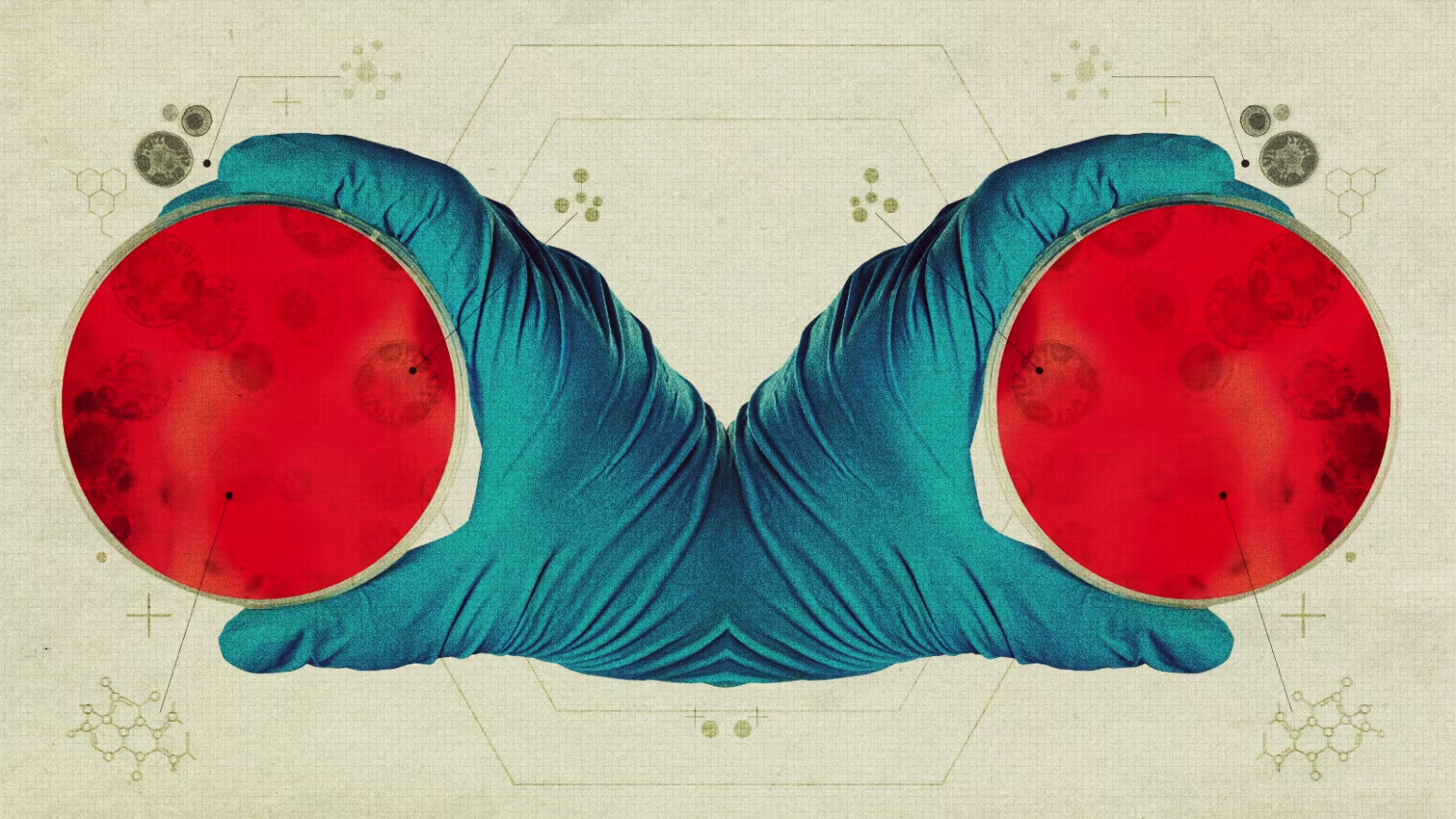
Scientists around the world are sounding alarms about a controversial frontier of synthetic biology known as mirror life—a hypothetical form of life built entirely from molecules whose structures are reversed versions of those found in nature. Although the concept was originally developed to advance medicine and deepen our understanding of life’s origins, many experts now believe mirror organisms could introduce dangers unlike anything humanity has ever faced.
What Exactly Is Mirror Life?
Life on Earth is built on a fundamental asymmetry called chirality, which refers to molecules having “handedness.” Natural DNA and RNA contain right-handed components, while proteins rely on left-handed amino acids. These mirrored pairs cannot interact normally—much like a right glove cannot fit a left hand.
Mirror life would flip this biological rule entirely. All cellular components, from proteins to genetic material, would be constructed from their opposite-handed mirror versions. No such organism has ever existed naturally.
The Research That Sparked Concern
In 2019, synthetic biologist Kate Adamala and three collaborators received a U.S. National Science Foundation grant to explore whether a mirror cell could be engineered from scratch. Early expectations were optimistic: mirror molecules could offer new therapeutic pathways, improved drug stability, and deeper insights into how life began.
But as progress continued, troubling questions emerged. What would happen if a mirror bacterium, built from reversed biomolecules, came into contact with humans, animals, or ecosystems? Would it die immediately—or would it thrive uncontrollably?
As Adamala consulted experts in biosafety, immunology, and ecology, a disturbing consensus formed: mirror cells might be effectively invisible to the human immune system. Because our immune defenses are built to recognize natural chirality, they may completely miss an invader made from opposite-handed molecules.
This realization prompted Adamala and her team to halt their research entirely.
A Growing Scientific Alarm
By 2023 and 2024, informal discussions among researchers evolved into a formal working group of 38 scientists. Their extensive 300-page analysis, published in Science under the title “Confronting Risks of Mirror Life,” argued that mirror bacteria could become feasible within a few decades—and the consequences could be devastating.
Potential Risks Highlighted in the Report Include:
- Immune evasion: Mirror organisms may replicate unchecked inside humans.
- Ecological disruption: They could behave like invasive species, outcompeting natural organisms without predators.
- Resistance to antibiotics: Most drugs rely on natural chirality and may not affect mirror-based cells.
- Containment challenges: Human error or deliberate misuse could undermine even high-security labs.
Stanford microbiologist David Relman described mirror life as one of the only realistic scientific threats capable of endangering all complex life on Earth.
Why Not Simply Ban the Research?
The scientific community is divided. Many researchers argue that fundamental studies on mirror molecules—such as individual proteins used for drug development—are safe and beneficial. These molecules cannot self-replicate and pose no biological threat.
Others warn that certain advances, such as a mirror ribosome, could make the eventual creation of mirror organisms almost inevitable.
Synthetic biologist Michael Kay, whose work focuses on mirror-image therapeutics, cautions against broad restrictions that could hinder promising medical breakthroughs.
The Push for Global Rules
Adamala, Relman, and many others now advocate for international guidelines that prevent the creation of a full mirror cell while allowing continued safe research on individual mirror molecules. Nearly 100 scientists, funders, and policymakers have signed statements urging caution and regulation before the technology progresses any further.
Meetings in the U.S. and U.K. throughout 2024 and 2025 sought to establish “red lines,” though the scientific community has yet to reach total consensus.
What Comes Next?
Most researchers agree on one point: a living mirror cell should not be created—at least not until the risks are thoroughly understood. For now, mirror life remains hypothetical. But with rapid progress in synthetic biology, what seems theoretical today could become possible within a generation.
Relman captures the sentiment shared by many in the field: scientists must learn not just to ask “Can we?” but “Should we?”—echoing the cautionary wisdom of Jurassic Park’s Dr. Ian Malcolm.
About The Author