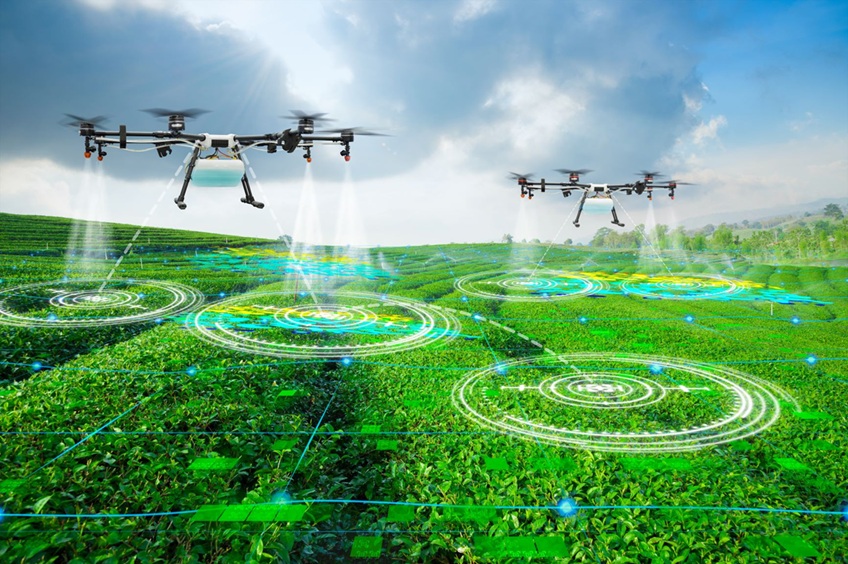
Agricultural Drones Revolutionize Global Farming: Boosting Efficiency, Saving Costs, and Attracting Rural Youth
Agricultural drones are reshaping the global farming landscape, introducing new levels of efficiency, precision, and sustainability. From spraying and seeding to monitoring crops, drones are saving farmers time, money, and labor — while sparking new interest in farming among rural youth.
But as drone technology takes flight across continents, experts warn that job displacement and environmental concerns could pose new challenges for the agricultural sector.
From Toy Gadgets to High-Tech Farm Tools
In just a few years, drones have evolved from expensive, niche gadgets into powerful farm management tools. Today’s agricultural drones can carry payloads of up to 220 pounds (100 kg) and are easier than ever to operate — no advanced training required.
While prices vary by region, many farmers opt to hire drone service providers rather than buy their own equipment. This shift has made drone technology more accessible and cost-effective, especially for smallholders.
Modern agricultural drones now act like “flying tractors”, capable of:
- Spraying pesticides and fertilizers
- Sowing seeds and distributing fish feed
- Transporting produce and painting greenhouses
- Monitoring livestock and crop health
- Mapping soil drainage and field topography
This versatility makes drones a cornerstone of precision agriculture, helping farmers optimize yields while minimizing waste.
A Global Tech Leap: How Asia Led the Drone Revolution
Unlike past agricultural innovations that spread slowly from rich to developing nations, drone adoption flipped the trend.
The agricultural drone boom began in China and East Asia, spread rapidly through Southeast Asia and Latin America, and is now gaining traction in North America and Europe.
- China leads the world with over 250,000 agricultural drones in operation.
- In Thailand, drones were used on 30% of farmland by 2023, up from almost none in 2019.
- In the U.S., registered agricultural drones surged from 1,000 in early 2024 to 5,500 in mid-2025 — though real numbers may be higher.
This technological leapfrogging shows how quickly developing nations have embraced automation to combat labor shortages and increase productivity.
Safer, Smarter, but Not Risk-Free
Replacing manual backpack spraying with drones has dramatically improved farm safety, reducing workers’ exposure to harmful agrochemicals.
However, drones aren’t risk-free. When used improperly, spraying from above can spread chemicals beyond intended fields, potentially harming neighboring crops, waterways, and communities. Proper regulation and operator training remain essential for minimizing environmental impact.
Labour Savings or Job Losses?
Drones are saving farmers time, labor, and costs. For smallholders, who represent 85% of farms globally, this automation reduces the need for dangerous, repetitive manual work.
It’s also helping make agriculture more appealing to rural youth, who often avoid traditional farming due to its physical intensity. Many are now finding new employment as certified drone pilots and service providers — a rising industry in itself.
Still, experts warn that drone efficiency may displace manual workers. A single drone can replace the effort of 30–100 workers, prompting calls for government retraining programs to help displaced laborers transition into new roles.
Sustainable Farming Takes Flight
Drones apply fertilizers and seeds more evenly, using fewer resources while improving yields. They reduce energy consumption compared to heavy machinery and help prevent soil compaction.
This approach supports “sustainable intensification” — producing more food with fewer inputs, a critical goal as global populations rise.
While evidence of yield improvement is still limited, early results suggest that drone-assisted farming can significantly boost productivity and reduce environmental impact.
The Future of Farming Is in the Sky
In just five years, drones have gone from novelty to necessity for millions of farmers worldwide. The technology promises greater efficiency, safer working conditions, and smarter resource management.
As innovation continues, agricultural drones may not only redefine how food is grown — but also revitalize rural economies and inspire a new generation of tech-savvy farmers.
Author’s Note:
Adapted and rewritten from The Conversation under a Creative Commons license. Original research by Ben Belton and Leo Baldiga, Michigan State University.
Source: downtoearth.org.in
About The Author