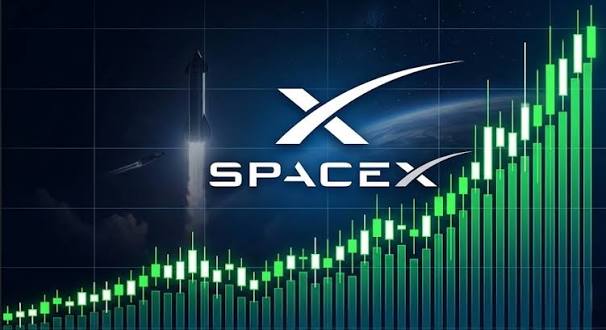
SpaceX’s recent public debut was widely celebrated as one of the most successful IPOs in modern financial history. The offering generated unprecedented capital inflows and immediately positioned the company among the most valuable publicly traded firms ever introduced to the market.
However, beneath the surface of this headline success lies a controversial financial outcome: a massive amount of potential value was not captured during the offering process. Instead of maximizing proceeds from investor demand, a significant “first-day pop” in share price created a gap between the offering price and market valuation.
This phenomenon, often referred to as money “left on the table,” has become a central point of debate among analysts examining the efficiency of the IPO structure and its long-term implications for SpaceX’s capital strategy.
Understanding the $17 Billion “Left on the Table” Effect
The core issue revolves around the difference between SpaceX’s IPO pricing and the market’s immediate willingness to pay a higher price. On the first trading day, shares rose sharply, suggesting that demand significantly exceeded the initial valuation set for the offering.
According to market estimates, this price jump translated into tens of billions of dollars in unrealized proceeds—funds that could have gone directly to SpaceX’s balance sheet if shares had been priced closer to market demand.
When accounting for additional mechanisms such as the over-allotment option (commonly known as the “Green Shoe”), the total estimated value not captured in the offering rises even further, approaching the high teens in billions of dollars.
This makes it one of the largest IPO underpricing events in financial history, far exceeding previous records set by major listings in companies such as Visa, Airbnb, and Snowflake.
Why IPO Underpricing Matters for SpaceX’s Business Model
While IPO “first-day pops” are not unusual in public markets, the scale of SpaceX’s gap is particularly significant given the company’s capital-intensive structure and long-term strategic ambitions.
SpaceX is not a conventional aerospace company. Its operations span rocket manufacturing, satellite internet infrastructure, and increasingly, artificial intelligence systems. Each of these sectors requires sustained and substantial capital investment.
In particular, its expanding AI division is expected to demand significant funding for compute infrastructure, data centers, GPU clusters, and model training systems. These investments are central to SpaceX’s ambition to compete in the frontier AI landscape.
As a result, the $17 billion gap is not merely an accounting detail—it represents a meaningful difference in available funding capacity for high-priority growth initiatives.
The Capital Demands of SpaceX’s AI Expansion
One of the most critical financial pressures facing SpaceX is the rapid expansion of its AI-related operations. These initiatives require continuous investment in high-performance computing infrastructure and large-scale model development.
Recent spending patterns suggest that AI-related capital expenditures already account for a large share of total investment outlays. In some reporting periods, AI infrastructure has absorbed the majority of hardware and systems spending, indicating how central this segment has become to the company’s future strategy.
However, the pace of spending is outpacing internally generated cash flow. Even with strong revenue contributions from SpaceX’s satellite internet business, the company continues to operate with significant capital requirements that exceed its operational earnings.
This creates a structural funding gap that must be addressed through external capital, asset monetization, or equity issuance.
Cash Flow Pressure and Funding Constraints
Despite strong growth in certain business segments, SpaceX faces a persistent mismatch between cash generation and capital expenditure needs.
Over recent quarters, the company has allocated tens of billions of dollars toward infrastructure expansion while generating comparatively lower operating cash flow. This imbalance has forced reliance on external financing and strategic capital allocation decisions.
A significant portion of IPO proceeds has already been earmarked for existing obligations, including debt repayments and strategic acquisitions. This limits the amount of fresh capital available for new AI investments and future expansion projects.
As a result, the company’s liquidity cushion—while substantial—may still be insufficient to support long-term capital requirements without additional funding mechanisms.
Dilution Risk and the Role of Equity Financing
One of the most important implications of the IPO structure is the potential for shareholder dilution. If SpaceX continues to fund large-scale investments through equity issuance, existing shareholders may see their ownership stakes gradually reduced.
This risk becomes more pronounced when stock valuations are high, as equity becomes a convenient and relatively efficient currency for acquisitions and capital deployment.
Recent transactions illustrate this dynamic. Large acquisitions structured as stock deals demonstrate how high valuations enable companies to finance expansion without immediate cash outflows. However, these transactions still transfer ownership value to new stakeholders, increasing dilution pressure over time.
If future capital needs continue to exceed internal cash flow, SpaceX may increasingly rely on equity-based financing, further amplifying dilution concerns.
Why the IPO Pricing Strategy Matters
A central debate emerging from SpaceX’s public debut is whether the IPO was optimally priced. Traditional IPO structures often involve conservative pricing to ensure strong first-day performance and investor demand stability.
However, this approach can result in substantial capital inefficiency when demand significantly exceeds supply, as appears to have occurred in this case.
Alternative listing models, such as direct listings or auction-based IPO mechanisms, have been used by other major technology firms to better align market pricing with demand. These methods reduce or eliminate first-day price jumps, allowing companies to capture more of the value generated during the offering.
In SpaceX’s case, analysts argue that alternative pricing strategies might have resulted in significantly higher capital raised at launch.
Long-Term Implications for SpaceX’s Growth Strategy
Despite concerns over IPO underpricing and capital inefficiency, SpaceX remains positioned as one of the most valuable and strategically important technology companies in the world.
Its combination of aerospace infrastructure, satellite communications, and AI development creates a vertically integrated ecosystem with long-term growth potential. However, sustaining this growth will require continuous access to large-scale funding.
The central question for investors is not only how valuable SpaceX is today, but whether its capital structure is optimized to support its long-term ambitions without excessive dilution or financial strain.
Conclusion: A Tradeoff Between Market Success and Capital Efficiency
SpaceX’s IPO represents both a historic financial achievement and a complex case study in capital market efficiency. While the offering successfully attracted massive investor demand and created immediate market value, it may have also left a significant amount of capital unrealized.
That gap—estimated at around $17 billion—has important implications for the company’s ability to fund its ambitious AI and infrastructure expansion plans.
As SpaceX continues to evolve into a multi-sector technology powerhouse, the balance between valuation, funding strategy, and shareholder dilution will remain a central challenge shaping its long-term trajectory.
About The Author