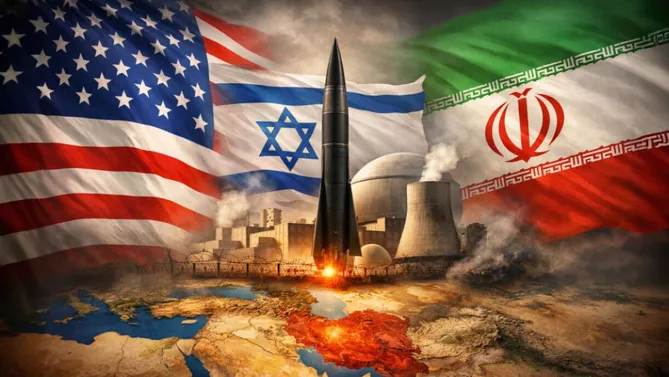
The global aviation industry was thrown into immediate turmoil after the United States and Israel launched military strikes on Iran, prompting sweeping airspace closures and mass flight suspensions across the Middle East. Major international carriers including Lufthansa, British Airways, and Wizz Air halted operations to affected destinations as the security situation rapidly deteriorated.
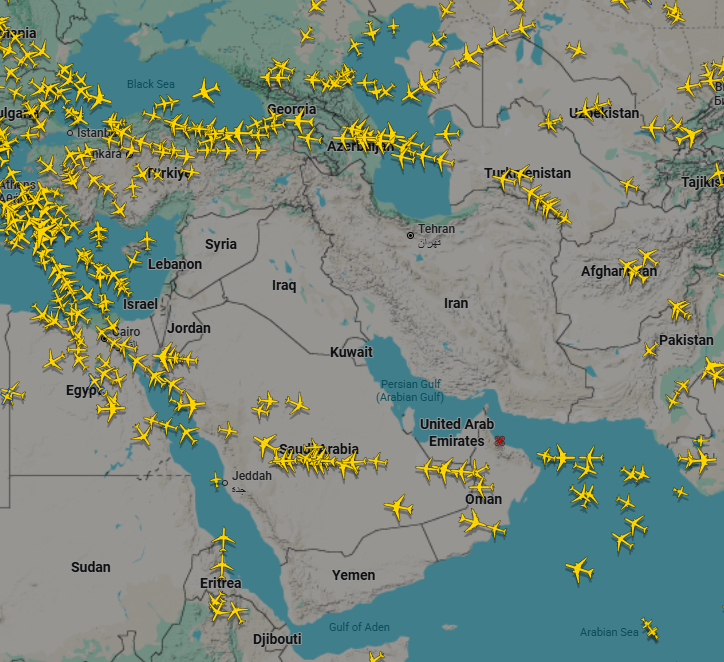
Flight tracking data revealed vast stretches of normally busy air corridors over Iran, Iraq, Kuwait, Israel, Jordan, and Bahrain suddenly emptied. The disruption has significantly impacted routes connecting Europe and Asia, increasing operational costs and creating logistical challenges for airlines and passengers alike.
This article examines the scale of the aviation disruption, the airlines affected, regulatory responses, and the broader implications for global air travel.
Widespread Airspace Closures Across the Middle East
Following the military strikes, multiple Middle Eastern countries moved quickly to close their airspace. Iran, Iraq, Israel, Jordan, Bahrain, Qatar, and Kuwait implemented restrictions, effectively shutting down some of the world’s busiest transit corridors.
According to preliminary data from aviation analytics firm Cirium, nearly 40% of flights to Israel were canceled, along with approximately 6.7% of flights across the broader region. A real-time aviation map from Flightradar24 showed aircraft diverting around the conflict zone, creating congestion in alternative air routes.
The Middle East functions as a central aviation bridge between Europe and Asia. Airports in cities such as Dubai, Doha, and Abu Dhabi serve as global transit hubs. The sudden shutdown of key airspace areas not only disrupts regional travel but also has cascading effects on long-haul international flights.
European Airlines Suspend Operations
In response to escalating military operations, the European Union Aviation Safety Agency (EASA) advised airlines to avoid affected airspace.
Several major European carriers responded immediately:
- British Airways, owned by International Airlines Group, canceled flights to Tel Aviv and Bahrain through early March and suspended services to Amman.
- Lufthansa halted flights to and from Dubai and temporarily suspended routes to Tel Aviv, Beirut, and Oman.
- Air France canceled flights to Tel Aviv and Beirut.
- Iberia suspended operations to Tel Aviv.
- Wizz Air stopped flights to Israel, Dubai, Abu Dhabi, and Amman.
- KLM, part of Air France-KLM, accelerated its suspension of Amsterdam–Tel Aviv flights.
- Virgin Atlantic began rerouting aircraft to avoid Iraqi airspace.
The Russian Ministry of Transport also confirmed that Russian carriers suspended flights to Iran and Israel.
These coordinated suspensions reflect heightened concern over aviation security risks in active conflict zones.
Gulf Carriers Face Direct Disruptions
Airlines based in the Middle East experienced immediate operational consequences due to proximity to affected airspace.
- Emirates reported disruptions to multiple routes.
- flydubai temporarily suspended operations.
- Qatar Airways and Kuwait Airways halted flights.
- Turkish Airlines canceled services to several regional destinations.
- Oman Air suspended flights to Baghdad.
These airlines rely heavily on regional transit flows and intercontinental connections. Prolonged airspace closures could significantly affect revenue streams and network stability.
Rising Operational Risks and Costs
Conflict zones pose growing risks to commercial aviation. Airlines must assess threats of missile activity, military aircraft presence, and potential misidentification incidents. The downing of civilian aircraft in past conflicts has heightened industry vigilance.
Beyond safety, operational costs are rising sharply. Rerouting flights adds flight time, increases fuel consumption, and disrupts crew scheduling. Insurance premiums for flights operating near conflict zones may also increase.
The Middle East has already been under strain due to the Russia–Ukraine war, which forced airlines to avoid Russian and Ukrainian airspace. The addition of another restricted corridor further narrows available global flight paths.
Aviation security experts note that prolonged instability could lead to precautionary evacuations or temporary shutdowns at major Gulf airports, intensifying disruption.
Geopolitical Implications for Aviation
The renewed military confrontation has diminished hopes for diplomatic resolution to Iran’s nuclear dispute with Western powers. With tensions escalating, airlines are preparing for extended airspace restrictions.
The aviation sector operates on thin margins and complex logistical planning. Even short-term closures create ripple effects across global networks. If the conflict expands or persists, travelers may face prolonged cancellations, rebookings, and higher ticket prices.
Furthermore, international aviation regulators may issue broader advisories affecting transcontinental operations. Airlines will continue monitoring government guidance and military developments to adjust flight paths in real time.
What Passengers Should Expect
Travelers with flights to or through the Middle East should anticipate:
- Flight cancellations or delays
- Rerouted long-haul journeys
- Extended travel times
- Increased ticket costs
- Limited availability on alternative routes
Passengers are advised to monitor airline communications closely and check flight status regularly.
Conclusion: A Volatile Environment for Global Air Travel
The suspension of Middle East flights following U.S. and Israeli strikes on Iran marks one of the most significant aviation disruptions in recent years. With airspace closures spanning multiple countries, airlines face mounting operational challenges and financial pressures.
The situation remains fluid. Aviation authorities, airlines, and governments are closely monitoring developments to safeguard passengers and crew while attempting to maintain essential connectivity between Europe, Asia, and beyond.
As geopolitical tensions intensify, the global aviation industry once again finds itself navigating the complex intersection of security, diplomacy, and commercial operations.
About The Author