The United States may be on the verge of a significant shift in trade policy as renewed attention focuses on Section 122 of U.S. trade law. This rarely invoked provision grants the president temporary but sweeping authority to impose tariffs in response to serious balance-of-payments concerns. With trade deficits exceeding $1.2 trillion and mounting political pressure over economic competitiveness, the debate over executive trade powers is once again at the forefront of global economic discussions.
This article examines the legal foundation of Section 122, the economic justification behind its potential use, and the international implications for key U.S. trading partners such as Japan, the European Union, and the United Kingdom.
Understanding Section 122: Presidential Authority in Trade Emergencies
Section 122 of the Trade Act provides the U.S. president with the authority to impose temporary import restrictions — including new tariffs — for up to 150 days. The legal threshold for activating this power centers on addressing “large and serious” balance-of-payments deficits or “fundamental international payments problems.”
Unlike other trade enforcement mechanisms, Section 122 does not require lengthy investigations or multilateral consultations before action is taken. It is designed as a rapid-response tool in times of economic strain. This feature makes it particularly powerful in situations where the executive branch believes immediate intervention is necessary to stabilize international payments or reduce trade imbalances.
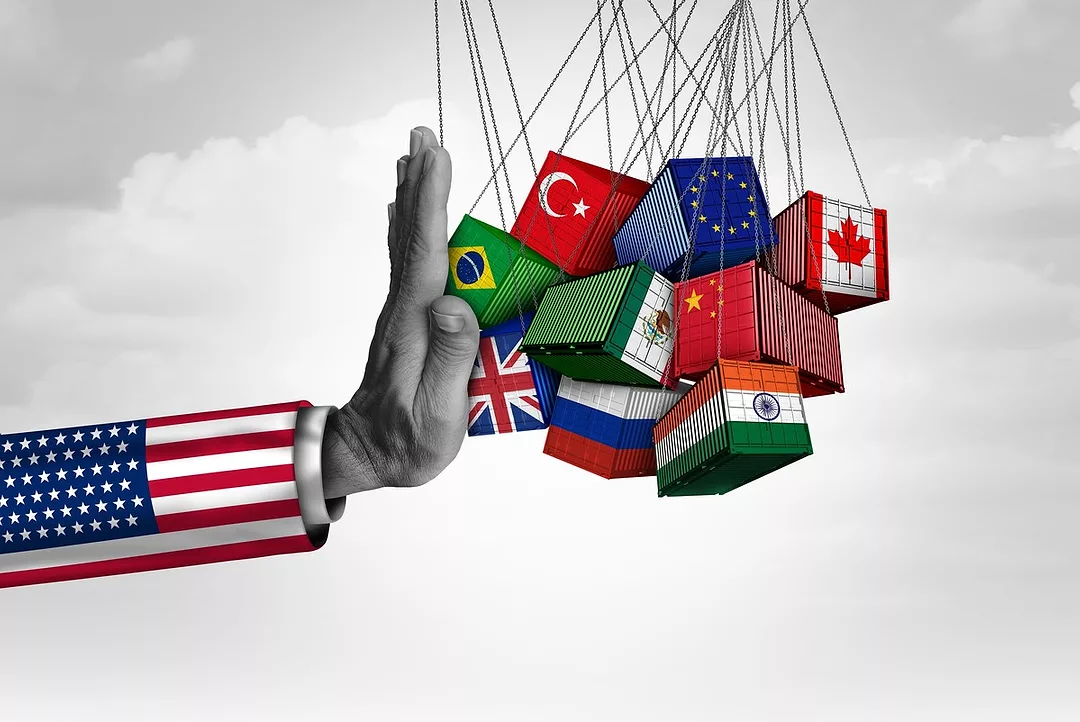
The provision allows the president to apply duties broadly — potentially affecting imports from any and all countries — rather than targeting specific nations. This universal scope differentiates Section 122 from more targeted trade remedies such as anti-dumping measures or Section 301 investigations.
The Economic Justification: A $1.2 Trillion Trade Deficit
The primary economic argument for invoking Section 122 revolves around the United States’ substantial goods trade deficit. Recent figures indicate that the country imports approximately $1.2 trillion more in goods annually than it exports. In addition, the U.S. current account deficit has reportedly reached about 4% of Gross Domestic Product (GDP).
Trade deficits, by themselves, are not inherently problematic. However, proponents of aggressive trade action argue that a deficit of this magnitude reflects structural imbalances in global commerce. These may include currency misalignments, foreign industrial subsidies, and unequal market access.
Another concern cited in support of tariff authority is the reversal of the United States’ primary income surplus. Historically, the U.S. benefited from significant overseas investment returns, offsetting portions of its trade deficit. A shift in this balance could intensify long-term financial vulnerabilities.
Supporters of tariff intervention contend that persistent deficits weaken domestic manufacturing, reduce supply chain resilience, and increase dependency on foreign producers. By contrast, critics warn that imposing broad tariffs could raise consumer prices, trigger retaliation, and disrupt global supply networks.
A Warning to Trade Partners: Stick to the Deals
Recent statements from U.S. leadership have emphasized that countries should not retreat from previously negotiated trade agreements. The warning was explicit: any nation attempting to renegotiate or withdraw from agreed trade terms could face substantially higher duties imposed under alternative legal authorities.
This signaling strategy serves multiple purposes. First, it reinforces the credibility of U.S. trade enforcement. Second, it discourages strategic backtracking by partner nations seeking more favorable terms. Third, it underscores that Section 122 is not the only mechanism available — other trade laws could impose even steeper tariffs if deemed necessary.
The message is clear: negotiated agreements are expected to be honored. Deviations may carry economic consequences.
Japan’s Response: Seeking Equal Treatment
Japan has formally requested assurances that its treatment under any new tariff regime would remain as favorable as existing agreements. As one of the United States’ largest trading partners, Japan’s concerns are both economic and strategic.
Japanese exports — particularly in automobiles, machinery, and electronics — play a significant role in bilateral trade. Any across-the-board tariff increase could affect key sectors and complicate economic planning.
Japan’s diplomatic approach signals a preference for stability. By requesting parity with existing arrangements, Japanese officials aim to protect the predictability that global supply chains require. The request also reflects a broader theme in international trade: businesses and governments alike value certainty over volatility.
European Union and United Kingdom: Maintaining Existing Agreements
Both the European Union and the United Kingdom have indicated that they intend to adhere to trade deals already finalized with the United States. This position suggests a desire to avoid escalation and maintain continuity in transatlantic commerce.
For the European Union, the stakes are substantial. The U.S. remains one of its most important export destinations, spanning sectors such as automotive manufacturing, pharmaceuticals, and aerospace. Trade friction could reverberate across multiple member states.
Similarly, the United Kingdom — navigating its independent trade relationships in the post-Brexit era — has an incentive to preserve stable access to U.S. markets. Any tariff disruption could complicate broader economic strategies.
The alignment of the EU and Britain in favor of maintaining existing deals demonstrates a shared priority: preventing sudden shifts that might destabilize investment flows and industrial output.
Potential Global Economic Impact
If Section 122 tariffs were implemented on a broad scale, the ripple effects could extend far beyond bilateral trade flows. Modern global commerce is deeply interconnected. Intermediate goods often cross borders multiple times before reaching final consumers.
Higher import duties could:
- Increase costs for U.S. manufacturers reliant on foreign components
- Raise retail prices for consumers
- Trigger retaliatory tariffs from affected countries
- Slow global trade growth
At the same time, advocates argue that temporary tariffs could encourage reshoring of production and reduce reliance on foreign supply chains. The outcome would depend heavily on the duration of the tariffs, the scope of affected industries, and the reaction of trading partners.
Strategic Leverage or Economic Risk?
The debate surrounding Section 122 ultimately reflects a broader philosophical divide in trade policy. One school of thought views tariffs as strategic leverage — a negotiation tool designed to correct imbalances and compel fairer trade practices. Another perspective sees broad tariffs as economically disruptive measures that undermine global cooperation.
The 150-day limit built into Section 122 suggests that it was conceived as a short-term corrective mechanism rather than a permanent restructuring of trade relationships. Whether temporary measures could evolve into longer-term policies remains a critical question.
Conclusion: A Defining Moment for U.S. Trade Policy
The renewed focus on Section 122 highlights the tension between domestic economic concerns and international trade commitments. With a $1.2 trillion goods trade deficit and ongoing debates about competitiveness, supply chain security, and global market fairness, the issue has significant political and economic weight.
Japan, the European Union, and the United Kingdom have all signaled a preference for continuity and stability. Whether those preferences align with U.S. strategic objectives will shape the next chapter of global commerce.
As policymakers weigh the balance between assertive trade enforcement and economic interdependence, the world watches closely. The decisions made under Section 122 could redefine not only U.S. tariff policy but also the architecture of international trade relationships for years to come.
About The Author