Transportation Stocks Lead Market Rally
After years of lagging major U.S. equities, “old economy” companies—those that move goods and people—are surging in popularity. The Dow Jones Transportation Average (DJT), which includes industry leaders such as CSX Corp. (CSX), FedEx (FDX), Old Dominion Freight Line (ODFL), and United Airlines (UAL), has outperformed the S&P 500 by 13 percentage points over the past six weeks, reaching near-record levels not seen since the financial crisis.
The rally is driven by a combination of strong economic data and investor rotation away from big tech stocks that have dominated recent years. Concerns about artificial intelligence (AI) disruption and the massive capital spending plans of tech hyperscalers are prompting market participants to diversify into sectors less vulnerable to technological automation.
Why the “Old Economy” Appeals to Investors
Transportation companies are considered highly economically sensitive. Their performance typically rises with broader economic activity because higher manufacturing output and consumer demand directly increase the volume of goods that need to be shipped.
Sameer Samana, head of global equities and real assets at Wells Fargo Investment Institute, noted that investors seeking alternatives to AI-driven stocks are drawn to companies whose core functions cannot be replicated by technology. This has created the so-called “AI-resistant” trade, highlighting transportation, logistics, and freight companies as attractive options.
Additionally, manufacturing data has strengthened the investment thesis. The Institute for Supply Management (ISM) reported that manufacturing activity expanded at the fastest pace since 2022 in January. This signals increased demand for freight and shipping services and a healthy economic backdrop, providing further tailwinds for transportation stocks.
Data and Market Signals Fuel Momentum
Recent economic indicators have further supported the sector:
- The ISM manufacturing index showed expansion, suggesting higher shipments and transport demand.
- A stronger-than-expected jobs report indicated stability in the labor market, reinforcing confidence in economic growth.
Mark Hackett, chief market strategist at Nationwide, explained that increased manufacturing activity directly drives transportation demand. Additionally, improved economic signals act as technical triggers for investors to rotate into stocks likely to benefit first from growth, such as railroads, trucking, and cargo carriers.
This combination of data and structural factors has helped the DJT reach new all-time highs, creating momentum in the sector.
Mixed Outlooks Across Transportation Sub-Sectors
Despite the rally, some analysts urge caution, suggesting future gains may be uneven across the group:
- Citigroup analyst Ariel Rosa downgraded four trucking stocks, including Old Dominion, noting that improved economic conditions were largely priced in.
- Leuthold Group’s Greg Swenson described airlines, railroads, and cargo as a “mixed bag,” expressing optimism mainly for air freight and logistics.
- Benchmark analyst Christopher Kuhn highlighted that trucking stocks could continue to benefit if demand picks up, as incremental revenue, volume growth, and pricing power can significantly boost margins.
Kuhn emphasized that even modest growth in these areas could produce “pretty big incremental margins” for trucking companies, indicating the rally may still have room to run.
Investor Takeaways: Diversification and AI Resistance
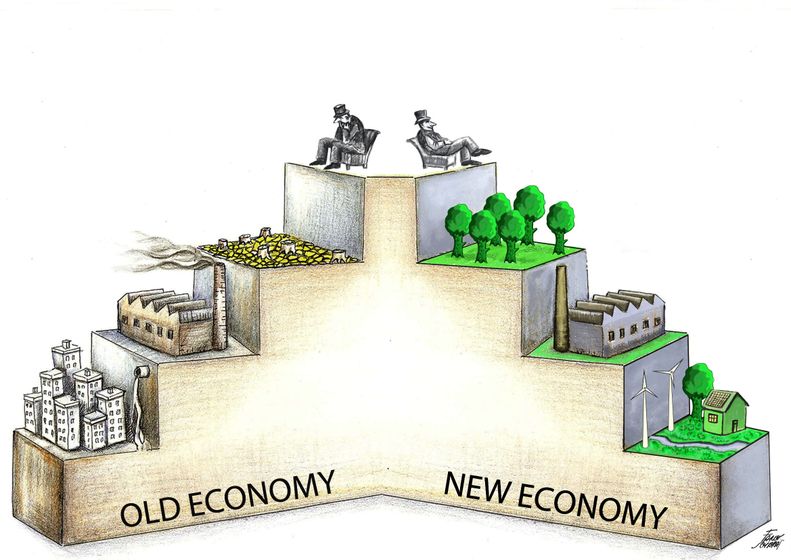
The resurgence of “old economy” stocks illustrates a broader trend in equity markets: rotation from high-growth tech and AI-dependent sectors to traditional industries that are resilient to automation. Transportation, logistics, and freight companies provide exposure to economic growth while being less susceptible to AI disruption.
Key considerations for investors include:
- Economic sensitivity: Transportation stocks benefit from rising manufacturing output and consumer demand.
- AI-resistant positioning: Core operations are difficult to automate fully.
- Valuation awareness: Some analysts warn that parts of the sector may already reflect current economic strength.
- Sub-sector differentiation: Airlines, trucking, and railroads may perform differently depending on demand dynamics and pricing power.
As investors balance high-tech enthusiasm with traditional economic plays, transportation stocks are emerging as a favored option for those seeking a safer, growth-linked alternative in a market increasingly wary of AI hype.
Conclusion: The Old Economy’s Moment
The Dow Jones Transportation Average’s recent surge signals renewed investor confidence in sectors tied directly to the real economy. While risks and mixed performance across sub-sectors remain, strong manufacturing data, labor market stability, and the AI backlash are driving a rotation into companies that move goods, freight, and people.
For market participants, the lesson is clear: even in an era dominated by AI and tech-driven growth, the fundamentals of the “old economy” remain powerful and profitable. Transportation stocks may continue to outperform as investors seek balance, stability, and AI-resistant exposure in their portfolios.
About The Author