Rising US–Iran Tensions Trigger Strategic Military Adjustments
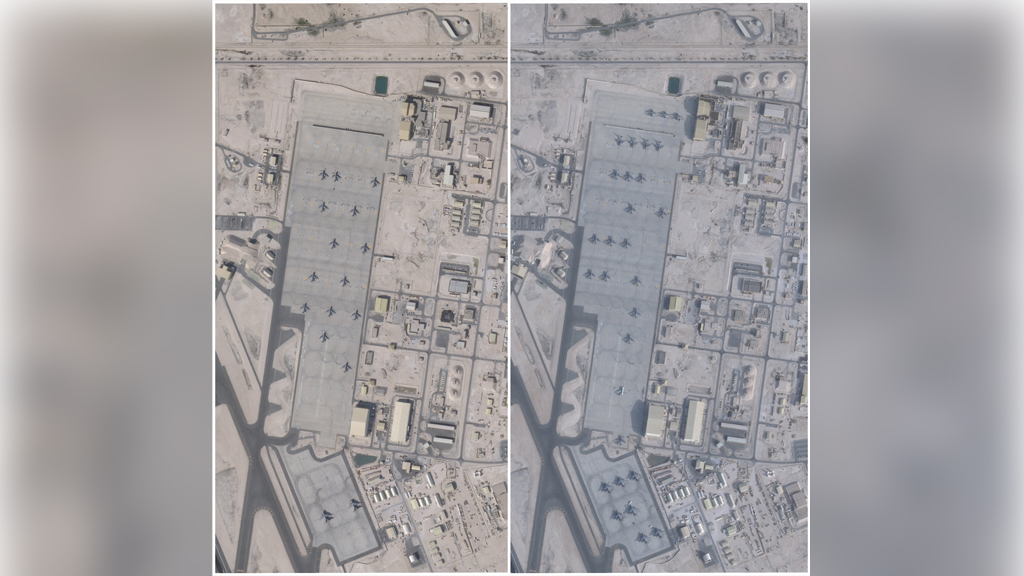
The United States has repositioned key missile defense systems at its largest Middle Eastern military installation in Qatar, according to newly analyzed satellite imagery. The move, which involved mounting Patriot missile batteries onto mobile truck launchers instead of keeping them in semi-permanent stations, signals a significant shift in defensive posture as tensions with Iran continue to escalate.
Al-Udeid Air Base, located southwest of Doha, serves as the central hub for U.S. air operations across the region. Recent satellite photos indicate that Patriot missile systems at the base were mounted on M983 Heavy Expanded Mobility Tactical Trucks (HEMTT), enabling faster deployment and repositioning in the event of an Iranian retaliatory strike.
The adjustment reflects growing concerns in Washington over regional instability, particularly as diplomatic efforts to ease confrontation with Tehran remain fragile.
Satellite Imagery Reveals Enhanced Mobility at Al-Udeid Base
Independent satellite analysis conducted in early February shows that several MIM-104 Patriot air defense systems were visibly mounted on mobile platforms at al-Udeid. This configuration contrasts with their typical semi-static deployment in fixed launcher stations.
Military analysts note that mobility significantly enhances survivability and operational flexibility. By placing missile systems on heavy tactical trucks, U.S. forces can:
- Rapidly relocate air defense assets to alternative sites
- Reduce vulnerability to pre-targeted strikes
- Improve response time against aerial threats
- Adjust defensive perimeters based on real-time intelligence
According to imagery assessments, as many as ten Patriot systems were stationed in mobile configuration at the start of February. It remains unclear whether they are still positioned on trucks.
This shift underscores heightened operational readiness amid growing speculation about potential U.S. military action against Iran.
Trump’s Warning and Ongoing Diplomatic Efforts
President Donald Trump has publicly warned that military action remains on the table in response to Iran’s nuclear program, ballistic missile development, and regional proxy activities. While negotiations to prevent open conflict are reportedly ongoing, Washington has maintained a firm stance, increasing pressure on Tehran through both rhetoric and military positioning.
Iran’s Revolutionary Guards have responded with their own warnings, stating that any attack on Iranian soil would prompt retaliation against U.S. bases throughout the Middle East.
Given the dense network of American installations in the region—including bases in Iraq, Jordan, Kuwait, Saudi Arabia, Bahrain, the United Arab Emirates, Oman, Turkey, and on Diego Garcia in the Indian Ocean—the risk of escalation carries broad strategic implications.
Broader Military Build-Up Across the Middle East
The repositioning at al-Udeid is part of a wider regional military buildup observed through comparative satellite imagery between January and February.
Aircraft Deployment Increases in Qatar
Imagery dated February 1 showed a notable rise in aircraft presence at al-Udeid compared to mid-January. Observed assets included:
- 1 RC-135 reconnaissance aircraft
- 3 C-130 Hercules transport aircraft
- 18 KC-135 Stratotankers (up from 14 in January)
- 7 C-17 Globemaster cargo planes (up from 2 previously)
The surge in refueling aircraft and cargo planes suggests preparation for sustained air operations and logistical reinforcement capability.
Enhanced Presence in Jordan
Satellite photos from February 2 at Muwaffaq Air Base in Jordan showed:
- 17 F-15E strike aircraft
- 8 A-10 Thunderbolt attack aircraft
- 4 C-130 aircraft
- 4 unidentified helicopters
At a secondary location within the same base complex, analysts identified:
- 1 C-17 cargo aircraft
- 1 C-130
- 4 EA-18G Growler electronic warfare jets
Notably, previous imagery from late January had not shown aircraft at that secondary site, indicating a recent deployment.
The inclusion of electronic warfare aircraft suggests preparations for potential suppression of enemy air defenses in any future operation.
Iran’s Military Posture and Strategic Capabilities
Iran has signaled that it has replenished missile stockpiles following last summer’s two-week conflict with Israel, during which Israeli forces targeted Iranian nuclear and military facilities. The United States later joined that campaign.
Iran maintains several underground missile complexes near Tehran, Kermanshah, Semnan, and along the Persian Gulf coast. These hardened facilities are designed to protect ballistic missile assets from aerial bombardment.
Satellite images also captured the Iranian naval drone carrier IRIS Shahid Bagheri operating near Bandar Abbas in late January and again in early February. The vessel’s visible deployment suggests heightened naval alertness in the Strait of Hormuz—a strategic maritime chokepoint through which a significant portion of global oil shipments pass.
Why Mobile Patriot Launchers Matter
The Patriot missile system is a cornerstone of U.S. air and missile defense. It is capable of intercepting:
- Tactical ballistic missiles
- Cruise missiles
- Advanced aircraft
Mounting Patriot batteries on HEMTT trucks instead of fixed launch pads dramatically enhances survivability during high-threat scenarios.
In modern warfare, fixed installations can be pre-mapped and targeted with precision-guided munitions. Mobile systems, however, complicate enemy targeting calculations. This flexibility reduces the likelihood of catastrophic loss of defensive capability in a first strike.
For a base like al-Udeid—home to thousands of U.S. personnel and critical command infrastructure—such adaptability is strategically significant.
Strategic Implications for Regional Stability
The visible buildup of U.S. assets across Qatar and Jordan, combined with Iran’s own military preparedness, increases the risk of miscalculation.
Analysts caution that while deterrence measures aim to prevent war, they can also contribute to escalation if either side interprets deployments as preparation for imminent attack.
Key risk factors include:
- Close proximity of U.S. bases to Iranian missile ranges
- The potential for proxy forces to initiate hostilities
- Maritime incidents in the Persian Gulf
- Cyber or electronic warfare escalation
With both Washington and Tehran maintaining hardline rhetoric, the coming weeks may prove critical for diplomatic channels.
What Comes Next?
It remains uncertain whether the mobile Patriot deployment represents a temporary precaution or a longer-term shift in regional military strategy.
If diplomatic negotiations yield progress, visible military posturing could gradually decrease. However, if talks collapse or hostilities resume—particularly related to Iran’s nuclear program—the mobile defensive posture at al-Udeid and other regional bases may become standard operating procedure.
For now, satellite imagery provides a rare window into real-time adjustments in military readiness, offering tangible evidence that the geopolitical temperature in the Middle East remains high.
About The Author