Global markets have once again entered a period of heightened uncertainty, and bitcoin is feeling the pressure. As geopolitical tensions escalate and volatility surges across asset classes, investors are reassessing long-held assumptions about cryptocurrency’s role in diversified portfolios. Is bitcoin truly “digital gold,” capable of protecting wealth during crises—or is it simply another high-risk asset that falters when fear takes hold?
Recent market action suggests the latter, at least for now. While traditional safe havens such as gold have rallied to new highs, bitcoin has struggled, reigniting debate over whether crypto can function as a reliable hedge in times of global stress.
Volatility Spikes as Geopolitical Tensions Shake Markets
Market volatility surged after comments from U.S. President Donald Trump raised the possibility of military action involving Greenland, unsettling investors worldwide. The CBOE Volatility Index—often referred to as Wall Street’s “fear gauge”—jumped sharply, moving above levels typically associated with stable equity markets.
As risk aversion returned, investors quickly reduced exposure to assets perceived as volatile. Stocks sold off, particularly in growth and technology sectors, and cryptocurrencies followed the same trajectory. Bitcoin, which had been attempting to reclaim the $100,000 level for the first time in months, reversed course sharply.
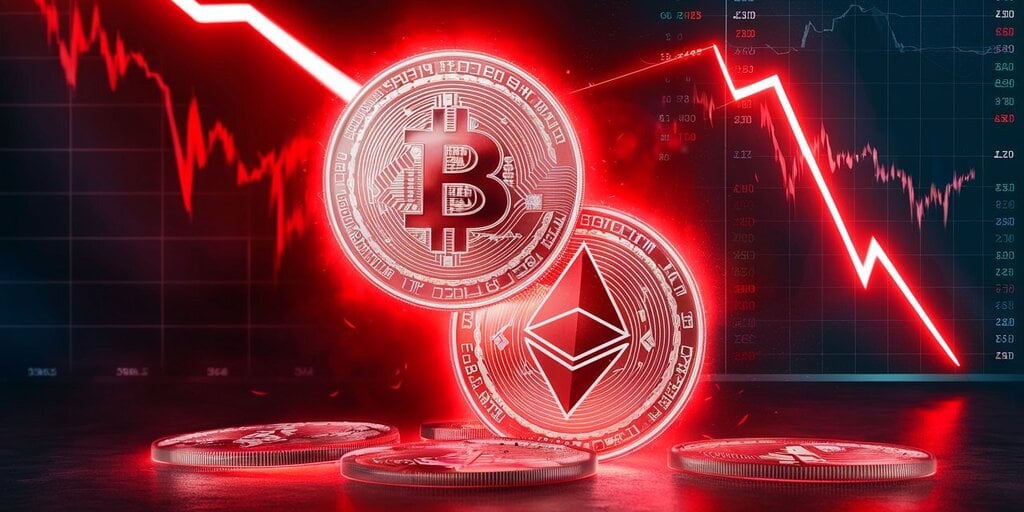
The world’s largest cryptocurrency is now trading below $90,000, erasing recent gains. Crypto-linked equities suffered even steeper declines, with major industry names posting losses exceeding 5% in a single session. The synchronized pullback highlights how closely digital assets remain tied to broader risk sentiment.
Bitcoin’s Safe-Haven Narrative Faces Another Test
For years, proponents have framed bitcoin as “digital gold”—a decentralized, non-sovereign store of value designed to thrive during economic turmoil and political instability. Veteran investors, including Ray Dalio, have argued that both gold and bitcoin can serve as protection against currency debasement and systemic risk.
However, the latest market episode is challenging that narrative. As geopolitical tensions intensified, gold prices surged to fresh all-time highs, reinforcing its traditional role as a crisis hedge. Bitcoin, by contrast, moved in the opposite direction.
This divergence has reignited a critical question for investors: if bitcoin fails to rise during periods of geopolitical stress, can it truly be considered a safe-haven asset?
A “Split Narrative” Around Bitcoin’s Role
Industry experts increasingly describe bitcoin as living in a “split narrative.” Among crypto-native investors, the asset is viewed as a long-term hedge against government overreach, monetary instability, and geopolitical conflict. For this audience, bitcoin’s fixed supply and decentralized nature make it uniquely valuable in an uncertain world.
Outside the crypto ecosystem, however, perceptions differ. Many institutional and retail investors continue to trade bitcoin as a high-beta asset—one that amplifies broader market movements rather than offsetting them.
This distinction helps explain recent price action. When volatility rises and investors seek safety, capital tends to flow into assets with long track records of stability. Bitcoin, still relatively young and highly volatile, is often treated as something to reduce rather than accumulate during turbulent periods.
Why Bitcoin Underperforms Gold During Crises
Gold’s resilience during market stress is rooted in centuries of history. It has functioned as a store of value across civilizations, currencies, and political regimes. Bitcoin, despite its technological innovation, lacks that historical depth.
Academic research supports this distinction. Studies examining the correlation between gold and bitcoin have found that while the two assets moved together during certain periods—particularly between 2022 and 2024—the relationship has weakened. In recent crises, gold has reasserted itself as the preferred hedge, while bitcoin has behaved more like a speculative asset.
One reason is existential risk. Unlike gold, bitcoin relies on digital infrastructure that could theoretically be disrupted by technological failures, regulatory crackdowns, or security breaches. These vulnerabilities undermine its appeal as a crisis-proof asset.
As one prominent academic noted, while bitcoin shares some characteristics with gold, it is “hardly a safe-haven asset” when stress tests are applied.
Risk Asset Behavior Dominates Short-Term Trading
From a market mechanics perspective, bitcoin’s recent decline aligns with its historical behavior during periods of elevated volatility. When fear rises, investors tend to seek liquidity and certainty. Bitcoin, which can experience double-digit percentage swings in short timeframes, often falls victim to this flight to safety.
This pattern reinforces the idea that bitcoin behaves more like a risk asset in the short term, regardless of its long-term philosophical appeal. During market drawdowns, it trades alongside growth stocks, technology shares, and other speculative investments.
That reality complicates portfolio construction. Investors who expected bitcoin to hedge geopolitical risk may find that it instead increases volatility during precisely the moments when stability is most desired.
Gold and Bitcoin: Complementary, Not Competing?
Despite bitcoin’s recent underperformance, some analysts caution against viewing gold and cryptocurrency as mutually exclusive. Rather than choosing one over the other, they argue that each asset plays a different role across market cycles.
Historical data suggests that gold tends to perform best during periods of acute stress, while bitcoin often shines during recoveries when risk appetite returns. In this framework, gold acts as protection during the downturn, and bitcoin captures upside during the rebound.
This approach reframes the debate. Instead of asking whether bitcoin replaces gold, the more productive question may be how the two assets can coexist within a diversified portfolio, each serving a distinct function.
What Could Drive Bitcoin Higher Again?
If geopolitical turmoil alone is insufficient to lift bitcoin prices, what catalysts could reignite momentum?
One potential driver is regulatory clarity. A proposed piece of U.S. legislation known as the Clarity Act aims to establish a comprehensive regulatory framework for digital assets. Supporters argue that clearer rules would reduce uncertainty, encourage institutional adoption, and unlock new capital inflows.
However, progress has stalled. Disagreements between traditional financial institutions and major crypto companies have delayed the bill, highlighting the political and economic complexities surrounding regulation. While bipartisan support exists in principle, consensus on implementation remains elusive.
Market observers estimate that the probability of near-term passage is below 50%. Still, even incremental progress could boost investor confidence and provide a tailwind for crypto prices.
The Bigger Picture: Identity Crisis or Growing Pains?
Bitcoin’s struggle during the latest volatility spike underscores an unresolved identity crisis. Is it a hedge, a risk asset, or something entirely new?
The answer may depend on time horizon. Over long periods, bitcoin’s scarcity and decentralization could support its role as a store of value. Over short periods, its price behavior continues to reflect speculative trading dynamics.
For investors, this distinction is crucial. Treating bitcoin as gold may lead to disappointment during crises. Treating it as a volatile growth asset, on the other hand, allows for more realistic expectations around drawdowns and recoveries.
Conclusion: Bitcoin’s Role Remains Unsettled
As volatility returns to global markets, bitcoin’s underperformance relative to gold is forcing investors to reassess long-standing assumptions. Despite its promise as a non-sovereign store of value, the cryptocurrency continues to trade like a risk asset when fear dominates.
That does not invalidate bitcoin’s long-term potential—but it does suggest that its role as a crisis hedge remains unproven. For now, traditional safe havens continue to shine when uncertainty rises, while digital assets wait for catalysts that favor risk-taking rather than risk avoidance.
Until that dynamic changes, bitcoin’s place in investor portfolios will remain a topic of active debate—one shaped as much by market psychology as by technology itself.
About The Author