Davos Opens Under the Shadow of Trade Conflict
The World Economic Forum in Davos has long served as a platform for global cooperation, economic dialogue, and diplomatic signaling. This year, however, it opened amid heightened tension, uncertainty, and growing unease among investors and policymakers alike. At the center of the storm stands U.S. President Donald Trump, whose revived tariff threats and aggressive posture toward Greenland have unsettled markets and disrupted trade relationships that were only recently reestablished.
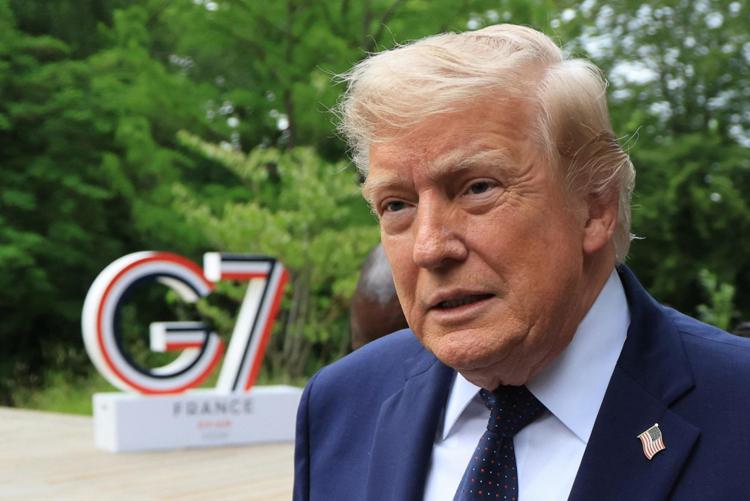
Trump’s arrival in Switzerland was closely watched by business leaders, diplomats, and financial institutions seeking clarity on whether the latest escalation represented a negotiating tactic or a deeper shift in U.S. foreign and economic policy. While the president attempted to reassure audiences by ruling out the use of “excessive force” to acquire Greenland, his rhetoric and policy threats signaled that economic pressure remains a core tool of his strategy.
The result is a complex mix of diplomacy, coercion, and market anxiety—one that raises serious questions about the durability of global trade agreements and the future of transatlantic relations.
Greenland at the Center of a Global Economic Dispute
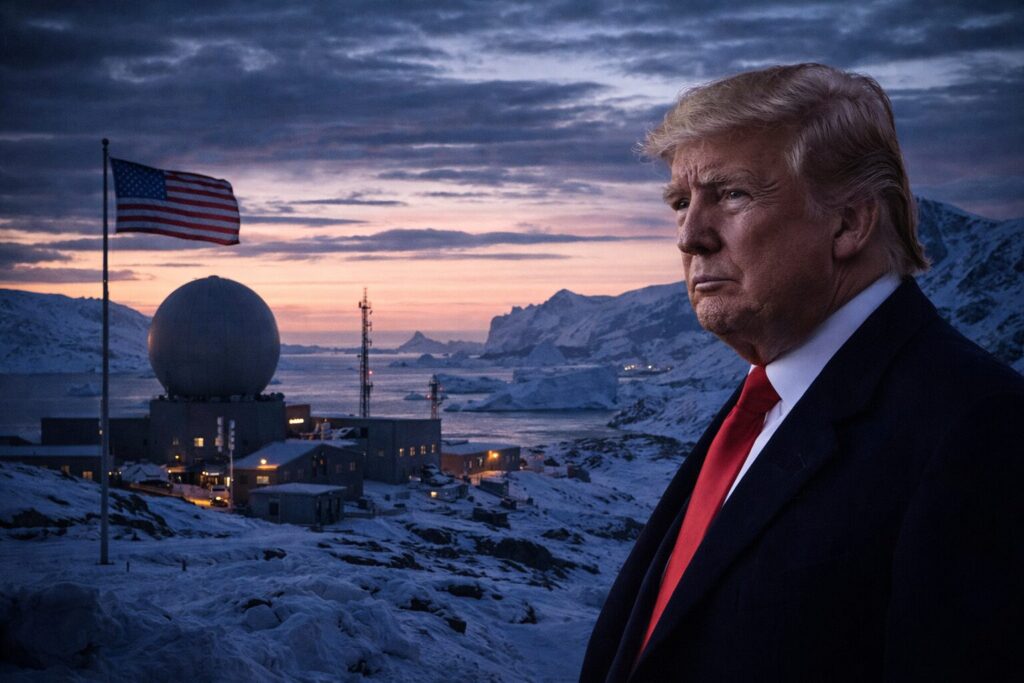
Greenland, a semi-autonomous territory under Danish sovereignty, has become an unlikely focal point of global trade tensions. President Trump has made no secret of his desire for the United States to acquire the strategically located Arctic territory, citing its geopolitical importance, natural resources, and role in national security.
Speaking at Davos, Trump called for “immediate negotiations” over Greenland, framing the issue as a matter of opportunity rather than confrontation. Yet his language carried a clear warning. He suggested that cooperation would be rewarded, while refusal would carry long-term consequences for those involved.
Although Trump publicly ruled out the use of excessive force, his broader approach leaves little doubt that economic leverage is central to his strategy. Tariffs, trade restrictions, and diplomatic pressure have emerged as the primary tools aimed at compelling European cooperation.
This approach has fundamentally altered the nature of the discussion. What might once have been a diplomatic disagreement between allies has evolved into a high-stakes economic standoff with global implications.
Tariffs as Leverage: A New Phase in US-Europe Relations
Trump’s tariff threats represent one of the most aggressive uses of trade policy against allied nations in recent history. Over the weekend preceding the Davos summit, the president announced plans to impose a 10% tariff on goods from eight European countries, with rates potentially rising to 25% by June if negotiations over Greenland fail to produce an agreement.
The proposed tariffs would apply broadly to all goods exported to the United States and could take effect as early as February. Such measures would mark a dramatic escalation in economic pressure, particularly given that they target countries traditionally considered close partners rather than strategic rivals.
European leaders responded swiftly. The European Parliament announced it would freeze the ratification process of a pending trade agreement with the United States, signaling that Trump’s tactics had crossed a political red line. Several EU capitals have also begun discussing retaliatory tariffs that could target over $100 billion worth of American exports.
France has emerged as one of the most vocal opponents of Trump’s approach. After President Emmanuel Macron rejected Trump’s call to join a U.S.-led peace initiative, the American president threatened tariffs of up to 200% on French wine and champagne. The move underscored how quickly trade policy is being weaponized in response to political disagreements.
Market Reaction: Volatility Returns to Global Assets
Financial markets have not remained indifferent to these developments. Trump’s tariff announcements and Greenland rhetoric have contributed to renewed volatility across equities, currencies, and commodities. Investors are increasingly wary that trade disruptions could slow global growth and fragment supply chains.
European markets have been particularly sensitive, reflecting concerns that a prolonged trade conflict with the United States could undermine export-driven economies. At the same time, the U.S. dollar has experienced fluctuations as traders assess whether tariffs and diplomatic friction could weaken America’s economic standing.
Safe-haven assets have benefited from the uncertainty. Demand for government bonds and precious metals has increased, signaling a shift toward defensive positioning among global investors. This pattern suggests that markets are beginning to price in a higher probability of prolonged geopolitical tension rather than a swift resolution.
Adding to investor unease is the prospect of foreign governments using financial tools as countermeasures. Denmark’s recent sale of U.S. Treasury holdings, while modest in scale, highlighted the potential for financial markets to become entangled in political disputes.
US Treasury and Legal Uncertainty Complicate the Picture
U.S. Treasury Secretary Scott Bessent sought to downplay concerns about foreign sales of U.S. government debt, noting that such transactions have occurred for years without destabilizing markets. Nevertheless, the symbolism of allies reassessing their exposure to U.S. assets has not gone unnoticed.
Compounding the uncertainty is the unresolved legal battle surrounding Trump’s global tariff authority. The U.S. Supreme Court has yet to issue rulings on several cases challenging the legality and scope of the administration’s trade measures. The absence of clarity leaves businesses and investors uncertain about the long-term enforceability of existing and proposed tariffs.
This legal ambiguity adds another layer of risk. Companies planning cross-border investments or supply chain adjustments must now account not only for political decisions but also for the possibility of abrupt judicial intervention.
Davos Message: Leadership or Coercion?
In his Davos address, Trump cast the United States as the uncontested leader of the global economy, dismissing speculation about economic decoupling or declining influence. He argued that global markets continue to rise and fall in tandem with U.S. performance, reinforcing America’s central role in the financial system.
Yet for many in attendance, the message was met with skepticism. Leadership rooted in predictability and cooperation differs fundamentally from leadership enforced through tariffs and threats. The distinction matters deeply to multinational corporations, financial institutions, and governments that rely on stable frameworks to guide long-term decisions.
As Trump prepares to meet with European leaders angered by his Greenland campaign, the path forward remains uncertain. Compromise could ease tensions and stabilize markets, while continued escalation risks entrenching divisions that may take years to repair.
Conclusion: A Defining Moment for Global Trade
The events unfolding at Davos underscore a broader transformation in global trade relations. Tariffs are no longer merely economic instruments; they have become tools of geopolitical negotiation and coercion. Greenland, once a peripheral concern, now symbolizes a deeper struggle over power, sovereignty, and economic influence.
For markets, the challenge lies in navigating an environment where political decisions can reshape trade flows overnight. For governments, the test is whether alliances forged over decades can withstand the pressures of transactional diplomacy.
As Trump’s tariff strategy continues to evolve, the world is left grappling with a fundamental question: can a global trading system built on cooperation survive an era defined by unilateral pressure?
About The Author