Apple Inc.’s once-criticized hesitation toward artificial intelligence is now proving to be a strategic advantage as investors grow uneasy about the enormous sums being poured into AI by major technology companies.
Earlier in the year, Apple shares struggled amid criticism that the iPhone maker lacked a clear AI roadmap. By the end of June, the stock had fallen 18%, making Apple the second-weakest performer among the so-called Magnificent Seven tech giants. Since then, sentiment has shifted dramatically. Apple’s shares have surged roughly 35%, while prominent AI-focused companies such as Meta Platforms, Microsoft, and even Nvidia have lagged or slipped into negative territory. Over the same period, the S&P 500 gained about 10%, and the Nasdaq 100 advanced 13%.
Market participants are increasingly rewarding Apple for its disciplined spending. Portfolio managers point out that while rivals have raced to invest hundreds of billions of dollars into AI infrastructure, Apple has remained measured and selective.
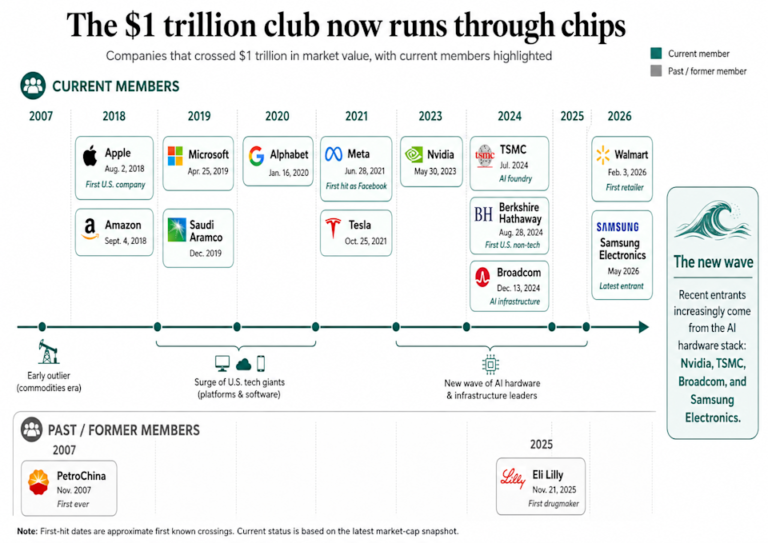
That restraint has helped lift Apple’s market capitalization to approximately $4.1 trillion, making it the second-largest weighting in the S&P 500, ahead of Microsoft and just behind Nvidia. The shift reflects broader skepticism about whether aggressive AI investment will deliver near-term returns, as well as confidence that Apple is well-positioned to benefit once the technology reaches widespread consumer adoption.
Investors view Apple as a company that can integrate AI gradually into its ecosystem—particularly the iPhone and its expanding services business—without bearing the heavy capital expenditures currently weighing on competitors. This positioning has earned the stock a reputation among some fund managers as an effective hedge against AI excesses.
However, the rally has also pushed Apple’s valuation to levels rarely seen in recent history. The stock is trading at roughly 33 times forward earnings, far above its long-term average and among the highest valuations within the Magnificent Seven, surpassed only by Tesla. Some analysts warn that this premium limits further upside and raises concerns that investors may be paying too much for Apple’s perceived safety.
Notably, Berkshire Hathaway trimmed its Apple holdings during the third quarter, even as it increased exposure to AI-focused companies. Despite the reduction, Apple remains Berkshire’s largest equity position by market value.
Technical analysts also caution that Apple’s stock may be due for a short-term pullback, especially given how far it has climbed above its long-term averages. Even so, most agree that the company’s long-term trajectory remains firmly positive.
Ultimately, Apple’s appeal lies in its unmatched consumer ecosystem. As artificial intelligence becomes profitable and mainstream, millions of users are likely to engage with it through Apple devices, reinforcing demand and boosting its high-margin services segment.
While concerns grow that AI could be forming a speculative bubble, many investors see Apple as a rare combination of growth potential and defensive stability—making it a preferred refuge in an increasingly uncertain tech landscape.
About The Author