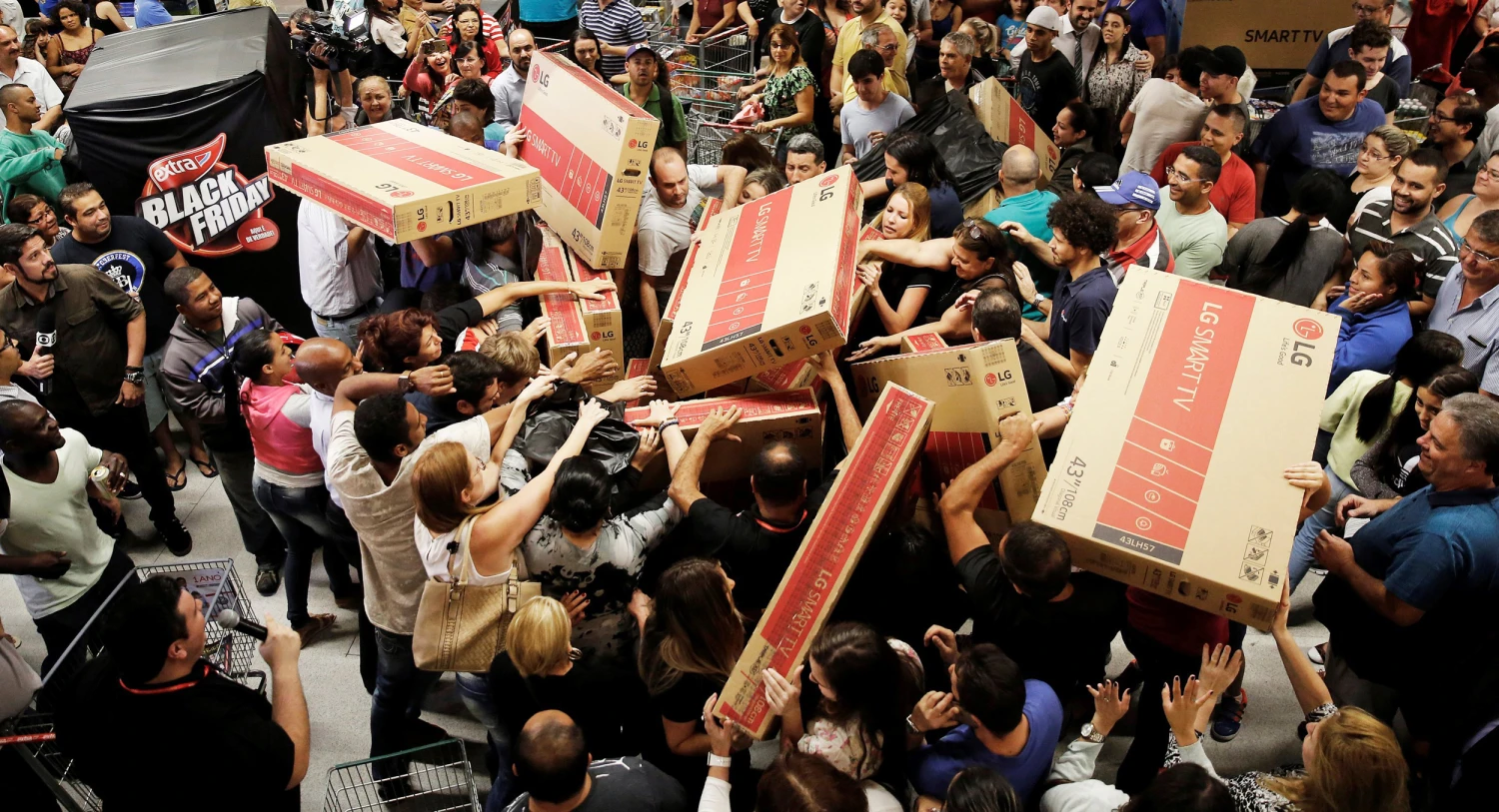
A record number of Americans are expected to head out for Black Friday this year—yet many shoppers may find the experience more frustrating than festive. Higher prices, fewer meaningful discounts, and lingering economic uncertainty are prompting consumers to spend cautiously, despite rising turnout.
The National Retail Federation (NRF) predicts 186.9 million people will shop between Thanksgiving and Cyber Monday, slightly above last year’s 183.4 million and the highest on record. But while crowds will fill stores and flood online checkout carts, overall holiday spending growth is projected to slow compared to recent years.
Many shoppers are entering the season already feeling stretched. “Everything seems so much more expensive,” said New Yorker Kate Sanner, who runs an online resale aggregator. After spending about $500 on gifts last year, she plans to reduce her budget to $300 and skip most general Black Friday deals in favor of targeted purchases.
With Thanksgiving arriving on November 27, retailers gain an extra day in the holiday shopping window—a critical period that typically accounts for roughly one-third of annual profits. Major chains launched early promotions to lock in spending: Walmart kicked off its multi-phase Black Friday rollout on November 14, Amazon began its deals week early, and Macy’s now operates a full Black Friday-dedicated online hub.
Despite the promotions, holiday sales in November and December are expected to exceed $1 trillion for the first time but grow at a slower pace of 3.7%–4.2%, compared with last year’s 4.8%.
Shoppers Pull Back as Costs Rise
Some households are reacting directly to rising costs—not just in stores, but across their budgets.
Liz Sweeney of Boise, Idaho, said her family’s discretionary spending has dropped sharply due to expected increases in healthcare premiums. “We spent nearly $2,000 on gifts in 2024,” she said. “This year our budget is $750.” Electronics and big-ticket items are off the list entirely.
Even so, US households still hold more savings than before the pandemic, according to Bank of America. Consumers remain financially stable but emotionally cautious. “Sentiment is weak, but fundamentals are strong,” said NRF chief economist Mark Mathews.
Average expected spending on gifts and seasonal items is projected to reach $890 per person, slightly below last year’s $902. Nearly two-thirds of consumers say they are waiting specifically for Thanksgiving weekend deals—an increase driven largely by older shoppers.
Deep Discounts Are Harder to Find
Veteran retail analyst Edgar Dworsky warns that traditional Black Friday pricing patterns are breaking down. With so many early sales, he says it’s becoming harder for shoppers to determine the best time to buy—and there’s no guarantee that major discounts will reappear on the actual Black Friday.
Historically, stores like Kohl’s, Macy’s, and JCPenney offered doorbuster deals on kitchen appliances for as little as $5 after stacked coupons and rebates. Many of those promotions have vanished. This year, Kohl’s is offering small appliances for $9.99 with a 15% coupon—without the extra incentives that once drove prices dramatically lower.
Retail consultant Jessica Ramirez agrees the promotional landscape has thinned. “There’s been far less activity this November—more full-price items, fewer deep discounts. And when deals do show up, they’re short-lived spot promotions.”
Walmart Still Pushes Aggressive Black Friday Pricing
Despite the broader trend of fewer bargains, Walmart is leaning into large markdowns to attract shoppers. Among the most notable deals listed on its site:
- 85-inch TCL Roku TV: $498, down from $678
- Blackstone outdoor grill: $157, down from $224
Last year’s headline deal featured a $120 discount on a 75-inch Vizio TV—suggesting Walmart is positioning televisions as a key draw once again.
A Crowded Black Friday With Cautious Spending
With tariffs raising import costs, supply issues pressuring margins, and consumers feeling squeezed, retailers face a complex holiday season. Even as record numbers of Americans turn out to shop, many will be hunting more carefully, spending more selectively, and deciding whether the deals are truly worth it.
About The Author