U.S. Targets Iran’s Financial Lifeline to Hezbollah
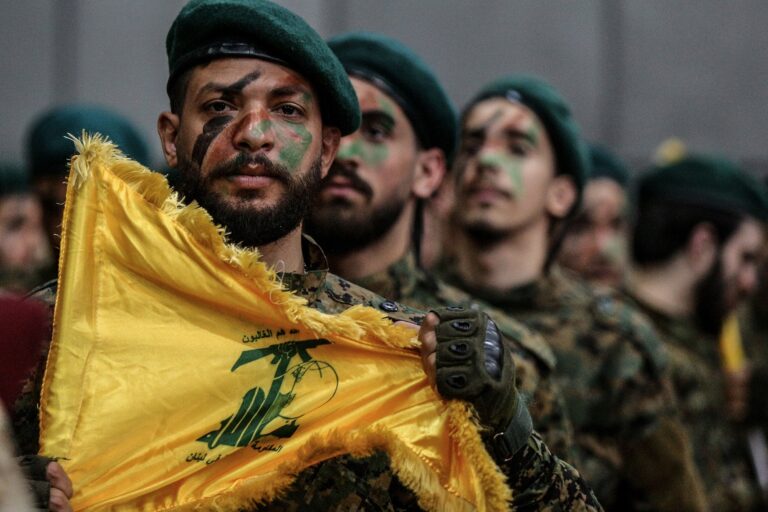
The United States is intensifying efforts to disrupt Iran’s funding of Hezbollah, aiming to exploit what it calls a rare “moment” in Lebanon’s political and security landscape, according to John Hurley, the U.S. Treasury’s undersecretary for terrorism and financial intelligence.
In an interview on Friday, Hurley revealed that Iran has funneled about $1 billion to Hezbollah in the past year, despite heavy Western sanctions that have crippled Tehran’s economy.
“There’s a moment in Lebanon now. If we could get Hezbollah to disarm, the Lebanese people could get their country back,” Hurley said in an exclusive discussion with Reuters in Istanbul.
“The key to that is driving out Iranian influence — starting with the money they pump into Hezbollah.”
Washington’s “Maximum Pressure” Strategy
The renewed push aligns with the U.S. “maximum pressure” campaign on Tehran, designed to limit Iran’s regional influence, restrict its nuclear ambitions, and weaken its support for armed groups across the Middle East.
In recent days, Washington imposed new sanctions on two individuals accused of using money exchanges to finance Hezbollah, which is designated a terrorist organization by the U.S., several Western governments, and Gulf states.
Hurley’s regional tour — covering Turkey, Lebanon, the UAE, and Israel — seeks to strengthen cooperation among allies and private banks in cutting off Iran’s funding channels.
Iran’s Economy Faces Renewed U.N. Sanctions
Iran’s economy, already weakened by years of Western sanctions, took another hit after the reinstatement of U.N. sanctions in September. The move followed the collapse of talks over Iran’s nuclear and missile programs.
Western powers accuse Tehran of secretly pursuing nuclear weapons capability, while Iran insists its program is for civilian energy purposes. Facing possible hyperinflation and a deepening recession, Iran has leaned on China, Russia, and regional allies such as the UAE to offset economic damage.
Israel Strikes Hezbollah Despite Ceasefire
Even as diplomacy unfolds, tensions on the ground remain high. Israel carried out heavy airstrikes in southern Lebanon on Thursday, targeting Hezbollah positions despite a ceasefire deal in place since 2023.
Israeli officials argue that Hezbollah is rebuilding its military strength, posing a renewed threat along the northern border.
Founded in 1982 by Iran’s Revolutionary Guards, Hezbollah has been a central force in the “Axis of Resistance” — a network of Iran-backed groups opposing Israel and Western interests.
Lebanon Caught Between Disarmament and Division
Lebanon’s government has pledged to disarm all non-state armed groups, but Hezbollah’s dual political and military role complicates enforcement. While the group has allowed Lebanese forces to seize some of its southern weapons caches, it has refused to disarm completely.
Hurley said his meetings with Middle Eastern officials emphasized the financial levers available to isolate Iran and cut Hezbollah’s funding streams.
“Even with their economy in crisis, Iran is still funneling enormous sums to terrorist proxies,” Hurley noted, calling for “collective regional action” to block those flows.
The Road Ahead
For Washington, success depends on leveraging Lebanon’s current political opening and regional fatigue with Iran’s proxy conflicts. Hurley’s mission signals a renewed focus on financial warfare, using sanctions to weaken Iran’s influence where military intervention has failed.
Whether this strategy leads to Hezbollah’s disarmament or deeper regional tension remains to be seen — but the U.S. appears determined to seize the opportunity.
About The Author