Category: Italian Vegetarian Main | Prep Time: 25 min | Cook Time: 25 min | Difficulty: Medium | Serves: 6
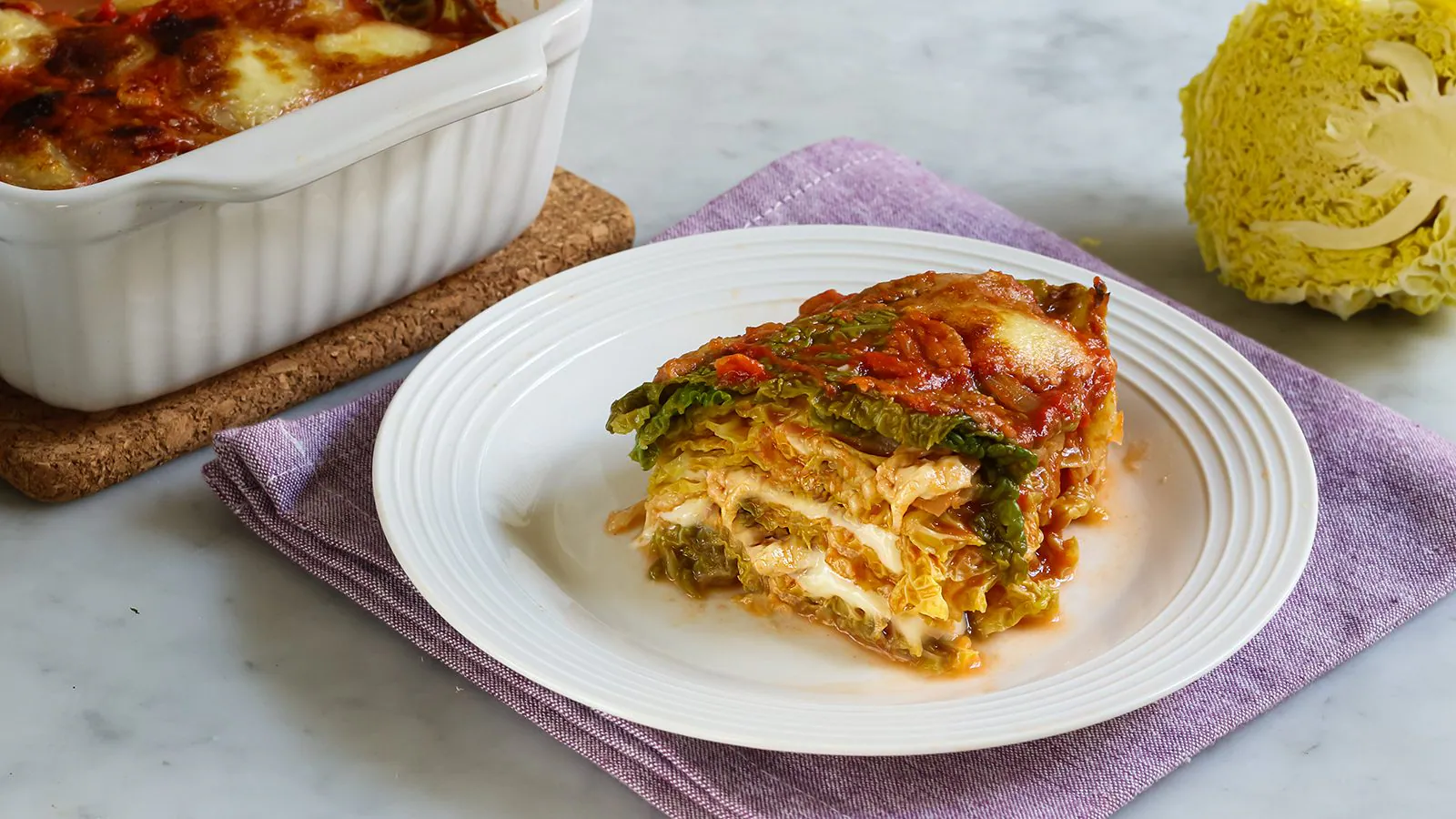
Parmigiana di Verza — or Cabbage Parmigiana — is a deliciously creative Italian dish that transforms humble winter vegetables into something elegant and full of flavor. Introduced by Antonella on È Sempre Mezzogiorno (March 7, 2025), this recipe captures the beauty of seasonal produce and traditional Italian comfort food.
Layers of tender savoy cabbage, colorful vegetables, creamy béchamel, and melted caciocavallo cheese come together to form a stunning vegetarian centerpiece. Each bite offers a perfect balance between creaminess, sweetness from the yellow cherry tomatoes, and the earthy depth of kale and cabbage.
Baked to golden perfection, this dish is proof that healthy, home-style cooking can also be indulgent and heartwarming — ideal for cozy family lunches or festive gatherings.
🛒 Ingredients
- 1.5 kg (3.3 lb) savoy cabbage
- 200 g (7 oz) green cabbage
- 10 leaves black kale (cavolo nero)
- 20 yellow cherry tomatoes, peeled and quartered
- 3 potatoes, diced
- 2 hard-boiled eggs, sliced
- 300 g (10.5 oz) caciocavallo cheese, cubed
- 300 ml (1¼ cups) béchamel sauce, seasoned with black pepper
- 1 spring onion, sliced
- 200 ml (¾ cup) vegetable broth
- 1 bunch fresh basil
- 150 g (5 oz) grated cheese (Parmigiano or Grana Padano)
- Black olive powder (optional, for garnish)
- Extra virgin olive oil
- Salt and freshly ground black pepper, to taste
Baking temperature: 170°C (340°F)
Cooking time: 20–25 minutes
👩🍳 Preparation
- Blanch the cabbage:
Separate the savoy cabbage leaves and blanch them in boiling salted water for 2–4 minutes. Drain and pat dry on paper towels. Remove the thick central ribs, chop them finely, and set aside. - Prepare the vegetable filling:
In a large saucepan, heat a drizzle of olive oil and sauté the sliced spring onion with a few basil leaves. Add the chopped green cabbage, diced potatoes, shredded black kale, the chopped cabbage ribs, and the yellow tomatoes. Season lightly with salt.
Cook over medium heat for about 15 minutes, stirring occasionally. Add two ladles of vegetable broth and continue cooking for another 15 minutes, until the vegetables are tender and fragrant. Adjust seasoning. - Assemble the Parmigiana:
Lightly oil a baking dish. Spread a thin layer of pepper-infused béchamel on the bottom. Arrange a layer of blanched cabbage leaves, then spoon over part of the vegetable ragù, some diced caciocavallo, a few slices of boiled egg, grated cheese, and another drizzle of béchamel.
Continue layering in the same order until all ingredients are used, finishing with a layer of cabbage leaves on top. - Finish and bake:
Spread a final thin layer of béchamel over the surface, sprinkle with grated cheese, black olive powder, and freshly ground pepper.
Bake in a preheated oven at 170°C (340°F) for 20–25 minutes, until golden brown on top. - Serve:
Let it rest for 10 minutes before slicing. Serve warm, drizzled with a little olive oil and extra grated cheese if desired.
🍷 Wine Pairing
Pair your Parmigiana di Verza with a Vermentino di Toscana or a light Pinot Bianco. Their freshness balances the richness of the béchamel and the savory notes of the cheese.
🌿 The Story Behind Cabbage Parmigiana
This modern version of Parmigiana di Verza comes from the creative kitchens of Italy’s favorite cooking show, È Sempre Mezzogiorno. Chef Antonella reimagines the traditional eggplant parmigiana, replacing eggplant with savoy cabbage, a seasonal staple in northern and central Italy.
The dish celebrates the Italian art of using what’s in season — hearty greens, creamy cheese, and wholesome potatoes — transformed into layers of comforting flavor.
Historically, cabbage has been a winter vegetable loved in Italian peasant cuisine, prized for its versatility and nutrition. In this recipe, it’s elevated into something beautiful yet rustic, combining colors, textures, and aromas typical of the Mediterranean kitchen.
Over the years, Parmigiana di Verza has become a symbol of creative vegetarian cooking, showing how simple, honest ingredients can rival even the richest meat dishes.
It’s a meal that nourishes body and soul — perfect for anyone who loves authentic Italian comfort food with a touch of innovation.
About The Author