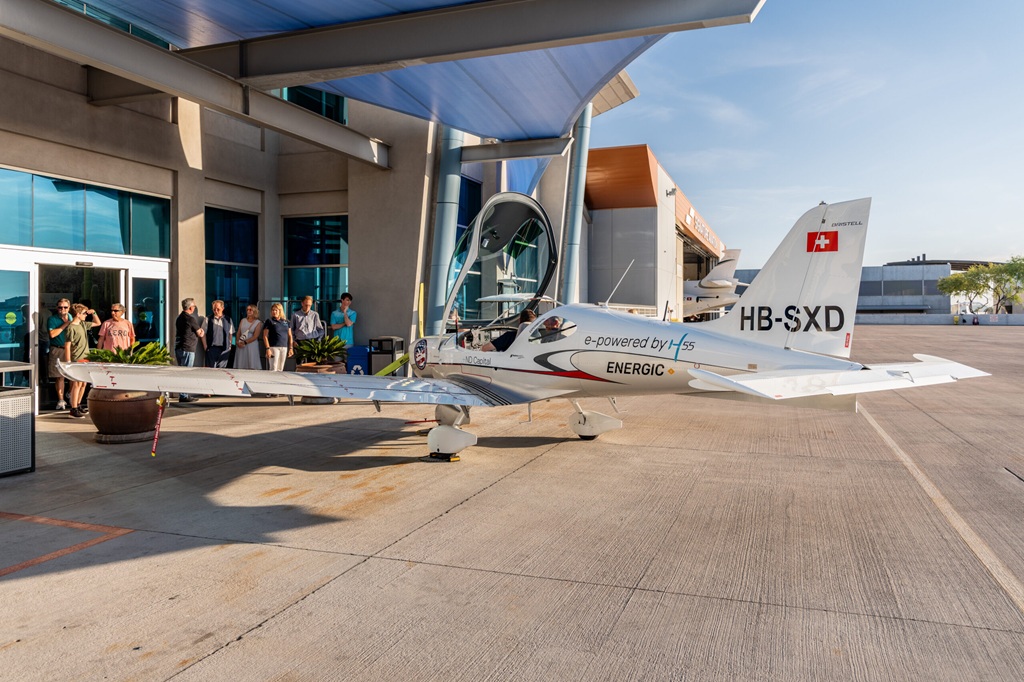
The Race to Build Large Electric Aircraft
For decades, the idea of large electric aircraft has hovered between futuristic dream and engineering challenge. The key limiting factor? Energy density — how much energy a battery can store relative to its weight, measured in watt-hours per kilogram (Wh/kg).
Experts generally agree that 500 Wh/kg is the threshold for making electric commercial aviation truly viable. Below that level, batteries simply don’t provide enough range without adding excessive weight.
Why Battery Energy Density Matters
Today’s electric vehicle (EV) batteries typically deliver 175–300 Wh/kg, far below what aircraft need.
However, battery innovation is accelerating. Chinese battery leader CATL has announced plans to reach 500 Wh/kg by 2028, a milestone that could revolutionize electric flight.
At that density, a 30-passenger aircraft weighing 8 tons could potentially travel 2,000–3,000 kilometers — enough to handle many regional routes efficiently and without emissions.
MIT’s Sodium–Air Fuel Cell: A Game Changer in the Making
While lithium batteries are improving, researchers at MIT (Massachusetts Institute of Technology) are exploring an even more radical breakthrough: sodium–air fuel cells.
Their lab-scale prototypes have demonstrated the potential to reach an astounding 1,000 Wh/kg at the system level — roughly double the energy density needed for large electric aircraft.
Unlike hydrogen-based fuel systems, which require extreme pressure or cooling, the sodium–air system uses liquid sodium metal as its fuel.
- Fuel Source: Derived from sodium chloride (table salt) — one of the most abundant materials on Earth.
- Refueling: Simple cartridge swaps, similar to changing a battery pack.
- Byproducts: The “exhaust” becomes sodium oxide, which then binds CO₂ from the air, forming sodium bicarbonate (baking soda).
It’s a carbon-capturing process, making it not just zero-emission — but potentially carbon negative.
From Experimental to Commercial: The Road Ahead
While these technologies are still in early stages, the momentum toward sustainable aviation is undeniable.
With global pressure mounting to decarbonize transportation, investments in electric propulsion, advanced materials, and energy storage are surging.
If energy density milestones continue to advance — and if sodium–air fuel cells prove scalable — the first generation of large, all-electric aircraft could take flight within the next decade.
The question is no longer if electric aircraft will happen — but how soon.
As innovations from CATL, MIT, and others push energy density beyond current limits, the dream of zero-emission, long-range electric aviation is steadily moving from science fiction to scientific reality.
About The Author