🚀 Visa’s Strong Quarter Fuels Big Questions
Visa (NYSE: V) is once again making headlines—not just for its impressive financials, but for what could be a historic shift in how money moves globally.
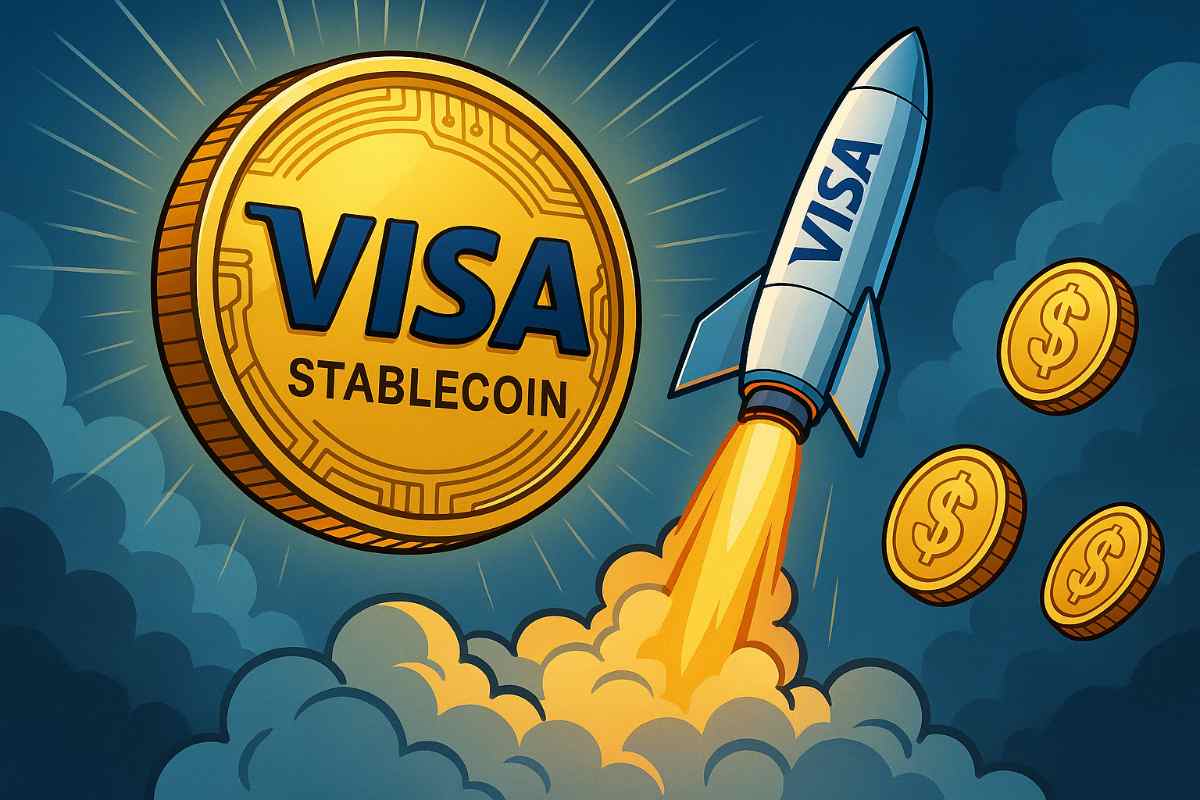
According to a new note from Mizuho Securities, Visa’s latest quarterly earnings “set up fairly well,” sparking the intriguing question: Is Visa evolving into the stablecoin of stablecoins?
💰 Earnings Beat Expectations
Mizuho analyst Dan Dolev reported that Visa’s fiscal fourth-quarter revenue rose 12%, surpassing forecasts.
After a lukewarm outlook last quarter, Visa’s performance “came in stronger than expected,” supported by healthy consumer spending across retail, travel, and fuel.
Looking ahead, Visa’s fiscal 2026 guidance projects low double-digit growth — a challenging but realistic goal given current economic stability.
🪙 Stablecoins: The Next Big Catalyst for Visa
The real excitement, however, lies in Visa’s long-term stablecoin strategy.
Stablecoins — digital assets pegged to traditional currencies — are increasingly shaping the future of digital payments. Mizuho analysts described them as “a key long-term growth catalyst for Visa.”
While many stablecoins are becoming commoditized, Visa is positioning itself as “the network of networks” — or, as Mizuho puts it, “the stablecoin of stablecoins.”
🌍 Visa Expands Its Global Stablecoin Network
Visa’s involvement in stablecoin-linked programs is expanding rapidly:
- 130+ card-issuing programs in over 40 countries
- Stablecoin spending has quadrupled year-over-year
- Visa Direct, its real-time payments platform, has grown 50% annually since 2016
Visa Direct now accounts for up to 20% of Visa’s total global debit volume, underscoring how digital payment rails are merging with blockchain-based infrastructure.
🔗 Tokenization and the Future of Banking
One of Visa’s most ambitious projects involves enabling banks to “mint and burn” their own stablecoins via the Visa Tokenized Asset Platform.
This system could give traditional financial institutions the tools to issue and manage stablecoins securely—without depending solely on third-party crypto platforms.
In effect, Visa isn’t competing with crypto; it’s building the infrastructure that connects fiat and digital currencies.
🤖 The Role of AI in Payment Innovation
Mizuho’s report also mentioned AI-powered investment strategies, including ProPicks AI, which tracks performance metrics for thousands of global companies.
Interestingly, Visa’s rival Mastercard (MA) is often evaluated alongside Visa in these AI-driven models—showing how machine learning and predictive analytics are now guiding investment decisions in fintech.
🧩 The Takeaway: Visa’s Evolution in the Digital Money Era
With strong fundamentals, expanding digital payment channels, and a clear focus on stablecoin integration, Visa is well-positioned to redefine its role in global finance.
If Mizuho’s prediction proves right, Visa might soon be known not just as the world’s largest payment processor — but as the stablecoin of stablecoins, bridging the gap between traditional finance and the decentralized future.
About The Author