1. Strategic Escalation
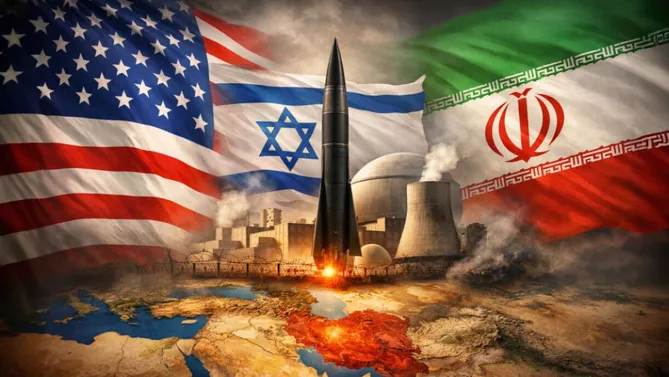
The conflict has expanded beyond direct U.S.–Israel strikes on Iran to include:
- Israeli operations in Lebanon targeting Hezbollah
- Iranian retaliatory strikes against Israeli cities
- Drone attacks on Saudi energy infrastructure
- Operational disruptions in Qatar
- Friendly-fire incident involving Kuwait
This is no longer a contained bilateral exchange; it is a region-wide escalation.
2. High-Impact Developments
Assassination of Iran’s Supreme Leader
Ali Khamenei has reportedly been killed.
This triggers:
- Immediate succession struggle within Iran’s clerical and security apparatus
- Elevated risk of internal consolidation rather than collapse
- Potential hardening of regime posture
Analysts note Iran’s political system distributes authority across institutions to preserve continuity under shock conditions.
U.S. Casualties
- A fourth U.S. service member has died.
- Chairman of the Joint Chiefs Gen. Dan Caine warned: “We expect to take additional losses.”
This signals:
- Anticipation of prolonged engagement
- Recognition of operational risk
U.S. Messaging
Defense Secretary Pete Hegseth stated:
- Objective: Destroy Iran’s missiles and naval capability
- Goal: Deny nuclear weapons capability
- Emphasis: “This is not endless war.”
President Donald Trump indicated the campaign could last four weeks.
Interpretation:
- Defined operational timeline (at least rhetorically)
- Attempt to limit domestic political fallout ahead of midterms
3. Regional Flashpoints
Kuwait Friendly-Fire Incident
Kuwait air defenses mistakenly shot down three U.S. F-15E jets.
- All six crew members ejected and survived
- Cause under investigation
Implications:
- Strain on coalition coordination
- Heightened risk of miscalculation
- Evidence of high-alert, compressed decision cycles
Energy Infrastructure Attacks
Saudi Arabia
Saudi Aramco shut its Ras Tanura refinery (550,000 bpd) following drone attack.
Qatar
QatarEnergy halted LNG production after attacks on facilities in Ras Laffan and Mesaieed.
Implications:
- Immediate supply shock risk
- Potential LNG market disruption
- Energy price volatility
Markets reacted sharply:
- Brent crude up ~8%
- Gold +2%
- Equities lower
- USD stronger
This reflects classic risk-off positioning.
Israel–Hezbollah Front
Hezbollah intelligence chief in Beirut reportedly killed by Israeli strike.
Lebanon’s Prime Minister announced intent to implement a ban on Hezbollah’s military activities — an extremely consequential domestic political move if enforceable.
Iranian Retaliation
Iran’s Revolutionary Guards launched new attacks targeting Beersheba, Israel.
This indicates:
- Continued Iranian capacity for missile/drone strikes
- No immediate de-escalation trajectory
4. Nuclear Dimension
The head of the International Atomic Energy Agency, Rafael Grossi, stated:
- No indication nuclear facilities were hit.
- No evidence comparable to prior direct strikes on nuclear infrastructure.
This reduces immediate nuclear escalation risk but does not eliminate it.
5. Broader Geopolitical Implications
Regionalization Risk
The conflict now spans:
- Iran
- Israel
- Lebanon
- Saudi Arabia
- Qatar
- Kuwait
The involvement of Gulf energy infrastructure raises global economic stakes.
Market and Economic Risk
Potential consequences if escalation continues:
- Oil > $90/barrel
- LNG supply constraints (Europe particularly vulnerable)
- Inflation reacceleration
- Central bank policy complications
- Emerging market capital flight
Political Risk (U.S.)
Pre-strike warnings reportedly highlighted:
- Midterm election vulnerability
- Voter fatigue with foreign wars
- Tension between domestic economic messaging and military escalation
Political management will now depend heavily on:
- Casualty containment
- Campaign duration
- Energy price stability
Strategic Assessment
This conflict has entered a high-volatility, multi-domain phase characterized by:
- Leadership decapitation
- Proxy retaliation
- Energy infrastructure disruption
- Coalition friction (Kuwait incident)
- Explicit expectation of further losses
The next 72 hours will likely determine whether:
- The conflict remains a high-intensity but time-limited campaign, or
About The Author