Albertsons and Safeway Store Closures: How a 100-Year-Old Grocery Chain Is Reshaping U.S. Retail in 2026
The American grocery industry is undergoing significant transformation as major retailers adjust to rising costs, changing consumer habits, and increased competition from online shopping platforms. One of the most notable developments is the ongoing wave of store closures by Albertsons, a grocery giant with roots stretching back more than a century.
As part of a broader restructuring strategy, the company has announced multiple store shutdowns across the United States that will continue into 2026. These closures reflect a major shift in how traditional supermarket chains operate and compete in today’s retail environment.
For many communities, the loss of a neighborhood grocery store can have far-reaching consequences. Beyond simple inconvenience, store closures may increase travel distances for essential goods, reduce price competition, and create additional financial pressure for households.
The Collapse of the Kroger–Albertsons Merger
One of the key factors influencing Albertsons’ current strategy was the collapse of its proposed merger with Kroger. The $24.6 billion deal, announced in 2022, aimed to create one of the largest grocery retailers in the United States.
However, the merger faced intense regulatory scrutiny from the Federal Trade Commission, which ultimately blocked the agreement in 2024 due to concerns about reduced competition in the grocery sector.
Without the merger, both companies have pivoted away from aggressive expansion plans. Instead, they are focusing on improving operational efficiency, strengthening digital services, and optimizing their store networks.
For Albertsons, that shift has meant closing underperforming stores and redirecting resources toward locations with stronger financial performance.
A Massive Grocery Network Across the U.S.
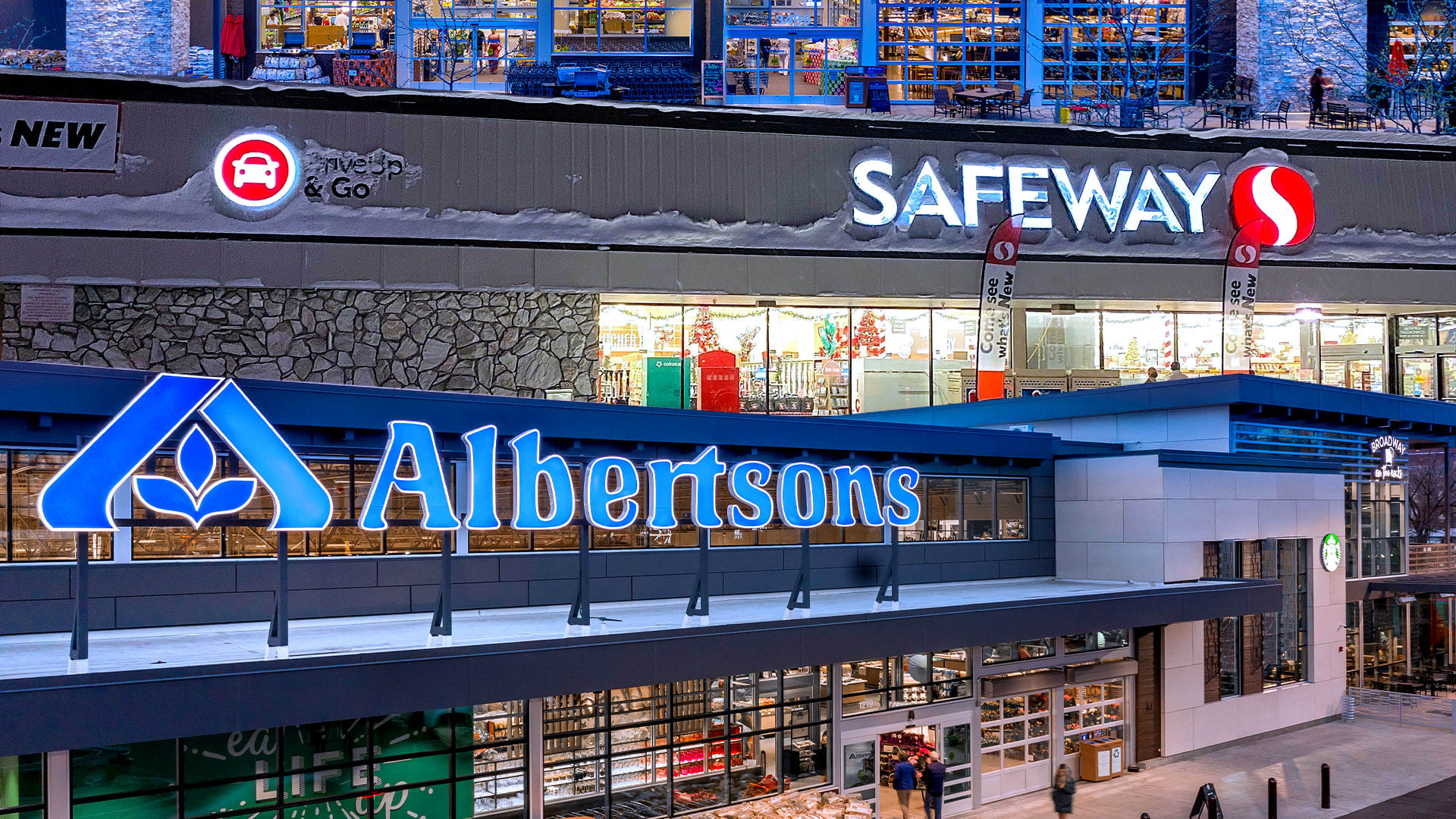
Founded in 1939, Albertsons has grown into one of the largest supermarket operators in the United States. The company currently runs more than 2,200 stores across 35 states and operates a wide variety of grocery brands.
Its portfolio includes well-known supermarket chains such as Safeway, Vons, Jewel-Osco, and ACME Markets. Other brands under the company’s umbrella include regional chains like Shaw’s and Tom Thumb.
In addition to grocery stores, Albertsons also operates pharmacies, fuel centers, distribution facilities, and food manufacturing operations. This diversified network has helped the company maintain a strong national presence despite fierce competition from discount chains, warehouse retailers, and online grocery services.
Still, maintaining such a large footprint comes with significant operational costs, which has led the company to streamline its operations in recent years.
Safeway Confirms Major Store Closure in Washington, D.C.
One of the most recent closures involves a long-standing Safeway location in Washington, D.C. The grocery store at Hechinger Mall on Maryland Avenue had served the local community for nearly four decades.
The store is scheduled to close permanently in May, while its pharmacy will stop operating several weeks earlier.
According to company representatives, the closure was influenced by the expiration of the building lease as well as a strategic reassessment of the company’s real estate portfolio. Like many retailers, Albertsons regularly reviews store performance, lease costs, and local market conditions before deciding whether to continue operating a location.
Safeway itself has a long history in the American grocery sector. Founded in 1915, the chain became part of Albertsons in 2015 through a $9.2 billion acquisition that also included the Vons supermarket brand.
Store Closures Across Multiple Albertsons Brands
The Washington, D.C. shutdown is just one example of a larger trend affecting Albertsons’ entire network. In recent years, the company has closed dozens of stores across several of its grocery brands.
Throughout 2025, closures included numerous Safeway locations as well as stores operated by other banners. For example, a Carrs supermarket in Anchorage shut down in May, while an Albertsons location in Portland, Oregon, closed later in the summer.
Additional closures also affected smaller chains within the company’s portfolio. A United Supermarkets location in Kingfisher, Oklahoma, was closed as part of the restructuring effort.
The pattern continued into 2026, with stores closing under the Vons brand in California and an Albertsons location shutting down in Las Vegas.
Although the number of closures represents only a small fraction of the company’s overall network, the decisions highlight how aggressively retailers are adapting to evolving market conditions.
Cost-Cutting Measures and Corporate Restructuring
Behind the wave of store closures is a broader effort by Albertsons to reduce expenses and improve profitability. Company leadership announced a plan to eliminate approximately $1.5 billion in costs by 2027.
The savings initiative focuses heavily on reducing selling, general, and administrative expenses. This includes consolidating offices, reducing staffing levels, and improving operational efficiency throughout the organization.
Corporate layoffs have already taken place at several office locations, including facilities in Phoenix and Pleasanton, California. These cuts are intended to streamline operations and free up capital for new investments.
According to CEO Susan Morris, the company plans to reinvest the savings into strategic growth areas. These include technology upgrades, pricing strategies, digital commerce platforms, and retail media initiatives.
Such investments are increasingly important as grocery retailers compete not only with each other but also with major e-commerce companies offering online grocery delivery.
Early Signs of Financial Improvement
Despite the challenges associated with store closures and workforce reductions, Albertsons has begun reporting signs of financial progress.
Recent financial results show modest growth in revenue and comparable sales. Net sales have increased slightly year over year, while operational efficiencies have helped lower administrative costs as a percentage of total revenue.
The company attributes these improvements partly to the reduction of expenses tied to the failed Kroger merger, as well as the early benefits of its cost-cutting program.
While the long-term success of this strategy remains uncertain, the company believes the restructuring will strengthen its ability to compete in a rapidly evolving retail market.
A Changing Retail Landscape
The challenges facing Albertsons are not unique. Across the United States, many retailers are closing physical locations as consumer shopping behavior shifts toward online and hybrid purchasing models.
Industry analysts estimate that thousands of stores could close nationwide in 2026, although new openings are also expected as retailers experiment with smaller formats and more efficient store concepts.
The shift reflects a broader transformation within the retail sector. Traditional brick-and-mortar stores are no longer the sole focus of retail strategy; instead, companies must integrate physical stores with e-commerce platforms, delivery services, and digital marketing tools.
For grocery chains, the pressure is even greater because food retail operates on relatively thin profit margins.
Impact on Communities and Local Economies
While corporate restructuring may improve efficiency, the closure of grocery stores can create serious challenges for local communities. In some areas, especially rural or lower-income neighborhoods, a supermarket may serve as the primary source of affordable food.
When a store closes, residents may have to travel farther to purchase groceries, which can increase transportation costs and reduce access to fresh produce and essential items.
Local economies can also be affected. Grocery stores often serve as employment centers and anchor businesses within shopping districts. Their departure can reduce foot traffic and weaken surrounding businesses.
The Future of the Grocery Industry
As the grocery sector continues to evolve, companies like Albertsons must balance cost management with long-term growth strategies. Investments in digital infrastructure, automation, and supply chain optimization are likely to play a major role in shaping the future of food retail.
At the same time, the importance of physical stores will not disappear entirely. Instead, many retailers are shifting toward a more flexible model that combines traditional shopping with online ordering and delivery.
For consumers, the coming years may bring fewer but more technologically advanced grocery stores, along with expanded digital services.
The ongoing restructuring at Albertsons illustrates how even long-established companies must adapt to survive in a rapidly changing retail environment. Whether these changes ultimately strengthen the company’s position—or further reshape the grocery landscape—remains to be seen.
About The Author