ECB Warns Prolonged Iran War Could Trigger Inflation Surge and Slow Eurozone Growth
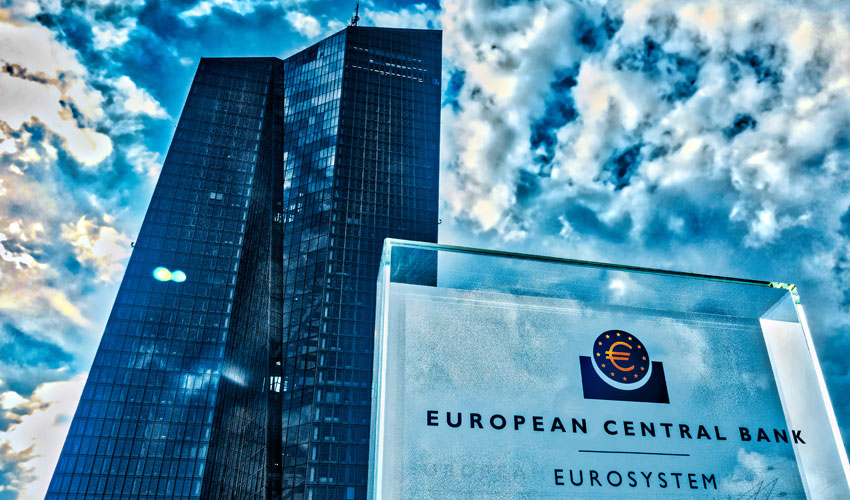
Growing geopolitical tensions in the Middle East are beginning to worry financial policymakers across Europe. Officials from the European Central Bank (ECB) have warned that if the conflict involving Iran turns into a prolonged war involving multiple countries, the eurozone economy could face a dangerous combination of rising inflation and slowing growth.
While policymakers believe the conflict may be short-lived, they are increasingly concerned about the potential economic consequences if it drags on. A prolonged war could disrupt energy markets, increase global uncertainty, and place additional pressure on the fragile economic recovery in Europe.
The situation is particularly sensitive for the ECB because the eurozone only recently managed to stabilize inflation after a period of sharp price increases. Any new surge in inflation, especially one driven by energy costs, could complicate the central bank’s strategy for managing interest rates and maintaining economic stability.
Geopolitical Conflict Raises Economic Concerns
The ongoing military conflict involving Iran has entered its second week, and its ripple effects are already being felt in global markets. Financial analysts and policymakers are closely monitoring developments as the situation spreads beyond the immediate region, affecting trade routes, commodity prices, and investor sentiment.
Senior officials at the ECB have stressed that it is still too early to fully evaluate the economic impact. However, they acknowledge that the longer the conflict continues, the greater the risk of economic disruption.
ECB Vice President Luis de Guindos noted that the institution’s current expectation is that the conflict will remain short and contained. Nevertheless, he cautioned that a prolonged war could alter inflation expectations across the eurozone.
Inflation expectations are a crucial factor in monetary policy. When businesses and consumers begin to anticipate higher inflation in the future, they adjust wages, pricing, and spending behavior accordingly. This can create a self-reinforcing cycle that makes inflation harder for central banks to control.
For now, eurozone inflation remains close to the ECB’s official target of 2%. Maintaining that stability has been a key objective for the central bank, particularly after the volatility experienced in recent years.
Lessons From the Ukraine Crisis
Many ECB policymakers are drawing comparisons to the economic aftermath of the Russian invasion of Ukraine in 2022. That conflict triggered a dramatic surge in energy prices across Europe, which quickly translated into higher inflation.
At the time, the ECB initially believed the inflation spike would be temporary. However, as energy costs continued to climb, the central bank was forced to respond with an aggressive series of interest rate increases. The rapid tightening of monetary policy marked one of the most significant rate-hiking cycles in the institution’s history.
This experience has made policymakers far more cautious about geopolitical risks.
If energy prices rise sharply again due to disruptions in the Middle East, the eurozone could face a similar scenario. Oil and gas markets are particularly sensitive to conflicts in the region because several major energy producers operate there. Any threat to supply routes or production facilities can quickly drive prices higher.
A repeat of the energy-driven inflation seen after the Ukraine invasion would create serious challenges for European economies that are still recovering from previous shocks.
Energy Prices and Inflation Pressures
Energy prices remain one of the most important variables influencing inflation in Europe. The eurozone is heavily dependent on imported energy, making it vulnerable to disruptions in global supply.
Central bankers are particularly concerned about the possibility that a prolonged conflict could push oil and gas prices higher for an extended period. If that were to happen, the effects would spread across multiple sectors of the economy.
Higher energy costs increase production expenses for manufacturers, raise transportation costs for businesses, and lead to higher prices for consumers. Over time, this can push overall inflation above the ECB’s target level.
German central bank president Joachim Nagel has warned that if energy prices remain elevated for a prolonged period, the eurozone could experience both higher inflation and weaker economic growth.
Such a scenario presents a difficult dilemma for monetary policymakers. Rising inflation typically requires higher interest rates to reduce demand and stabilize prices. However, slowing economic growth often calls for lower rates to stimulate investment and spending.
Balancing these competing forces would make policy decisions significantly more complex.
Policymakers Urge Caution and Flexibility
Other European central bankers have echoed these concerns, emphasizing the importance of caution when evaluating the situation.
Finland’s central bank governor Olli Rehn has warned against assuming that the conflict will quickly come to an end. According to him, the escalation already observed suggests that policymakers should prepare for multiple possible outcomes rather than relying on overly optimistic scenarios.
Similarly, other members of the ECB’s governing council have emphasized the need for flexibility in monetary policy decisions.
If the conflict ends quickly and energy prices stabilize, the economic consequences may be limited and temporary. In such a case, the ECB would likely maintain its current policy trajectory without significant adjustments.
However, if geopolitical tensions intensify and energy markets remain volatile, the central bank may need to reconsider its strategy.
Some policymakers have suggested that the final policy response will depend on which economic force proves stronger: inflation pressures or slowing growth. If inflation rises sharply, tighter monetary policy may be necessary. But if the conflict damages economic activity more severely, the ECB may prioritize supporting growth.
Markets Watching the Next ECB Meeting
Financial markets are closely watching the ECB’s upcoming policy meeting scheduled for mid-March. At present, economists widely expect the central bank to keep interest rates unchanged at that meeting.
However, investors will pay close attention to the ECB’s updated economic forecasts and comments from policymakers regarding geopolitical risks.
Even if the central bank does not change rates immediately, the tone of its communication could influence market expectations for future policy moves.
Geopolitical developments often create significant volatility in financial markets. Energy prices, stock indices, bond yields, and currency markets can all react rapidly to new information about conflicts or diplomatic developments.
As a result, central bank guidance plays an important role in stabilizing market expectations during periods of uncertainty.
The Broader Impact on the Eurozone Economy
Beyond inflation and interest rates, a prolonged conflict could affect the eurozone economy in several additional ways.
Trade disruptions, increased shipping costs, and declining investor confidence could all contribute to slower economic activity. Businesses may delay investment decisions if geopolitical risks remain elevated, while consumers could reduce spending due to uncertainty about the future.
Tourism and global supply chains may also face disruptions depending on how the conflict evolves.
For policymakers, these broader economic effects must be considered alongside inflation when determining the appropriate monetary policy response.
The ECB’s primary mandate is to maintain price stability, but it must also ensure that its decisions do not unnecessarily harm economic growth.
Uncertainty Remains the Key Challenge
At this stage, the biggest challenge for policymakers is the high level of uncertainty surrounding the conflict. Geopolitical events can change rapidly, making economic forecasting extremely difficult.
While the ECB hopes that the situation will be resolved quickly, officials are preparing for the possibility that tensions could escalate further.
The coming weeks will likely be critical in determining whether the conflict remains contained or evolves into a broader regional crisis with significant global economic consequences.
For the eurozone, the outcome could have important implications for inflation, economic growth, and the future direction of monetary policy. As policymakers continue to monitor developments, maintaining flexibility and readiness to respond will remain central to the ECB’s strategy.
About The Author