Shares of International Business Machines experienced their sharpest single-day decline in more than 25 years after AI startup Anthropic unveiled new capabilities that could disrupt a key pillar of IBM’s legacy business. The market reaction was swift and severe: IBM stock fell 13.2% in one trading session — its steepest drop since October 18, 2000.
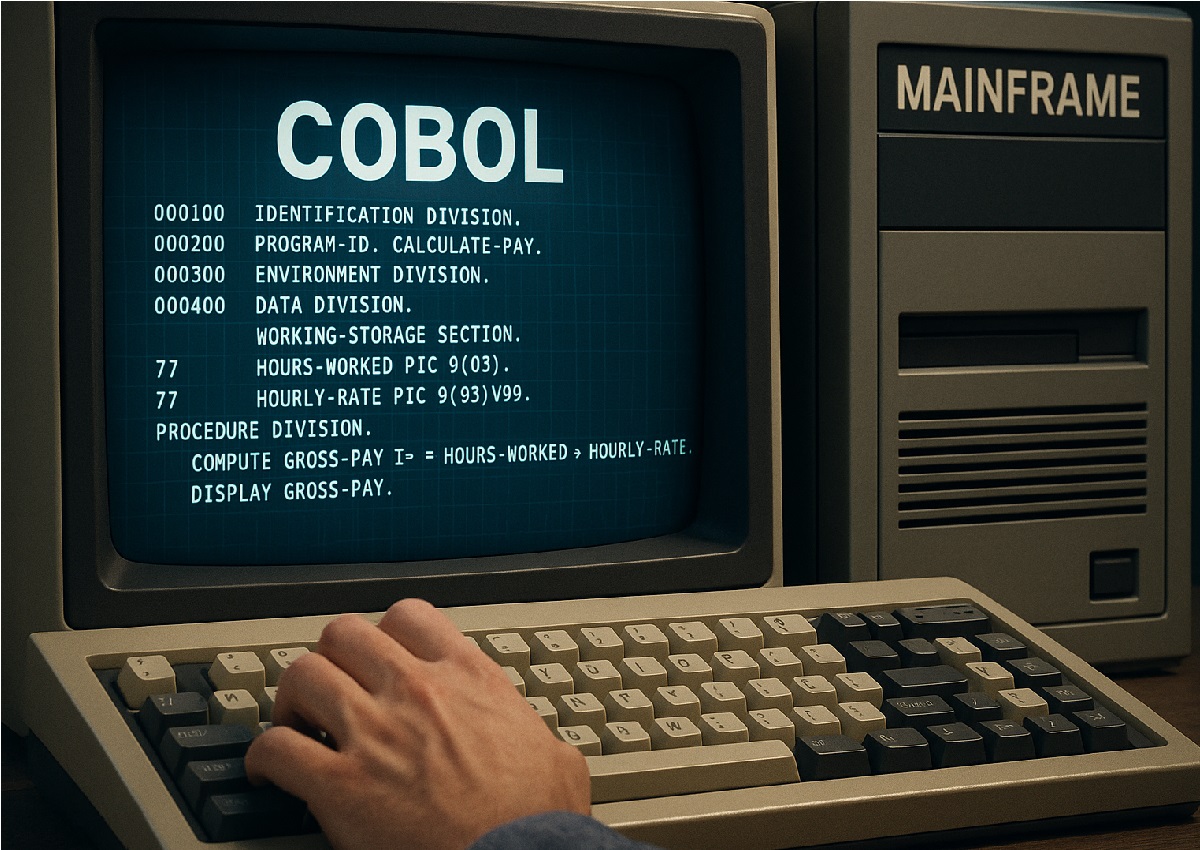
The catalyst was Anthropic’s announcement that its AI-powered tool, Claude Code, can significantly accelerate the modernization of COBOL systems — a programming language deeply embedded in IBM’s mainframe ecosystem. Investors quickly recalibrated expectations about the long-term value of IBM’s traditional consulting and modernization services, triggering a broad selloff not only in IBM but across the enterprise software and cybersecurity sectors.
This development signals a potentially transformative moment in enterprise technology, artificial intelligence, and legacy system modernization.
Why IBM Stock Fell: The AI Threat to Legacy Consulting
IBM’s historic strength lies in its enterprise infrastructure, consulting services, and mainframe computing platforms. A major portion of its long-term service revenue stems from helping organizations maintain, optimize, and modernize systems built on COBOL — a programming language that remains foundational in banking, insurance, and government IT environments.
Anthropic’s announcement directly challenges that revenue stream.
In a public blog statement, the company claimed that its Claude Code tool can automate the most labor-intensive parts of COBOL modernization. Traditionally, upgrading COBOL-based systems requires extensive manual analysis. Consulting teams spend years mapping workflows, identifying dependencies, and translating decades-old code into modern architectures.
Anthropic argues that AI can compress this process dramatically.
According to the company, tasks that once required “armies of consultants” can now be accelerated using AI-driven exploration and code analysis. It further stated that modernization timelines could shrink from multiple years to just a few quarters.
For investors, that message implied margin pressure for IBM’s consulting division — and possibly structural disruption.
The Strategic Importance of COBOL in IBM’s Ecosystem
COBOL (Common Business-Oriented Language) is not a relic of the past; it remains mission-critical infrastructure. IBM mainframes process a substantial share of global financial transactions, insurance claims, and government administrative systems.
The durability of COBOL has historically worked in IBM’s favor. Organizations dependent on legacy code have relied on IBM’s consulting expertise for system maintenance and upgrades. The complexity of these systems has served as a competitive moat.
However, AI-assisted code interpretation changes that dynamic.
If AI tools can automatically map legacy architectures, analyze dependencies, and generate modernized code frameworks, the high barrier to modernization begins to erode. This reduces reliance on long consulting engagements — a key profit center for IBM.
Markets appear to be pricing in that risk.
Anthropic’s Claude Code: A Push Toward the Application Layer
Anthropic’s Claude large language model has already been positioned as a competitor in the generative AI space. However, the rollout of specialized plug-ins — including Claude Code — signals a broader strategic ambition: moving beyond foundational models into enterprise applications.
Rather than simply offering conversational AI, Anthropic is embedding its technology directly into workflows. Code modernization is a high-value use case because it intersects with mission-critical enterprise infrastructure.
By automating:
- Codebase exploration
- Workflow mapping
- Dependency identification
- Refactoring analysis
Claude Code targets the most time-consuming phases of digital transformation.
Investors interpreted this not merely as incremental innovation but as a competitive assault on established enterprise service providers.
Software Sector Selloff: AI Disruption Fears Intensify
IBM was not alone in suffering losses. The broader software industry has faced sustained volatility amid accelerating AI capabilities.
Companies in cybersecurity and cloud observability were also hit. Shares of CrowdStrike and Datadog declined as investors assessed whether Anthropic’s new security-oriented AI tools could challenge existing platforms.
The concern is straightforward: if AI systems can automate threat detection, code analysis, and security assessments more efficiently than current enterprise software, traditional vendors may face pricing compression and customer migration.
The result has been heightened sensitivity across tech equities.
Market Psychology: From AI Beneficiaries to AI Casualties
Over the past year, AI has fueled massive valuations in semiconductor manufacturers, cloud providers, and AI-native startups. However, as AI capabilities expand into operational domains, a new phase of market repricing is emerging.
In this phase:
- AI infrastructure companies may benefit.
- Traditional software vendors face scrutiny.
- Consulting-heavy business models appear vulnerable.
IBM’s sharp decline underscores a shift in narrative. Investors are now evaluating not only who builds AI tools, but also who may be displaced by them.
This dynamic mirrors historical technology transitions, where automation compresses service margins and redefines competitive advantage.
Long-Term Implications for Enterprise IT
If Anthropic’s claims prove accurate at scale, enterprise IT modernization cycles could accelerate dramatically. Shorter project timelines would reduce transformation costs and increase organizational agility.
However, there are caveats.
COBOL systems often integrate decades of business logic, regulatory compliance structures, and proprietary workflows. Fully automating modernization carries operational risk. Enterprises may still require human oversight, validation, and testing before deploying AI-generated transformations.
Thus, the question is not whether consulting disappears — but whether its role changes.
IBM may adapt by integrating AI tools into its own service offerings. In fact, the company has aggressively invested in AI initiatives and hybrid cloud strategies. The market reaction reflects uncertainty, not inevitability.
The Broader AI Application Layer Race
Anthropic’s move reflects a broader trend in AI commercialization. Large language models are evolving from general-purpose chat systems into task-specific enterprise tools.
By targeting code modernization and security analysis, Anthropic positions itself within the high-margin enterprise software stack — often referred to as the “application layer.”
This layer historically belongs to established players with long-standing enterprise contracts. AI-native firms are now competing directly in that territory.
The stakes are significant:
- Enterprise IT modernization spending runs into hundreds of billions annually.
- AI automation could reshape pricing structures.
- Competitive barriers may shift from manpower scale to model performance.
IBM’s stock reaction suggests that investors recognize this inflection point.
Is This a Structural Shift or Short-Term Volatility?
A single trading session does not define a company’s long-term trajectory. IBM has survived multiple technology transitions, from hardware dominance to cloud services to AI initiatives.
However, a 13.2% drop — the steepest since 2000 — is symbolically powerful. It reflects how quickly market sentiment can change when disruptive technology targets established revenue models.
Several variables will determine whether this event marks a structural shift:
- Enterprise adoption speed of AI modernization tools
- Demonstrated reliability of AI-generated code transformation
- Competitive response from IBM and other incumbents
- Regulatory and security considerations
If enterprises embrace AI-led modernization aggressively, consulting-intensive models may face sustained margin compression. If adoption is gradual, incumbents may adapt successfully.
Conclusion: A Defining Moment for AI and Enterprise Software
The sharp selloff in IBM shares highlights the accelerating intersection of artificial intelligence and enterprise infrastructure. Anthropic’s claim that Claude Code can modernize COBOL systems in months rather than years challenges a long-standing industry assumption: that legacy modernization is inherently slow and labor-intensive.
Whether this proves transformative or overstated, the market response demonstrates a clear shift in investor perception. AI is no longer viewed solely as an enhancement tool — it is increasingly seen as a competitive disruptor.
As enterprise IT enters this new phase, companies that successfully integrate AI into their core strategies may thrive. Those that rely too heavily on traditional service models may face mounting pressure.
The next quarters will reveal whether this was an overreaction — or the beginning of a deeper revaluation across the global software industry.
About The Author