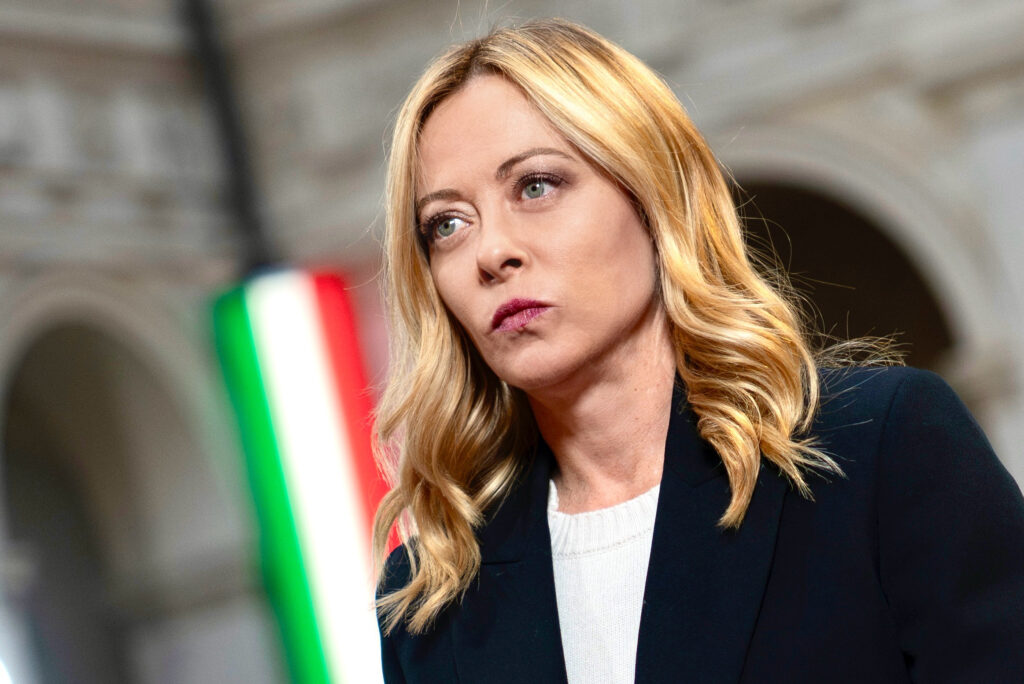
GIORGIA MELONI PRESIDENTE DEL CONSIGLIO
Milan Games Marred by Unrest as Leaders Speak Out
Italy’s Winter Olympics celebrations were overshadowed by unrest in Milan after violent clashes erupted on the sidelines of an anti-Olympics protest, prompting sharp condemnation from Prime Minister Giorgia Meloni and the International Olympic Committee (IOC).
The disturbances occurred on the first full day of competition in the Winter Games, jointly hosted by Milan and the Alpine resort of Cortina d’Ampezzo. While events inside venues proceeded as planned, scenes of disorder in the city reignited debate over the social and environmental costs of hosting global sporting spectacles.
Meloni Labels Violent Protesters ‘Enemies of Italy’
Prime Minister Meloni responded forcefully, drawing a stark distinction between peaceful demonstrators and those responsible for violence and sabotage.
In a statement posted on Instagram, Meloni praised the thousands of workers, volunteers, and security personnel supporting the Games. She contrasted their efforts with what she described as deliberate attempts to damage Italy’s international image.
According to Meloni, violent protesters not only clashed with police in Milan but were linked to acts of sabotage targeting the national rail network—actions she said harmed ordinary citizens and disrupted the country during a moment of global attention.
Her remarks reflect the hard-line law-and-order stance of her right-wing coalition government, which has repeatedly framed infrastructure attacks and street violence as threats to national cohesion.
Clashes Erupt After Protest Splinters
Authorities said the violence broke out after a small group splintered from a larger, mostly peaceful demonstration. While around 10,000 people marched through Milan to protest rising housing costs and environmental concerns connected to Olympic-related development, a faction of roughly 100 individuals reportedly turned confrontational.
Police said the group hurled bottles, firecrackers, and smoke bombs at officers, triggering brief but intense clashes in the city center. Law enforcement intervened to restore order, and no major injuries were immediately reported.
The unrest drew widespread media coverage, amplifying concerns among organizers about security and public perception.
Rail Sabotage Raises Security Concerns
Adding to tensions, Italian authorities reported multiple acts of sabotage on the national rail network near Bologna on the same day. Investigators said damaged infrastructure at three separate locations caused delays of up to two and a half hours for high-speed, intercity, and regional trains.
Although no group has claimed responsibility, the incidents echoed similar sabotage during the opening day of the 2024 Paris Summer Olympics, when France’s high-speed rail system was targeted, causing widespread travel disruption.
Italian police are investigating whether the rail damage is linked to anti-Olympics activism or broader extremist activity.
IOC: Violence Has No Place at the Games
The International Olympic Committee joined Italian officials in condemning the unrest. IOC spokesperson Mark Adams emphasized that while peaceful protest is a legitimate democratic right, violence fundamentally contradicts Olympic values.
Speaking at a press conference, Adams said the Games are intended to promote unity and peace, particularly at a time of heightened global tension. He urged focus to remain on athletes and competition rather than disruption.
The IOC has long faced criticism over the social impact of mega-events, but it has consistently rejected violent protest as a means of opposition.
Balancing Protest, Security, and Global Spotlight
The Milan clashes highlight the growing challenges facing Olympic host cities, where large-scale investment, urban redevelopment, and environmental impact increasingly spark local opposition.
For Italy, the priority now is preventing further disruption while maintaining the image of stability and hospitality that organizers hope the Games will project worldwide.
As competition continues in Milan and Cortina d’Ampezzo, authorities are expected to tighten security around both venues and critical infrastructure—seeking to ensure that the focus returns to sport rather than street unrest.
About The Author