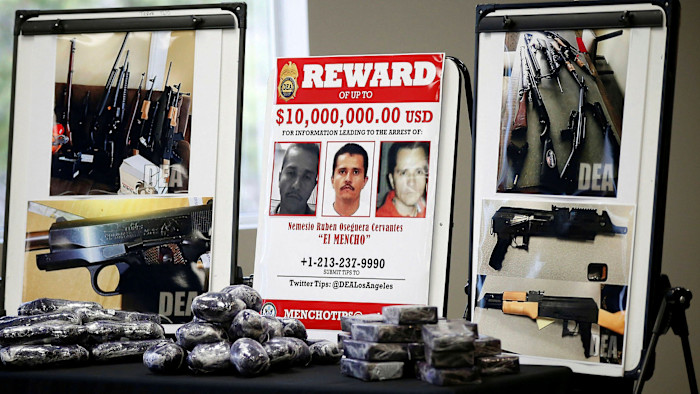
Mexican authorities have reportedly killed Nemesio Oseguera Cervantes, widely known as “El Mencho,” the notorious leader of the Jalisco New Generation Cartel (CJNG), in a high-profile military operation. The development comes as the Mexican government faces mounting pressure to tackle organized crime, including direct threats of intervention from the United States.
According to government sources familiar with the operation, Oseguera, a former police officer turned cartel kingpin, was targeted in a coordinated raid led by Mexico’s Defense Ministry. While the Mexican Security Minister declined to comment immediately, multiple reports suggest that Oseguera was killed during the attempted capture.
El Mencho: From Police Officer to Cartel Kingpin
Nemesio Oseguera emerged from a modest background to become one of Mexico’s most feared criminal figures. As the leader of the CJNG, he transformed the cartel into a continent-spanning organization, rivaling the influence of the Joaquin ‘El Chapo’ Guzman and the infamous Sinaloa Cartel.
The CJNG, originating in the western state of Jalisco, particularly the city of Guadalajara, quickly expanded its operations across Mexico and internationally. Under Oseguera’s leadership, the cartel engaged in large-scale drug trafficking, extortion, and violent territorial expansion.
El Mencho became a symbol of the cartel’s ruthlessness, operating from the shadows while consolidating control over drug routes, particularly for methamphetamine, cocaine, and heroin. His death marks a significant blow to the organization but also raises concerns about potential retaliatory violence.
Military Operation and Immediate Aftermath
The operation reportedly took place in Tapalpa, where clashes between Mexican military forces and cartel members erupted. Local authorities, including Jalisco Governor Pablo Lemus Navarro, urged residents to remain indoors, declaring a “Code Red” as violence spread across multiple federal entities.
Social media videos and news outlets captured scenes of burning vehicles, roadblocks, and armed confrontations, particularly in northern and northwestern states. Michoacan Governor Alfredo Ramirez Bedolla confirmed reports of state highways being blocked due to the unrest.
Officials emphasized that the operation was led by the Defense Ministry and was aimed at arresting Oseguera, though it ultimately resulted in his death. The White House had not responded immediately to requests for comment on the developments.
Implications for Mexico’s Drug War
El Mencho’s death represents a critical moment in Mexico’s ongoing struggle against organized crime. While the operation is a tactical success, analysts warn that it could trigger a wave of violent reprisals from the CJNG, as other cartel factions seek to assert control over lucrative trafficking routes.
The news also underscores the international dimension of Mexico’s drug conflict. The Trump administration had previously pressured President Claudia Sheinbaum to intensify anti-cartel operations and hinted at direct intervention if Mexican authorities failed to act.
The CJNG’s influence had expanded rapidly following the incarceration of El Chapo, the Sinaloa Cartel leader, highlighting the complex interplay between rival criminal organizations and state enforcement. Oseguera’s removal may destabilize cartel hierarchies temporarily, but experts caution that long-term solutions require structural reforms, intelligence-led policing, and regional cooperation.
Nationwide Security Concerns
The military operation triggered immediate concern for civilian safety. Authorities across multiple states implemented heightened security measures, while residents were warned to stay indoors. Reports of highway blockages, burning vehicles, and armed clashes illustrate the cartel’s capacity for rapid retaliation.
Experts note that historically, the death of a cartel leader often leads to short-term surges in violence, as subordinates fight for succession and rivals attempt to capitalize on the power vacuum.
Conclusion: A Turning Point in Mexico’s Drug Conflict
The reported death of Nemesio “El Mencho” Oseguera marks one of the most significant blows to organized crime in Mexico in recent years. As leader of the CJNG, he oversaw one of the most violent and expansive criminal networks in the Americas.
While the military operation demonstrates Mexico’s willingness to act decisively against high-profile cartel figures, the immediate aftermath of the raid highlights the challenges of controlling retaliatory violence and maintaining public safety.
El Mencho’s death may shift power dynamics within the CJNG and across rival cartels, but Mexico’s broader struggle against organized crime is far from over. Authorities face the dual challenge of dismantling criminal networks while protecting civilians and ensuring long-term stability across the country.
About The Author