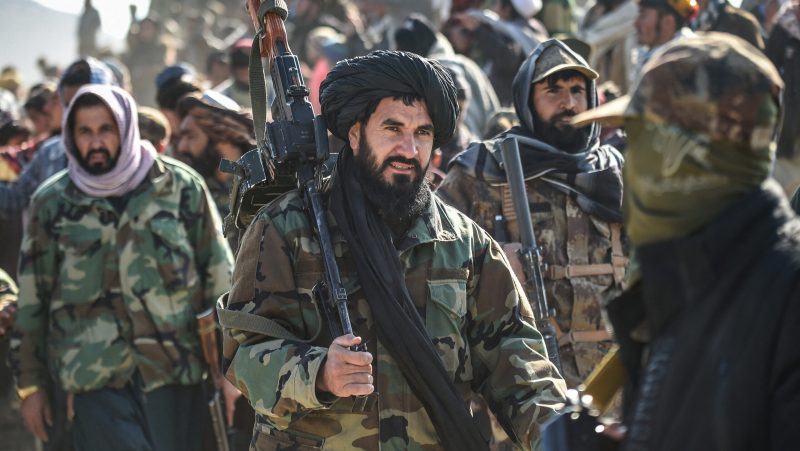
Tensions between Pakistan and Afghanistan have erupted into one of the most serious military confrontations in recent years, as Pakistani forces carried out coordinated air and ground strikes on Afghan territory. The overnight attacks targeted key cities including Kabul and Kandahar, marking a dramatic shift in relations between the two neighboring Islamic nations. Pakistani officials described the situation as “open war,” signaling a sharp escalation that threatens stability across a volatile and strategically sensitive region.
This unprecedented military action underscores the fragility of ties between Islamabad and the Taliban-led government in Kabul. For years, the two countries have been entangled in accusations, border clashes, and diplomatic strain. However, direct strikes against Taliban government forces represent a significant rupture in what was once a cautiously cooperative relationship.
Pakistan’s Airstrikes on Kabul and Kandahar
According to security sources in Islamabad, Pakistani forces launched air-to-ground missile attacks on Taliban military offices and installations in Kabul, Kandahar, and Paktia province. These operations reportedly involved precision targeting of military posts believed to be associated with cross-border militant activity.
Kandahar, long regarded as the spiritual and political heartland of the Taliban, holds immense symbolic and strategic value. Striking this city sends a strong message regarding Pakistan’s shifting military posture. Kabul, as Afghanistan’s capital, is the administrative center of Taliban governance, making it an equally significant target.
The strikes followed retaliatory actions by Taliban forces, who claimed to have attacked Pakistani military installations across the border. Both sides reported substantial casualties, though the exact toll remains unverified. Independent confirmation has been limited due to restricted access and conflicting official statements.
Speaking publicly, Pakistan’s Defense Minister Khawaja Muhammad Asif declared that patience had run out, characterizing the confrontation as a state of “open war.” This statement represents one of the most direct acknowledgments of military hostilities between the two governments in recent history.
The Long-Standing Dispute Over Militancy
At the core of the conflict lies Pakistan’s longstanding accusation that Afghanistan provides sanctuary to militants responsible for attacks inside Pakistani territory. Islamabad has repeatedly claimed that armed groups operate from Afghan soil, targeting security forces and civilians along the border.
The Taliban administration has firmly denied these allegations, asserting that Pakistan’s security challenges stem from internal issues rather than external interference. This dispute has fueled repeated skirmishes along the 2,600-kilometer frontier known as the Durand Line, a boundary that has been historically contentious and politically sensitive.
Clashes intensified after Afghanistan reportedly launched retaliatory strikes on Thursday night, prompting Pakistan’s subsequent large-scale response. The rapid cycle of attack and counterattack reflects a breakdown in diplomatic channels and mutual trust.
Military Imbalance and Asymmetric Risks
Pakistan possesses significantly superior conventional military capabilities, including advanced air power, missile systems, and a structured defense command. As a nuclear-armed state, Pakistan holds one of the most formidable military establishments in South Asia.
In contrast, Afghanistan under Taliban control lacks comparable conventional assets. However, the Taliban have decades of experience in guerrilla warfare, honed during prolonged conflict against U.S.-led forces prior to regaining power in 2021. Their asymmetric tactics could transform the conflict into a drawn-out insurgent-style confrontation, particularly in mountainous border regions.
The risk of escalation is not merely bilateral. A prolonged confrontation could destabilize border provinces, disrupt trade routes, and create humanitarian challenges for civilian populations caught in crossfire. Militancy networks could also exploit instability to expand operations, complicating counterterrorism efforts across the region.
Regional Powers Step In
The sudden escalation has triggered diplomatic concern among major regional stakeholders. Countries including Russia, China, Turkey, and Saudi Arabia have reportedly initiated mediation efforts aimed at preventing further deterioration.
Iran, which shares borders with both Afghanistan and Pakistan, has also offered assistance in de-escalation. Tehran’s involvement comes at a delicate time, as it engages in sensitive negotiations with Washington regarding its own nuclear program and the possibility of renewed sanctions or military action.
The geopolitical landscape surrounding this crisis is complex. Pakistan occupies a strategic position linking South Asia, Central Asia, and the Middle East. Afghanistan, meanwhile, remains a crossroads for regional security dynamics, particularly following the withdrawal of U.S. forces and the Taliban’s return to power.
A sustained conflict between the two countries could disrupt energy corridors, trade projects under China’s Belt and Road Initiative, and counterterrorism coordination across the broader region.
Nuclear Dimension and Strategic Stability
One of the most alarming aspects of the crisis is Pakistan’s nuclear status. While there is no indication of nuclear weapons being involved, any military confrontation involving a nuclear-armed state inevitably raises concerns about strategic stability.
International observers are particularly wary of miscalculations or rapid escalation cycles. Cross-border strikes, retaliatory shelling, and heightened rhetoric increase the risk of unintended consequences. Even limited engagements can spiral if command-and-control structures face pressure or if non-state actors exploit the situation.
That said, most analysts believe both sides have incentives to avoid full-scale war. Pakistan faces economic constraints and internal security challenges, while Afghanistan’s Taliban government seeks international legitimacy and economic stability. Prolonged warfare would undermine both objectives.
Humanitarian and Economic Implications
Beyond the military and political dimensions, the human cost of renewed hostilities could be severe. Border communities are often the first to suffer from artillery exchanges, displacement, and infrastructure damage. Trade crossings that facilitate essential goods and commerce could be temporarily shut down, affecting livelihoods on both sides.
Pakistan and Afghanistan share deep social, tribal, and economic ties. Millions of Afghan refugees reside in Pakistan, and cross-border trade remains vital for Afghanistan’s economy. Escalation threatens to disrupt these interdependencies, potentially worsening humanitarian conditions in an already fragile environment.
Diplomatic Pathways Forward
The immediate priority for regional and international actors is de-escalation. Diplomatic backchannels, confidence-building measures, and independent verification of security concerns could serve as starting points. Border monitoring mechanisms and intelligence-sharing frameworks might help reduce mistrust.
However, rebuilding trust will require addressing the root causes of the dispute—namely, cross-border militancy allegations and territorial disagreements. Without structural solutions, periodic flare-ups are likely to continue.
The international community faces a delicate balancing act. Direct intervention is unlikely, yet coordinated diplomatic engagement could prevent further escalation. Multilateral forums may provide a neutral platform for dialogue, particularly given the involvement of neighboring powers with vested interests in regional stability.
A Pivotal Moment for South Asian Security
The latest confrontation between Pakistan and Afghanistan represents more than a border skirmish. It signals a profound shift in bilateral relations, transforming former tactical alignment into overt military hostility. Airstrikes on Kabul and Kandahar mark a watershed moment that could redefine security calculations across South Asia.
Whether this crisis evolves into a prolonged conflict or is contained through diplomacy will depend on political will, regional mediation efforts, and the strategic restraint of both governments. In a region already marked by volatility and nuclear deterrence dynamics, the stakes are exceptionally high.
As developments continue, the situation demands close international attention. The future trajectory of Pakistan–Afghanistan relations may shape not only their shared border but the broader security architecture of the region for years to come.
About The Author