China’s expanding military footprint in the Indo-Pacific has entered a new phase. Recent flight data analysis indicates that a large Chinese military drone has repeatedly flown over the South China Sea while broadcasting falsified aircraft identities. These deceptive operations, tracked since late summer, suggest an increasingly sophisticated use of electronic warfare and misdirection—possibly in preparation for future contingencies involving Taiwan.
The drone flights, which appeared under various civilian and military aircraft identities, represent a notable evolution in Beijing’s so-called “grey-zone” tactics. Analysts argue that such maneuvers could serve as rehearsal drills for confusing adversaries during a crisis, particularly in a scenario involving a cross-strait confrontation with Taiwan.
False Transponder Signals: A New Layer of Military Deception
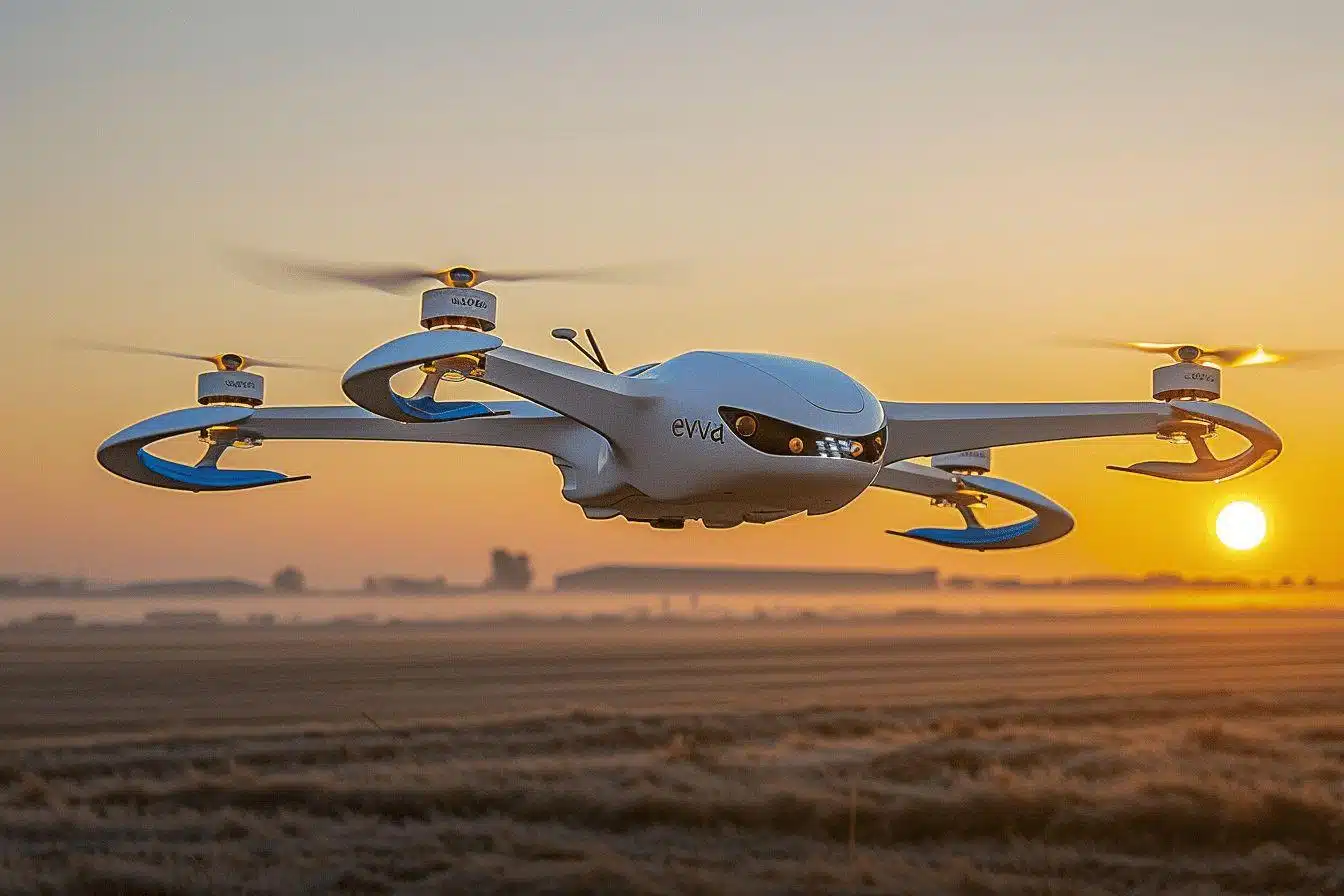
According to open-source flight tracking data, a long-endurance Chinese military drone operating under the call sign “YILO4200” has conducted more than 20 flights across the South China Sea since August. However, during these missions, the aircraft transmitted transponder signals identifying it as entirely different planes.
Among the false identities detected were a Belarusian cargo aircraft, a British fighter jet, a North Korean passenger plane, and even a private executive jet. The most frequently mimicked aircraft was an Ilyushin-62 cargo plane linked to a sanctioned Belarusian airline.
Aircraft transponders operate using a globally standardized 24-bit address assigned by the International Civil Aviation Organization. These signals broadcast essential flight data, including altitude, speed, and position. While designed for civil aviation transparency and safety, the system is vulnerable to manipulation if reprogrammed.
Aviation specialists note that while such falsification may not deceive advanced military radar systems, it can distort publicly accessible tracking platforms and create short-term ambiguity in crowded airspace. In high-tension situations, even momentary uncertainty can alter response timelines.
Strategic Geography: Why the South China Sea Matters
The drone’s flight paths were not random. Most missions originated from Hainan province and proceeded eastward toward the Philippines, passing near the disputed Paracel Islands and tracing routes along Vietnam’s coastline.
The South China Sea remains one of the world’s most geopolitically sensitive maritime corridors. It serves as a vital shipping artery, with trillions of dollars in annual trade passing through its waters. Territorial disputes involving China, Vietnam, the Philippines, Malaysia, and others have intensified over the past decade.
China has steadily militarized artificial islands in the region, equipping them with runways, radar systems, and missile platforms. By masking drone activity within this environment, Beijing may be refining techniques for surveillance, reconnaissance, and psychological operations under the guise of civilian or foreign aircraft movements.
Implications for a Taiwan Contingency
Security analysts interpret these drone operations as a rehearsal for potential deception strategies in the event of heightened cross-strait tensions. Taiwan represents one of the most volatile flashpoints in global geopolitics. Beijing views the island as a breakaway province, while Taiwan maintains its own government and democratic system.
In a hypothetical military campaign, electronic deception could play a critical role. Masked drone flights might:
- Distract or overload adversary air defense networks
- Conceal reconnaissance operations
- Delay response decisions
- Spread misinformation across public flight-tracking systems
While advanced military radar would likely identify discrepancies, the broader information ecosystem—including commercial tracking tools—could become cluttered with misleading data. This tactic may aim to generate confusion not only among regional militaries but also within media and diplomatic circles.
The concept aligns with China’s doctrine of “informationized warfare,” which emphasizes dominance in cyberspace, electronic systems, and perception management as much as traditional battlefield superiority.
Grey-Zone Tactics and Escalation Management
The use of deceptive drone signals fits within a broader pattern of incremental pressure strategies commonly described as grey-zone operations. These activities operate below the threshold of open warfare but are designed to assert territorial claims, test adversaries’ resolve, and refine military capabilities.
Unlike overt aggression, grey-zone tactics complicate proportional responses. They blur the line between civilian and military domains, exploiting legal ambiguities and technological vulnerabilities.
In this case, the drone masking strategy avoids direct confrontation while demonstrating technical prowess. It allows Chinese forces to conduct operational testing in real-world conditions without crossing clearly defined red lines.
Such experimentation also supports domestic political objectives. Demonstrating readiness and innovation aligns with directives from China’s leadership emphasizing military modernization and preparedness.
Electronic Warfare and Airspace Integrity
Electronic warfare (EW) encompasses a range of techniques used to disrupt, manipulate, or exploit electromagnetic systems. Transponder spoofing falls within the spectrum of electronic deception, although it differs from radar jamming or signal interference.
While aviation authorities rely on layered detection systems—including primary radar and satellite surveillance—the proliferation of open-source tracking platforms has introduced new variables. Publicly accessible data can influence media narratives, investor confidence, and diplomatic reactions during crises.
Even if air traffic controllers can distinguish authentic signals from manipulated ones, the temporary confusion among external observers may offer strategic advantages.
Importantly, experts caution that spoofing activities could increase risks to civil aviation if misused. Airspace congestion combined with deceptive signals might complicate coordination in already contested environments.
The Belarusian Cargo Plane Angle
One of the most intriguing elements of the operation is the repeated impersonation of a Belarusian cargo aircraft associated with Rada Airlines. The airline was sanctioned by the U.S. Treasury in 2024 for activities involving logistics support in Africa and connections to Russian military-linked entities.
By adopting this identity, the drone may have sought to blend into established traffic patterns or leverage geopolitical ambiguity. Alternatively, it may have served as a deliberate signal—testing how quickly analysts and governments detect and attribute irregularities.
The choice of foreign identities, including a Royal Air Force Typhoon jet and a North Korean passenger aircraft, suggests a systematic evaluation of different deception profiles rather than accidental misconfiguration.
What This Means for Regional Security
China’s drone masking operations underscore the evolving nature of military competition in the Indo-Pacific. The contest increasingly extends beyond ships and missiles into the digital and informational domains.
For neighboring states, the implications are clear:
- Airspace monitoring must integrate cyber and electronic countermeasures.
- Intelligence agencies must correlate multiple data streams to verify aircraft identity.
- Diplomatic channels must prepare for incidents triggered by misinformation or misinterpretation.
For Taiwan specifically, such tactics could be an early indicator of how Beijing might complicate early-warning systems during a crisis.
Conclusion: A Preview of Future Conflict Dynamics?
The repeated use of falsified transponder signals by a Chinese military drone marks a notable evolution in strategic deception. While unlikely to fully deceive sophisticated defense systems, the practice reflects deliberate experimentation with electronic masking and narrative manipulation.
As geopolitical tensions persist in the South China Sea and around Taiwan, these activities provide insight into how future conflicts may unfold—not solely through kinetic force, but through layered ambiguity and digital misdirection.
China’s approach demonstrates that modern warfare is as much about controlling perception and information flows as it is about conventional military strength. Whether these flights represent routine testing or a rehearsal for larger ambitions, they highlight a critical shift in how states prepare for high-stakes confrontation in the 21st century.
About The Author