Cambodia Turns to France to Reinforce Its Border Claim
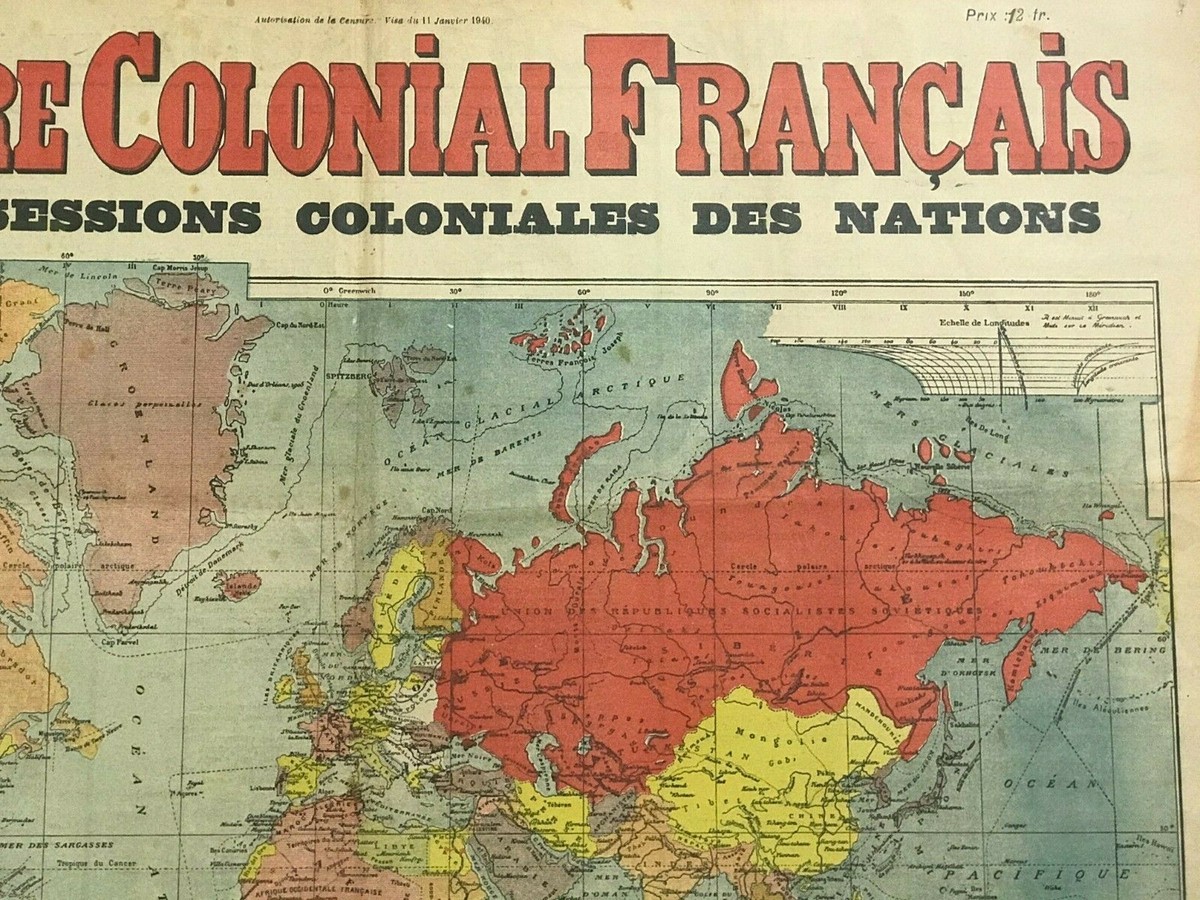
Cambodia has formally requested access to colonial-era maps and archival documents from France in an effort to solidify its long-contested border with Thailand. The materials date back to the period when France ruled Cambodia as part of French Indochina from 1863 to 1953. Phnom Penh hopes that these historical cartographic records will provide decisive legal support in its decades-long territorial dispute with Bangkok.
The timing of the request is significant. Although the two Southeast Asian neighbors signed a ceasefire agreement in December following months of armed clashes, the underlying territorial disagreement remains unresolved. Cambodia believes that the original French-drawn maps — particularly those used in 1907 to delineate the frontier — could reinforce its sovereignty claims in contested areas near the border.
However, France faces a delicate diplomatic calculation. Taking a visible role in the dispute could undermine its stated neutrality and risk straining relations with Thailand. Whether Paris will comply with Cambodia’s request remains uncertain.
The Historical Roots of the Cambodia–Thailand Border Dispute
The dispute centers on border demarcations established during the colonial era. In 1907, French authorities produced official maps defining the boundary between Cambodia and Siam (modern-day Thailand). These maps traced the frontier along watershed lines and river systems separating the two territories.
At the heart of the disagreement lies the ancient Hindu temple of Preah Vihear Temple, built between the 11th and 12th centuries during the Khmer Empire. The French maps placed the temple within Cambodian territory, a determination that Thailand has historically contested.
For Cambodia, the temple is not only an architectural treasure but also a powerful symbol of national identity. Thailand similarly regards the surrounding area as culturally significant, amplifying the emotional and political stakes.
Over the decades, Thailand has argued that the French maps were inaccurately drawn and should not be considered legally binding. This disagreement escalated dramatically in 1959, when Thai forces occupied the temple area.
International Court of Justice Rulings and Renewed Tensions
In response to Thailand’s occupation, Cambodia brought the case before the International Court of Justice (ICJ). In 1962, the court ruled that the temple itself belonged to Cambodia. However, it did not clearly define sovereignty over the surrounding 4.6 square kilometers of adjacent land.
For decades, the dispute simmered without major escalation. Tensions reignited in 2008 after UNESCO designated Preah Vihear Temple as a World Heritage Site. Thailand opposed aspects of the listing, arguing it prejudiced ongoing boundary negotiations.
Skirmishes broke out intermittently in the years that followed. In 2013, the ICJ issued a clarification, ruling that the land surrounding the temple also fell under Cambodian sovereignty. While the decision strengthened Cambodia’s legal position, practical enforcement along the rugged frontier remained contentious.
Recent Military Clashes and Ceasefire Agreement
The most recent phase of conflict began last summer, culminating in armed confrontations along disputed stretches of the border. Both countries deployed troops near contested zones, raising fears of broader escalation.
A ceasefire agreement reached in December effectively froze military positions, preventing either side from redeploying forces. While the arrangement halted active hostilities, it did not settle the core territorial dispute.
Cambodia has since accused Thailand of exploiting the agreement to entrench its presence in areas beyond those formally disputed. Phnom Penh alleges that Thai forces have constructed fortifications in contested zones, violating the spirit — if not the letter — of the ceasefire. Thailand has denied these accusations.
This fragile standoff underscores why Cambodia is seeking additional legal leverage. With significantly weaker military capabilities compared to Thailand, Cambodia is prioritizing diplomatic and legal channels to defend its territorial claims.
Why the Colonial Maps Matter Today
The French colonial maps represent more than historical artifacts; they are central pieces of evidence in defining the boundary’s original demarcation. Cambodia hopes that obtaining authenticated archival documents from France will reinforce its argument that the border was legally established under internationally recognized agreements.
From Phnom Penh’s perspective, reaffirming the validity of the 1907 maps would limit Thailand’s ability to reinterpret the frontier. It would also bolster Cambodia’s standing in any renewed proceedings before the International Court of Justice.
Yet France’s involvement carries geopolitical implications. While Paris administered Cambodia during the colonial period, modern France seeks to maintain balanced diplomatic relations in Southeast Asia. Publicly supporting Cambodia’s interpretation could be perceived as interference and potentially damage ties with Thailand.
Escalation to International Institutions
In recent weeks, Cambodia has broadened its diplomatic strategy. It has appealed to the United Nations Security Council, signaling that it considers the dispute a matter of regional security.
Phnom Penh has also indicated its intention to return to the International Court of Justice for further clarification, should negotiations with Thailand fail to produce progress.
Additionally, Cambodian officials have referenced engagement with the newly formed and controversial “Board of Peace” initiative promoted by Donald Trump, which is reportedly set to convene in Washington. While details of this body’s authority and influence remain unclear, Cambodia appears eager to internationalize the issue and build diplomatic momentum.
This multi-pronged approach reflects a calculated effort to shift the balance of power away from military confrontation and toward legal adjudication.
Strategic and Regional Implications
The Cambodia–Thailand border dispute illustrates how colonial-era boundaries continue to shape modern geopolitics. Many Southeast Asian frontiers were drawn by European powers with limited regard for local realities, leaving ambiguities that persist more than a century later.
Control of the Preah Vihear area is not only symbolic but also strategic. Elevated terrain offers military advantages, and national pride amplifies the stakes. Domestic politics in both countries further complicate compromise, as leaders risk backlash if perceived as conceding sovereignty.
For regional stability, a definitive legal resolution would be preferable to periodic military flare-ups. However, achieving that outcome requires mutual recognition of international rulings — something that has proven elusive.
Conclusion: Law, Diplomacy, and the Legacy of Empire
Cambodia’s request for French colonial maps marks a new phase in its long-running border dispute with Thailand. By seeking documentary evidence from the colonial era, Phnom Penh aims to strengthen its legal case and reduce reliance on military deterrence.
Whether France will provide the requested materials — and whether doing so will alter the diplomatic balance — remains uncertain. What is clear is that the dispute over Preah Vihear Temple and its surrounding territory continues to test the resilience of international law, regional diplomacy, and post-colonial boundary arrangements.
As Cambodia escalates its appeals to global institutions, the outcome will depend on a complex interplay of historical interpretation, legal precedent, and geopolitical strategy. The next chapter in this century-old dispute may be written not on the battlefield, but in courtrooms and diplomatic chambers.
About The Author