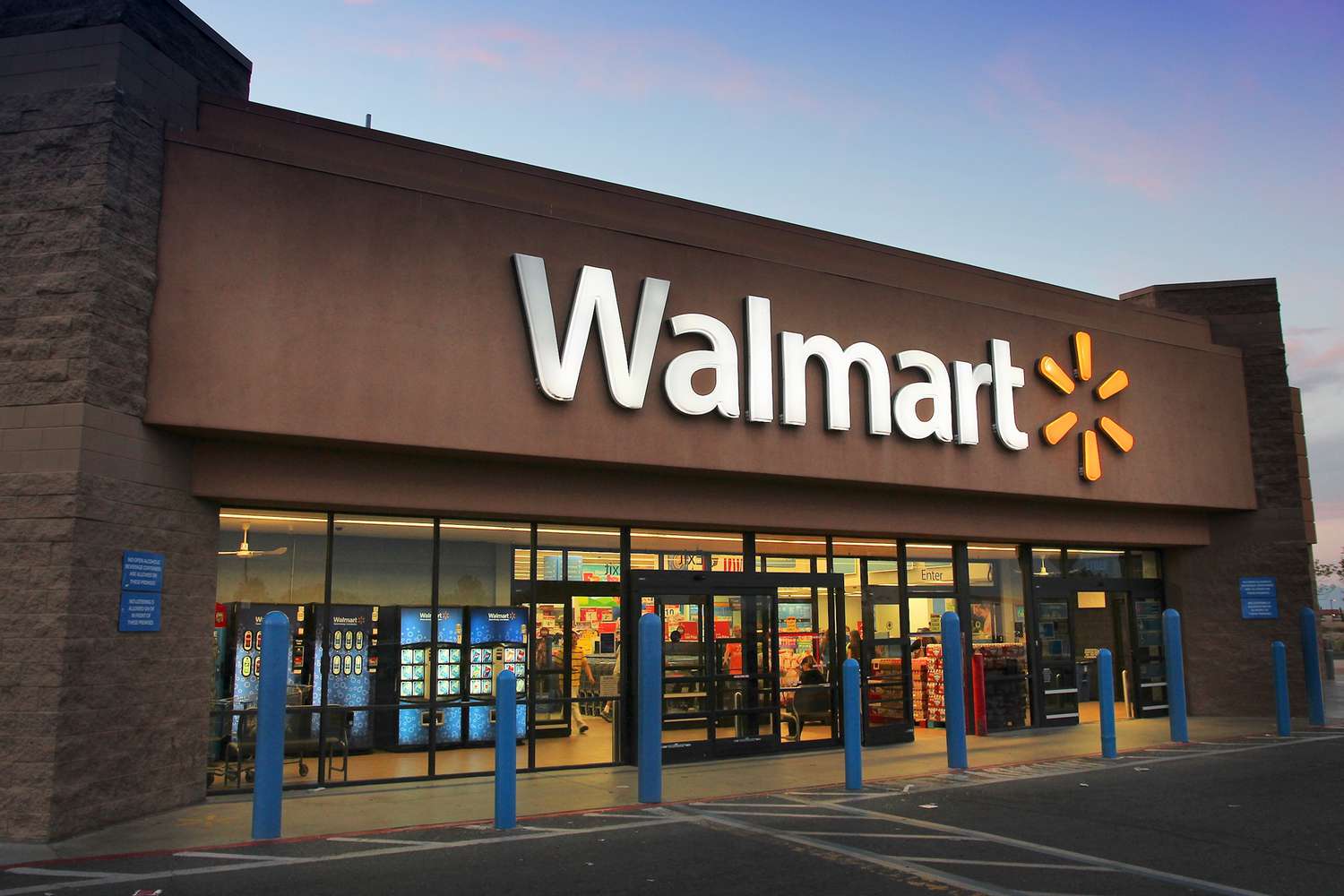
Introduction: A Milestone That Redraws Retail History
Walmart has crossed a historic threshold, becoming the first retail company in the world to achieve a market valuation of $1 trillion. The milestone marks a defining moment not only for the Arkansas-based retail giant but also for the broader retail industry, which has traditionally lagged behind technology firms in market capitalization.
The achievement comes after a sustained rally in Walmart’s stock over the past year, with shares climbing nearly 26%. Over the last decade, Walmart’s transformation has been even more dramatic, with its stock price rising more than fourfold—far outpacing the broader U.S. equity market. This ascent reflects a fundamental shift in how investors perceive Walmart: no longer merely a low-cost brick-and-mortar retailer, but a technology-enabled commerce platform with global scale.
From Discount Retailer to Trillion-Dollar Enterprise
Walmart’s rise to trillion-dollar status places it alongside some of the most valuable companies in the world, including Apple, Microsoft, Amazon, and Alphabet. What makes the achievement particularly notable is that Walmart operates in an industry traditionally associated with thin margins and intense price competition.
Over the years, Walmart has leveraged its unmatched scale to extract efficiencies across procurement, logistics, and pricing. However, the recent surge in valuation reflects more than operational excellence—it signals investor confidence in Walmart’s long-term strategy and its ability to adapt to rapidly changing consumer behavior.
The company’s headquarters in Bentonville, Arkansas, may be far from Silicon Valley, but its market value now firmly places it in the same league as global technology titans.
Wealthier Shoppers Drive Unexpected Growth
One of the most surprising elements of Walmart’s recent success has been its growing appeal to higher-income consumers. As inflation and economic uncertainty pressure household budgets, affluent shoppers have increasingly turned to Walmart for convenience and value—particularly for discretionary categories such as apparel, home furnishings, and electronics.
Fast delivery options, expanded product assortments, and competitive pricing have helped Walmart capture spending that once flowed to specialty retailers and e-commerce-only platforms. The company’s ability to serve both cost-conscious households and time-sensitive, higher-income shoppers has broadened its customer base and strengthened revenue resilience.
This shift has proven critical at a time when many consumers are cutting back on non-essential spending.
Resilience Amid Economic Headwinds
Walmart’s milestone comes against a challenging macroeconomic backdrop. U.S. households—especially those in low- and middle-income brackets—have been grappling with persistent inflation, rising borrowing costs, and signs of a cooling labor market.
Additional uncertainty stemming from tariffs and disruptions tied to a recent U.S. government shutdown has further dampened consumer confidence. In this environment, many retailers have struggled to maintain sales momentum.
Walmart, however, has benefited from its reputation as a value leader. As consumers reassess spending priorities, the company’s ability to offer competitive prices across a broad range of essentials has reinforced its role as a go-to destination during periods of economic stress.
A Decade of Outperformance
The scale of Walmart’s long-term stock performance underscores the magnitude of its transformation. Over the past ten years, the company’s shares have surged approximately 468%, compared with a roughly 264% increase in the S&P 500.
This sustained outperformance reflects consistent execution across multiple strategic initiatives, including e-commerce expansion, private-label growth, and operational modernization. Investors have rewarded Walmart for its ability to deliver steady earnings growth while reinvesting heavily in future capabilities.
Few retailers have managed to evolve at this pace without sacrificing profitability, making Walmart’s trajectory particularly noteworthy.
Joining the Nasdaq-100 Signals a New Identity
Walmart’s ascent was further cemented when it recently replaced AstraZeneca in the Nasdaq-100 Index, a benchmark traditionally dominated by technology and innovation-driven companies. Inclusion in the index underscores how far Walmart has moved beyond its roots as a traditional retailer.
The Nasdaq-100 is home to the most valuable non-financial companies in the United States, and Walmart’s entry signals recognition of its digital and technological capabilities. For investors, the move reinforces the perception that Walmart is increasingly a tech-enabled enterprise rather than a legacy retail brand.
Artificial Intelligence at the Core of Walmart’s Strategy
A major driver behind Walmart’s valuation surge is its aggressive investment in artificial intelligence and automation. The company has poured billions of dollars into modernizing its supply chain, using AI to forecast demand, optimize inventory, and streamline logistics.
These technologies allow Walmart to stock stores more efficiently, reduce waste—particularly in fresh produce—and improve delivery speeds for online orders. As grocery shopping increasingly shifts online, these capabilities have become a critical competitive advantage.
AI is also being deployed to lower the cost of goods, enhance pricing decisions, and personalize the shopping experience. By embedding intelligence across its operations, Walmart is driving efficiency gains that directly support margins and customer satisfaction.
E-Commerce and Omnichannel Strength
Walmart’s digital transformation has been particularly evident in its omnichannel strategy, which seamlessly integrates physical stores with online platforms. Customers can order groceries and merchandise online and choose from multiple fulfillment options, including curbside pickup, same-day delivery, and traditional shipping.
The company’s vast network of stores doubles as a fulfillment infrastructure, enabling faster and cheaper last-mile delivery compared to many competitors. This hybrid model has proven especially effective as consumers increasingly prioritize convenience and speed.
By leveraging physical assets in a digital context, Walmart has turned what was once seen as a disadvantage into a powerful strategic edge.
Analysts See Walmart as a New Kind of Tech Player
Market observers increasingly describe Walmart as a technology company in disguise. According to investment professionals, the company’s success lies in how effectively it has integrated advanced technology into every layer of its business.
Analysts point to Walmart’s ability to use data and automation not only to cut costs but also to capture a larger share of consumer spending. From inventory management to dynamic pricing and personalized recommendations, technology now underpins Walmart’s value proposition.
This shift has reshaped investor expectations, helping justify a valuation once considered unattainable for a retailer.
Standing Among Trillion-Dollar Giants
With its market value now exceeding $1 trillion, Walmart joins an elite group of U.S. companies that includes Nvidia, Apple, Microsoft, Amazon, Alphabet, and Meta. While many of these firms derive their worth from software, cloud computing, or semiconductor dominance, Walmart’s inclusion highlights the evolving nature of value creation.
The company’s ability to combine scale, technology, and everyday consumer relevance sets it apart from both traditional retailers and pure-play tech firms. This hybrid identity has become a key factor in its market appeal.
What the Milestone Means for the Retail Industry
Walmart’s achievement has broader implications for the retail sector as a whole. It demonstrates that brick-and-mortar retailers are not doomed to obsolescence if they are willing to invest in technology and adapt to changing consumer expectations.
The milestone also raises the bar for competitors, many of whom are struggling to balance cost pressures with the need for digital investment. Walmart’s success suggests that scale, when paired with innovation, can still deliver outsized returns.
Conclusion: A New Blueprint for Retail Success
Walmart’s rise to a $1 trillion market valuation marks a turning point in retail history. Once defined solely by low prices and vast stores, the company has reinvented itself as a technology-driven commerce leader capable of competing with the world’s most valuable firms.
Through aggressive investment in artificial intelligence, supply chain automation, and omnichannel experiences, Walmart has demonstrated that retail can be both resilient and innovative. As economic uncertainty persists and consumer behavior continues to evolve, Walmart’s transformation offers a powerful blueprint for the future of global retail.
For investors and industry watchers alike, the message is clear: Walmart is no longer just the world’s largest retailer—it is one of its most formidable technology-enabled enterprises.
About The Author