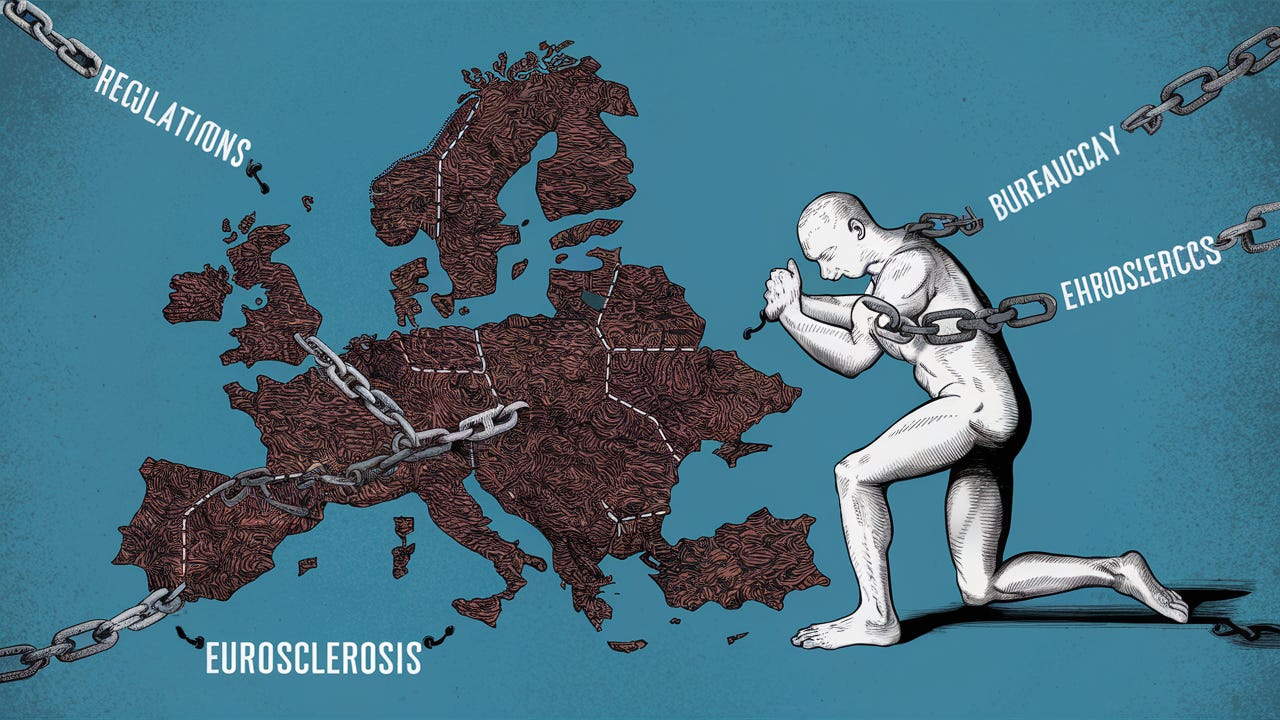
Eurosclerosis is a term used to describe a prolonged period of economic stagnation and high unemployment that affected Western Europe primarily during the 1970s and 1980s. The concept became widely discussed in economic policy circles as analysts sought to understand why European economies were underperforming compared to the United States and Japan.
At its core, Eurosclerosis reflects the impact of rigid labor markets, heavy regulation, protectionist policies, and high government intervention. While Europe eventually overcame this period through structural reforms, technological innovation, and deeper economic integration, the term remains relevant today as a warning about the consequences of inflexible economic systems.
This article examines the origins of Eurosclerosis, its structural causes, its impact on economic growth and employment, and the reforms that ultimately helped Europe regain competitiveness.
What Is Eurosclerosis?
Eurosclerosis refers to the slow economic growth and persistently high unemployment experienced by many Western European countries during the late 20th century. The term combines “Europe” with “sclerosis,” implying rigidity or hardening—much like a medical condition that restricts movement.
Originally, the term described two related phenomena:
- Sluggish economic performance, especially in labor markets
- Slow political progress toward deeper European integration
Economically, Eurosclerosis was characterized by:
- Rising unemployment rates
- Weak GDP growth
- Limited job creation
- Rigid wage structures
- Strong trade union influence
- High taxation and welfare spending
- Extensive government regulation
By the early 1980s, Europe’s unemployment rate was climbing rapidly even during periods of global economic recovery, highlighting structural weaknesses in its economic model.
Historical Context: Europe’s Economic Struggles in the 1970s and 1980s
The roots of Eurosclerosis can be traced back to the economic turbulence of the 1970s. Oil shocks, inflationary pressures, and global competition exposed vulnerabilities in European economies.
By the early 1980s:
- Unemployment in the European Community rose from approximately 5.5% in 1978 to over 11% by 1985.
- In contrast, the United States saw unemployment decline significantly after 1982.
- Japan continued to maintain relatively strong economic growth.
Even when global economic conditions improved, Europe’s labor markets failed to recover at the same pace. This divergence raised concerns among economists and policymakers.
German economist Herbert Giersch played a significant role in popularizing the concept of Eurosclerosis. He argued that Europe’s stagnation was not cyclical but structural. In his view, rigid institutions and protectionist policies were preventing necessary economic adjustment.
Structural Causes of Eurosclerosis
Eurosclerosis did not emerge from a single factor. Instead, it resulted from a combination of institutional rigidities and policy choices that restricted economic flexibility.
1. Rigid Labor Markets
One of the primary causes of Eurosclerosis was labor market inflexibility.
European labor markets were characterized by:
- Strong trade unions
- Collective wage bargaining
- High employment protection
- Limited wage flexibility
Because wages were relatively rigid downward, firms struggled to adjust labor costs during economic downturns. As a result, companies reduced hiring or substituted labor with capital-intensive technologies.
Unlike the United States and Japan, where real wages showed greater flexibility, European labor markets were less responsive to economic conditions. This rigidity contributed to persistent unemployment.
2. Protectionism and Industrial Subsidies
Many European industries received government protection through tariffs, subsidies, or direct financial support. While these measures were often introduced to help firms modernize and compete, they frequently had the opposite effect.
Protected industries:
- Became dependent on state aid
- Delayed structural adjustments
- Avoided necessary innovation
- Reduced competitive pressure
Instead of fostering competitiveness, protectionism reduced incentives for productivity growth and technological advancement.
3. High Taxes and Expansive Welfare States
Another significant factor contributing to Eurosclerosis was the large role of government in the economy.
European countries during this period had:
- High income taxes
- Substantial public spending
- Extensive welfare systems
- Generous unemployment benefits
While social safety nets provided stability, they also created disincentives for labor market participation in certain cases. High payroll taxes increased hiring costs for employers, further discouraging job creation.
Giersch argued that high taxation and government intervention reduced incentives for entrepreneurship and risk-taking. Barriers to entry made it difficult for new firms to emerge and compete with established players.
4. Regulatory Barriers and Market Entry Restrictions
Excessive regulation also played a critical role in Europe’s economic stagnation.
Regulatory burdens included:
- Complex licensing procedures
- Strict employment laws
- Industry-specific restrictions
- Barriers to new business formation
These obstacles limited economic dynamism and slowed the reallocation of resources from declining sectors to emerging industries.
Giersch described Europe’s institutional framework as resembling a form of syndicalism or guild-style economic organization, which he believed was incompatible with modern, innovation-driven growth.
The Impact of Eurosclerosis on Economic Growth
The consequences of Eurosclerosis were substantial:
Persistent High Unemployment
Unemployment remained elevated even during global economic recoveries. Structural unemployment became entrenched, particularly among youth and low-skilled workers.
Slower GDP Growth
Compared to the U.S. and Japan, European economies grew at a slower pace. Investment levels lagged, and productivity improvements were limited.
Reduced Competitiveness
Rigid labor costs and regulatory constraints weakened Europe’s competitive position in global markets. Firms struggled to adapt to technological change and globalization.
Political Frustration
Beyond economic stagnation, Eurosclerosis also reflected slow progress toward European integration. Economic divergence complicated efforts to deepen cooperation among member states.
How Europe Overcame Eurosclerosis
By the 1990s and early 2000s, Europe began to reverse its economic stagnation. Several key developments contributed to this recovery.
1. Technological Advancement
The rapid growth of the technology sector and the information economy played a transformative role. Unlike traditional industries, technology firms operated in relatively less regulated environments and were less constrained by union structures.
Digital innovation improved productivity, fostered entrepreneurship, and opened new markets.
2. Labor Market Reforms
Many European countries introduced structural reforms aimed at increasing labor market flexibility. These included:
- Adjustments to employment protection laws
- Incentives for part-time and temporary work
- Revisions to collective bargaining systems
- Efforts to reduce non-wage labor costs
While controversial, these reforms gradually improved job creation and reduced structural unemployment.
3. Deeper European Integration
The push toward stronger European integration also helped address Eurosclerosis.
Key developments included:
- The creation of the European Single Market
- Increased labor mobility across member states
- Harmonization of regulations
- Expansion of cross-border trade
Greater economic openness encouraged competition and reduced fragmentation within the European market.
4. Deregulation and Market Liberalization
Reforms in product and financial markets improved competition and capital allocation. Reduced barriers to entry enabled new firms to emerge, fostering innovation and economic renewal.
The Modern Meaning of Eurosclerosis
Today, the term Eurosclerosis is used more broadly. It no longer applies exclusively to Western Europe in the 1980s. Instead, it describes any economy experiencing stagnation due to:
- Excessive regulation
- Labor market rigidity
- Protectionist policies
- High taxation
- Overextended government intervention
In this broader sense, Eurosclerosis serves as a cautionary concept in macroeconomic policy discussions worldwide.
Lessons from the Eurosclerosis Era
The experience of Eurosclerosis provides important policy insights:
- Economic flexibility is essential for long-term growth.
- Protectionism can delay necessary structural adjustments.
- Excessive regulation may reduce innovation and competitiveness.
- Balanced social policies must avoid undermining labor market incentives.
- Technological advancement can drive economic revitalization.
The European recovery demonstrates that structural reforms, integration, and openness can restore economic dynamism even after prolonged stagnation.
Final Thoughts
Eurosclerosis represents a critical chapter in modern economic history. During the 1970s and 1980s, Western Europe experienced slow growth and rising unemployment largely due to rigid labor markets, heavy regulation, and protectionist policies.
However, the subsequent embrace of technological innovation, structural reform, deregulation, and European integration helped reverse this stagnation. By the early 21st century, many European economies had regained competitiveness and improved labor market performance.
Although the term originated in a specific historical context, its broader implications remain highly relevant. Any economy that resists structural adjustment, limits competition, and restricts market flexibility risks facing a similar period of stagnation.
Understanding Eurosclerosis is not merely an exercise in economic history—it is a reminder of how policy choices shape long-term economic performance and growth.
About The Author