The Rise of Smartphones and the Beginning of a Turning Point
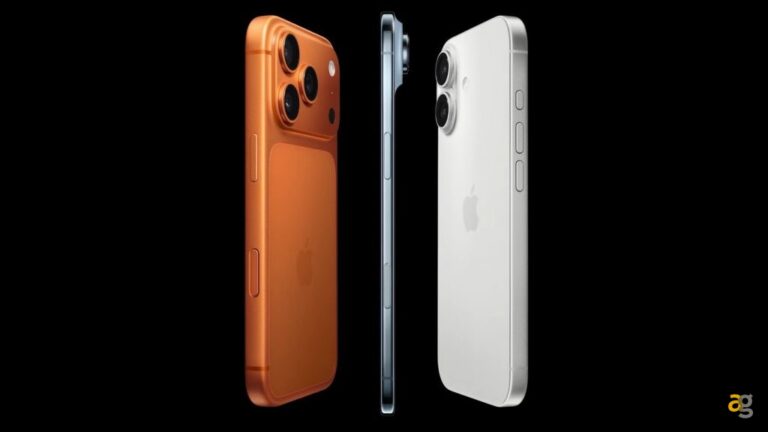
Since the launch of the iPhone in 2007, smartphones have become the centerpiece of modern life. They are no longer just communication tools but digital companions that manage our work, social lives, entertainment, navigation, and even health. Smartphones act as extensions of our identities, storing personal data, memories, and access to nearly every digital service we use daily.
However, despite their deep integration into everyday routines, a major shift may be approaching. According to Mark Zuckerberg, founder and CEO of Meta, the era of smartphones dominating technology is slowly moving toward its conclusion. While smartphones are unlikely to disappear overnight, Zuckerberg believes they will eventually take on a secondary role as new technologies emerge.
At the heart of this transformation is a new class of wearable devices: smart glasses powered by augmented reality. These devices, according to Zuckerberg, represent the next major computing platform—one that could redefine how humans interact with technology.
Why Mark Zuckerberg Thinks Smartphones Are Losing Momentum
Zuckerberg’s prediction is not based on speculation alone. It reflects broader trends within the tech industry and consumer behavior. Over the past decade, innovation in smartphones has slowed noticeably. While each new model offers incremental improvements—better cameras, faster processors, or refined displays—the fundamental experience remains largely unchanged.
Modern smartphones share similar designs, rely heavily on touchscreens, and demand constant visual attention. This stagnation has created a sense that smartphones are evolving, but no longer transforming the way people interact with technology.
Another issue is digital overload. Constant notifications, screen addiction, and prolonged screen time are increasingly seen as drawbacks rather than benefits. Instead of empowering users, smartphones often dominate attention and fragment focus. According to Zuckerberg, technology should enhance human experience, not absorb it entirely.
This growing dissatisfaction opens the door for alternatives that are more seamless, intuitive, and integrated into daily life—without demanding constant screen interaction.
The Shift Toward Wearable Technology
In Zuckerberg’s vision, the future of technology is not something we hold in our hands, but something we wear. Smart glasses are central to this transition because they offer a more natural interface between the physical and digital worlds.
Rather than pulling a phone out of a pocket, unlocking it, and navigating apps, smart glasses allow users to access digital information directly within their field of vision. This shift reduces friction and enables technology to function more like an assistant than a distraction.
Wearable devices already exist in various forms—smartwatches, fitness trackers, and wireless earbuds—but smart glasses have the potential to become the primary gateway to digital interaction. They are discreet, hands-free, and capable of delivering information precisely when and where it is needed.
Augmented Reality as the Core Technology
At the center of this evolution lies augmented reality (AR). Unlike virtual reality, which immerses users in a fully digital environment, AR overlays digital elements onto the real world. This approach allows users to remain grounded in their physical surroundings while benefiting from contextual digital enhancements.
Smart glasses equipped with AR can perform a wide range of tasks, such as:
- Displaying navigation directions directly on the street ahead
- Translating foreign languages in real time
- Showing notifications without interrupting real-world interactions
- Providing contextual information about objects, places, or people
- Enabling hands-free communication and productivity tools
Because these functions are integrated into the user’s natural line of sight, they reduce the need for constant device handling. This creates a smoother and more human-centered digital experience.
Meta’s Vision and the Orion Project
Meta is not merely theorizing about this future—it is actively building it. One of the company’s most ambitious initiatives is Project Orion, which aims to develop advanced AR smart glasses capable of functioning as a standalone computing platform.
The goal of Orion is to move beyond experimental prototypes and deliver consumer-ready smart glasses that are lightweight, stylish, and powerful enough for everyday use. These devices are designed to blend into daily life rather than stand out as futuristic gadgets.
Meta’s long-term strategy focuses on making smart glasses socially acceptable, technologically capable, and economically accessible. This includes advancements in display technology, battery efficiency, gesture control, and voice-based interfaces.
Zuckerberg has suggested that by around 2030, smart glasses could surpass smartphones in terms of daily usage, even if phones continue to exist as complementary devices.
Competition in the Post-Smartphone Era
Meta is not alone in recognizing the potential of a post-smartphone world. Other major technology companies are investing heavily in AR and wearable computing.
Apple has made significant moves in spatial computing, blending hardware, software, and immersive experiences. Google continues to develop AR platforms and smart wearable concepts. Meanwhile, startups and hardware manufacturers are experimenting with new designs and interaction models.
This growing competition signals that the industry views smart glasses not as a niche product, but as the next major battleground in consumer technology. The race is no longer about who makes the best smartphone, but who defines what comes after it.
Challenges Facing Smart Glasses Adoption
Despite the excitement, smart glasses face several challenges before they can truly replace smartphones. These include:
- Technical limitations: Battery life, processing power, and heat management remain complex issues.
- Privacy concerns: Devices that continuously scan surroundings raise questions about data collection and surveillance.
- Social acceptance: Wearable cameras and displays must overcome skepticism and discomfort among the public.
- Cost barriers: Early versions of advanced AR glasses may be expensive for mainstream consumers.
Zuckerberg acknowledges these challenges but believes they are solvable through continued innovation and responsible design. As technology matures, these barriers are expected to diminish, much like they did with smartphones in their early years.
Will Smartphones Really Disappear?
Rather than vanishing entirely, smartphones are more likely to evolve into secondary devices. Just as laptops did not disappear when smartphones became popular, phones may remain useful for certain tasks while no longer serving as the primary interface for digital life.
In this scenario, smart glasses handle real-time interactions, while smartphones operate in the background for processing, storage, or specific use cases. Over time, as wearable technology becomes more powerful, even this dependency may fade.
A New Digital Era Is Taking Shape
Mark Zuckerberg’s prediction marks a broader shift in how technology is expected to serve humanity. The future is moving toward devices that are less intrusive, more contextual, and better aligned with natural human behavior.
Smart glasses powered by augmented reality represent more than a new gadget—they symbolize a fundamental change in digital interaction. If Zuckerberg’s vision proves accurate, the next decade could redefine how people access information, communicate, and navigate the world.
While smartphones shaped the digital age of the past 15 years, smart glasses may define the next one. The post-smartphone era may not arrive suddenly, but its foundations are already being built today.
About The Author