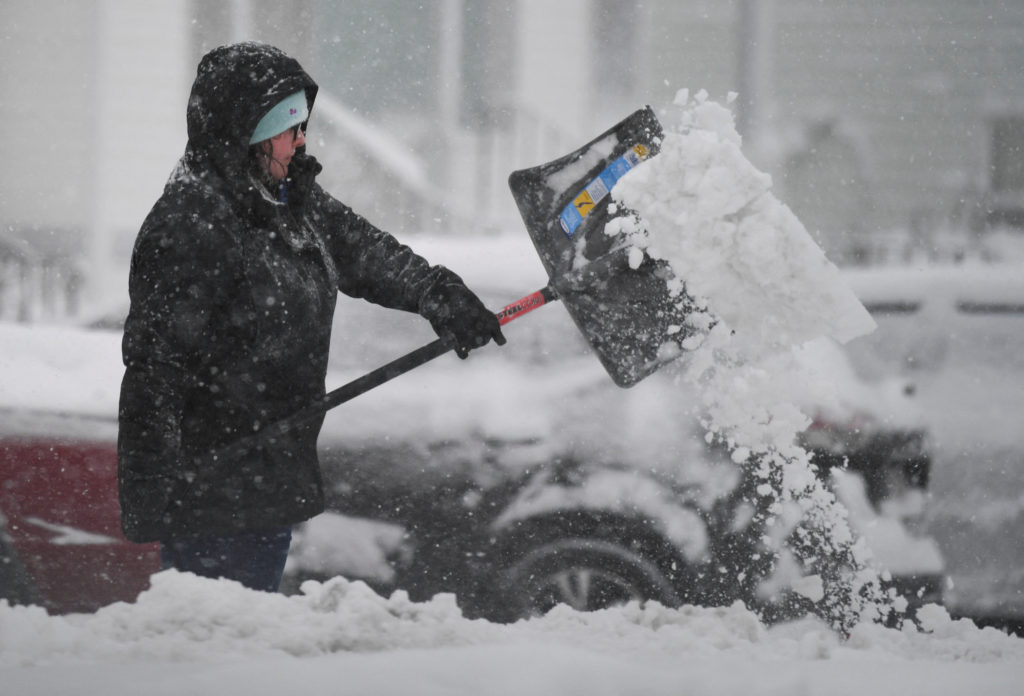
A woman throws snow while shovelling her car during the first winter storm of 2024 which is expected to bring heavy snowfall across the northeast United States, in Worcester, Massachusetts, U.S. January 7, 2024. REUTERS/Amanda Sabga
A powerful and far-reaching winter storm has disrupted daily life across much of the United States, leaving more than 800,000 customers without electricity and forcing the cancellation of nearly 10,000 flights. The storm, described by forecasters and government officials as historic in both scale and severity, is bringing a dangerous mix of snow, sleet, freezing rain, and extreme cold to large portions of the country. As conditions worsen, millions of Americans are facing hazardous travel, prolonged power disruptions, and life-threatening temperatures.
The storm system extends across the eastern two-thirds of the nation and has already affected states as far west as New Mexico. Meteorologists warn that the worst impacts are still unfolding, with frigid air, ice accumulation, and heavy snowfall expected to persist well into the week. Federal and state authorities have mobilized emergency resources as communities brace for continued disruptions.
Widespread Power Outages Across Multiple States
One of the most immediate and severe consequences of the winter storm has been the loss of electrical power across large regions of the country. According to real-time outage monitoring data, more than 800,000 homes and businesses were without electricity as of Sunday morning. The outages are concentrated in the southern and central United States, where ice and freezing rain have damaged power lines and strained electrical infrastructure.
Tennessee has been particularly hard hit, reporting more than 300,000 customers without power. Mississippi, Texas, and Louisiana each recorded over 100,000 outages, while additional disruptions were reported in Kentucky, Georgia, North Carolina, and Alabama. Utility crews are working around the clock, but progress has been slowed by treacherous road conditions, falling temperatures, and ongoing precipitation.
Extended power outages during extreme cold pose serious risks, especially for vulnerable populations such as the elderly, young children, and those relying on electrically powered medical equipment. Emergency shelters have been opened in several states, and residents are being urged to conserve heat, avoid unnecessary travel, and check on neighbors when it is safe to do so.
Massive Travel Disruptions and Flight Cancellations
The storm has also severely disrupted air travel across the United States, stranding passengers and creating ripple effects throughout the global aviation system. Airlines canceled nearly 10,000 flights scheduled for Sunday alone, with additional delays expected as the storm progresses.
Major airports across the Midwest, South, and East Coast have been impacted by snow-covered runways, icy conditions, and reduced visibility. Airlines are struggling to reposition aircraft and crews, while passengers face long delays, rebookings, and limited availability on future flights. Ground transportation has also been affected, as icy roads and snow accumulation make driving hazardous or impossible in many areas.
Transportation authorities are urging travelers to monitor airline notifications closely, avoid unnecessary trips, and allow extra time for any essential travel. The combination of winter weather and high travel volume has created one of the most significant transportation disruptions of the season.
Federal Emergency Declarations and Government Response
In response to the growing crisis, the federal government has taken swift action to support state and local efforts. The president approved federal emergency disaster declarations in at least 12 states, including South Carolina, Virginia, Tennessee, Georgia, North Carolina, Maryland, Arkansas, Kentucky, Louisiana, Mississippi, Indiana, and West Virginia. These declarations unlock federal funding and resources to assist with emergency response, debris removal, and recovery efforts.
Seventeen states, along with the District of Columbia, have declared weather-related emergencies. The Department of Homeland Security has emphasized the seriousness of the situation, warning residents to prepare for prolonged cold, limited mobility, and potential shortages. Officials have encouraged households to stock up on food, fuel, medications, and essential supplies before conditions deteriorate further.
Public messaging from federal and state leaders has focused on safety, urging people to stay indoors when possible, dress in layers, and avoid travel during the most dangerous periods of the storm. Authorities are also coordinating with local emergency management agencies to ensure rapid response to medical emergencies and infrastructure failures.
Energy Grid Strain and Emergency Power Measures
The extreme cold and rising demand for heating have placed enormous stress on the nation’s energy systems. To prevent widespread blackouts, the U.S. Department of Energy issued emergency orders allowing grid operators to deploy additional power generation resources beyond normal regulatory limits.
In Texas, the Electric Reliability Council of Texas (ERCOT) was authorized to activate backup generation at data centers and other large facilities. This measure aims to stabilize the grid and prevent cascading outages similar to those experienced during previous winter storms. In the mid-Atlantic region, grid operator PJM Interconnection received emergency authorization to operate specific power resources regardless of restrictions imposed by state laws or environmental permits.
Energy officials have emphasized that these actions are temporary but necessary to maintain grid reliability during extreme weather. Consumers are being asked to reduce electricity usage during peak hours when possible, helping to ease strain on the system and minimize the risk of further outages.
Dangerous Weather Conditions and Forecast Outlook
Meteorologists are warning that this storm is unusual not only for its size but also for its duration. The National Weather Service has described it as an expansive and long-lasting winter system capable of producing crippling to locally catastrophic impacts, particularly in the southeastern United States. Heavy ice accumulation is expected in areas unaccustomed to such conditions, increasing the likelihood of fallen trees, power line damage, and blocked roads.
In addition to ice and snow, record-breaking cold temperatures are forecast to spread deeper into the Great Plains and surrounding regions by Monday. Wind chills are expected to reach dangerously low levels, increasing the risk of frostbite and hypothermia within minutes of exposure. Livestock, pets, and outdoor infrastructure are also at heightened risk.
Forecasters caution that even after precipitation ends, lingering cold will continue to pose challenges for recovery efforts. Melting and refreezing could lead to additional hazards, including black ice and further stress on power systems.
A Storm With Nationwide Consequences
The ongoing winter storm serves as a stark reminder of how extreme weather events can impact nearly every aspect of modern life, from electricity and transportation to public safety and economic activity. Businesses across affected regions are closing temporarily, schools are shifting to remote learning or canceling classes, and supply chains are facing new delays.
Emergency officials stress that preparedness and caution are essential as the situation evolves. While restoration efforts are underway, full recovery may take days or longer in the hardest-hit areas. Residents are encouraged to follow guidance from local authorities, stay informed through official weather updates, and prioritize personal safety above all else.
As the storm continues its path across the country, millions remain on alert, hoping for swift improvement while bracing for the challenges still ahead.
About The Author