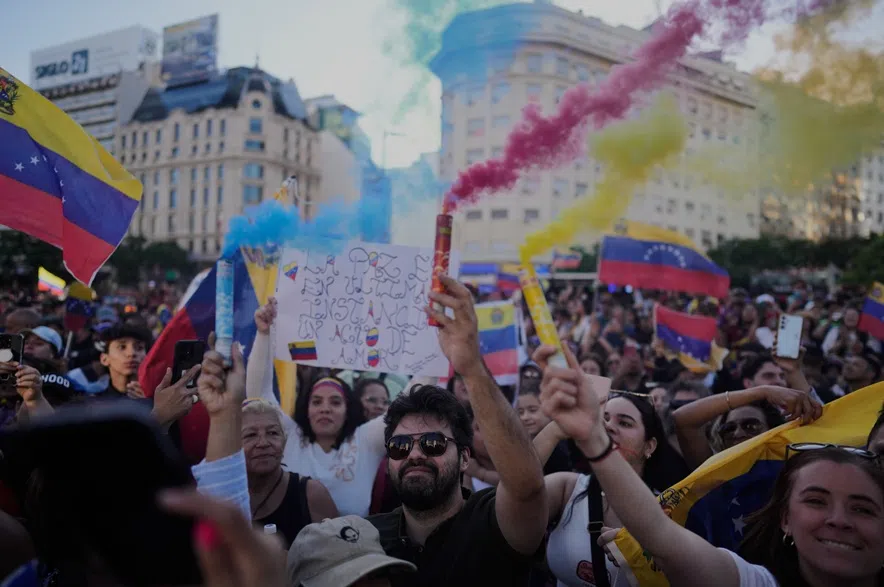
The reported capture of Venezuelan President Nicolás Maduro by United States forces has ignited intense debate among legal scholars, policymakers, and international observers. The operation, which allegedly resulted in Maduro being transferred to New York to face criminal charges, raises serious questions about its legality under both U.S. constitutional law and international law.
According to U.S. officials, the operation was carried out as part of a law enforcement effort linked to federal indictments issued by a New York grand jury. Maduro, along with several close associates and family members, was accused of crimes involving terrorism, narcotics trafficking, and weapons offenses. The Justice Department reportedly requested military support to execute the arrest.
However, critics argue that the use of military force to seize a sitting foreign leader represents a dangerous escalation. International law generally prohibits the use of force against another state unless authorized by the United Nations Security Council or justified under the doctrine of self-defense. Legal experts emphasize that criminal allegations—such as drug trafficking or gang-related violence—do not meet the legal threshold of an armed conflict that would justify a cross-border military operation.
Compounding the controversy, senior U.S. officials acknowledged that Congress was not notified prior to the operation. While the U.S. president serves as commander-in-chief, the Constitution grants Congress the authority to declare war. Past administrations have justified limited military actions without congressional approval, but legal analysts note that seizing a foreign head of state goes far beyond traditional law enforcement activity.
Further confusion arose after statements from the White House suggested the possibility of temporary U.S. control over Venezuela’s governance and oil assets. Constitutional and international law experts argue that such claims undermine the administration’s assertion that the mission was purely a targeted arrest. As one legal scholar noted, an operation cannot simultaneously be framed as a criminal apprehension and a step toward governing another sovereign nation.
The United States has not recognized Maduro as Venezuela’s legitimate leader since 2019, citing disputed election results. However, Washington has also failed to formally recognize an alternative authority capable of granting consent for such an operation—an important factor under international law.
Historical comparisons have been drawn to prior U.S. actions, including the 1989 arrest of Panamanian leader Manuel Noriega and other overseas captures of criminal suspects. In most cases, however, those operations involved either local consent or a recognized armed conflict, circumstances that do not clearly apply here.
Despite widespread legal skepticism, experts believe the United States is unlikely to face tangible consequences. International law lacks strong enforcement mechanisms, particularly when powerful nations are involved, making accountability difficult even if violations occurred.
About The Author