The question of who controls Greenland has suddenly become a focal point of international diplomacy, drawing in major global powers and reopening historical debates about sovereignty, colonialism, and strategic territory. Russian President Vladimir Putin has now weighed in publicly, stating that Greenland’s ownership is of no concern to Moscow while suggesting that the island could be worth as much as $1 billion.
Putin’s remarks come amid renewed efforts by U.S. President Donald Trump to assert American control over Greenland, a semi-autonomous territory of Denmark with vast natural resources and critical strategic importance in the Arctic. While Russia has traditionally maintained a strong presence in the Arctic region, the Kremlin’s latest statements indicate a calculated decision to stay on the sidelines of the dispute—at least publicly.
Putin Addresses Greenland Question for the First Time
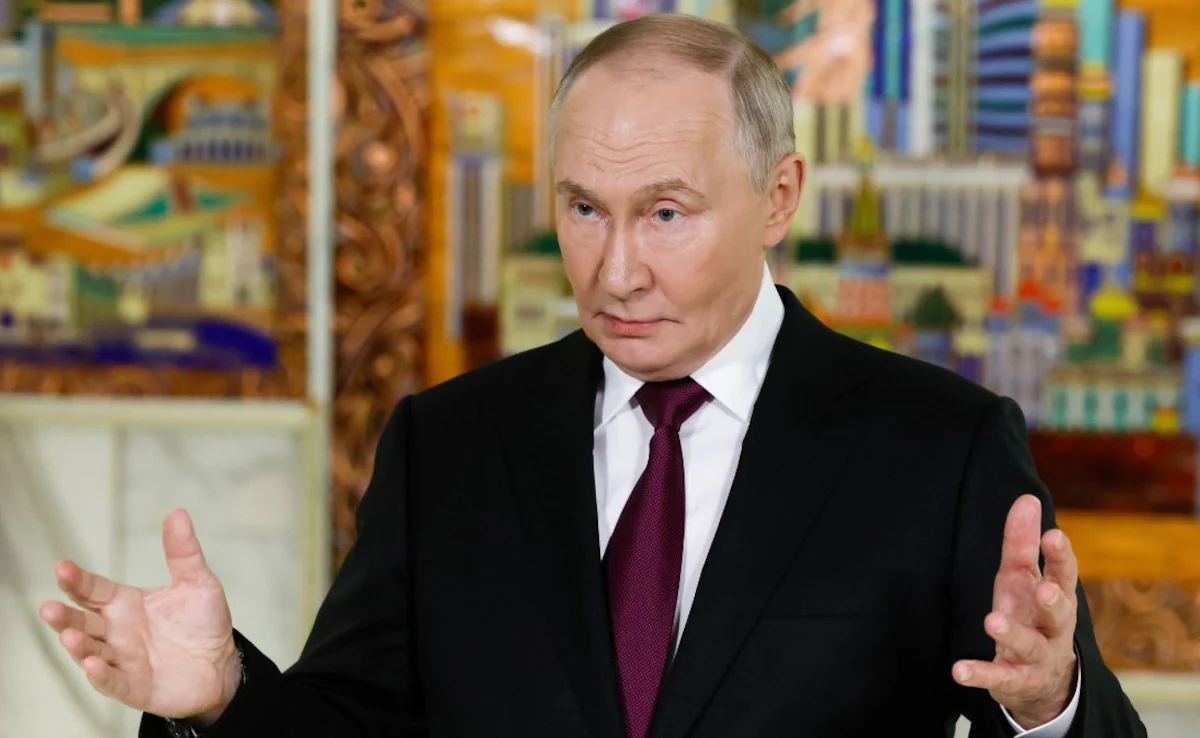
Speaking during a meeting of Russia’s Security Council, Vladimir Putin addressed the Greenland issue publicly for the first time. His message was clear: Russia does not view the question of Greenland’s ownership as relevant to its national interests.
According to Putin, the matter should be resolved exclusively between the United States and Denmark. He emphasized that Moscow neither intends to interfere nor sees any strategic reason to oppose Washington’s ambitions regarding the Arctic island.
“What happens in Greenland is of no concern to us whatsoever,” Putin stated, underscoring Russia’s official stance of neutrality.
This declaration marks a notable contrast to Russia’s otherwise assertive posture in Arctic affairs, where it has invested heavily in military infrastructure, energy exploration, and shipping routes. Analysts suggest that Moscow’s restraint in this case may be driven more by geopolitical calculation than indifference.
U.S. Push for Greenland Strains Transatlantic Relations
The renewed American interest in Greenland has already created friction between Washington and its European allies. President Trump’s push to acquire the territory has deepened divisions between the United States and Denmark, raising concerns across Europe about the future of transatlantic cooperation.
Although Trump recently stepped back from earlier threats—such as using tariffs as leverage or hinting at coercive measures—his comments continue to fuel uncertainty. Speaking in Davos, Trump ruled out the use of force but suggested that progress toward a negotiated arrangement was possible.
The controversy has become one of the most sensitive diplomatic disputes between the U.S. and Europe in decades, with Greenland at the center of a broader debate about sovereignty, influence, and Arctic security.
Russia, meanwhile, has watched the unfolding tensions with visible interest. The dispute aligns with Moscow’s broader objective of exploiting divisions among Western allies, even if it chooses not to directly intervene.
Criticism of Denmark’s Historical Treatment of Greenland
While declining to take a position on Greenland’s future ownership, Putin used the opportunity to criticize Denmark’s historical relationship with the island. He characterized Denmark’s past governance of Greenland as colonial and harsh, suggesting that the issue has been largely ignored by the international community.
Putin stated that Denmark had long treated Greenland as a colony and implied that Greenlanders had suffered under that arrangement. However, he quickly added that these historical grievances were not central to the current geopolitical debate.
This criticism echoes narratives often employed by Moscow in international discourse, particularly when highlighting what it sees as Western hypocrisy on issues of self-determination and human rights.
Despite the sharp language, Putin stopped short of advocating any specific outcome for Greenland’s political future, reinforcing Russia’s position that the issue lies outside its sphere of concern.
Estimating Greenland’s Price: The $1 Billion Figure
One of the most striking elements of Putin’s remarks was his speculation about Greenland’s potential price tag. Drawing on historical precedents, Putin suggested that the island could be valued at approximately $1 billion.
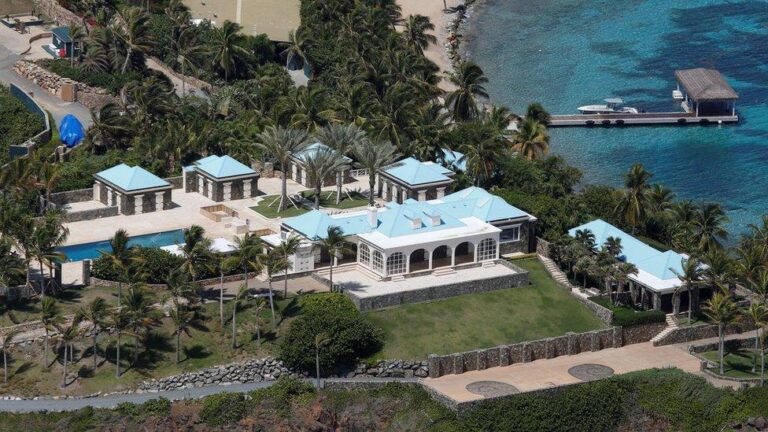
To support this estimate, Putin referenced two notable land transactions in history. In 1867, Russia sold Alaska to the United States for $7.2 million. In 1917, Denmark sold the Virgin Islands to Washington. By adjusting the Alaska deal for inflation, gold prices, and Greenland’s significantly larger size, Putin arrived at his rough valuation.
He added that the United States could easily afford such a purchase, framing the figure as relatively modest given the island’s strategic location and natural resources.
While the $1 billion estimate is speculative and largely symbolic, it has added fuel to global discussions about whether territorial acquisitions still have a place in modern geopolitics.
Russia’s Strategic Calculations in the Arctic
Although Putin has downplayed Russia’s interest in Greenland, the Arctic remains a core strategic priority for Moscow. Russia possesses the longest Arctic coastline and has steadily expanded its military and economic footprint in the region.
From new icebreakers to upgraded military bases, Russia has positioned itself as a dominant Arctic power. However, analysts believe that opposing U.S. ambitions in Greenland could complicate Russia’s broader objectives—particularly at a time when Moscow is seeking diplomatic flexibility.
Russia’s foreign ministry has rejected suggestions that Moscow harbors ambitions toward Greenland. At the same time, it has been careful not to criticize Trump directly, especially as the U.S. president attempts to broker a deal to end the ongoing conflict in Ukraine.
This cautious approach suggests that Russia sees potential diplomatic value in maintaining cordial relations with Washington, even as tensions with Europe persist.
Ukraine War Casts Shadow Over Greenland Debate
The Greenland issue cannot be separated from the broader geopolitical context, particularly the war in Ukraine. Denmark’s strong financial and military support for Kyiv has angered Moscow, which continues its campaign to consolidate control over four Ukrainian regions claimed by Russia in 2022.
Against this backdrop, Russia’s criticism of Denmark takes on additional significance. While Greenland itself may not be central to Russian strategy, Denmark’s role within NATO and its support for Ukraine make it a politically sensitive actor for Moscow.
Nevertheless, Russia has avoided directly linking the Greenland debate to the Ukraine conflict, opting instead to frame its comments in historical and economic terms.
Global Implications of the Greenland Debate
The renewed focus on Greenland highlights deeper shifts in global power dynamics. The Arctic is becoming increasingly important as climate change opens new shipping routes and access to untapped resources. Control over strategic locations like Greenland could shape economic and military balances for decades.
Putin’s decision to publicly dismiss Russia’s interest while subtly supporting the idea of a U.S.-Denmark resolution reflects Moscow’s broader diplomatic strategy: allowing rivals to compete while preserving its own leverage.
Whether Greenland ultimately remains under Danish sovereignty, gains greater autonomy, or becomes part of a landmark international deal remains uncertain. What is clear, however, is that the island has emerged as a symbol of 21st-century geopolitics, where history, economics, and strategy collide.
Conclusion: A Calculated Neutrality
By declaring Greenland’s ownership irrelevant to Russia, Vladimir Putin has signaled a stance of calculated neutrality. His comments avoid confrontation, criticize historical colonial practices, and introduce a provocative valuation—all without committing Moscow to a specific position.
As the United States and Denmark navigate a highly sensitive diplomatic challenge, Russia appears content to observe from the sidelines, benefiting from Western divisions while keeping its own strategic options open.
In an era of renewed great-power competition, Greenland’s future may ultimately be decided far from its icy shores—but its significance on the global stage has never been greater.
About The Author