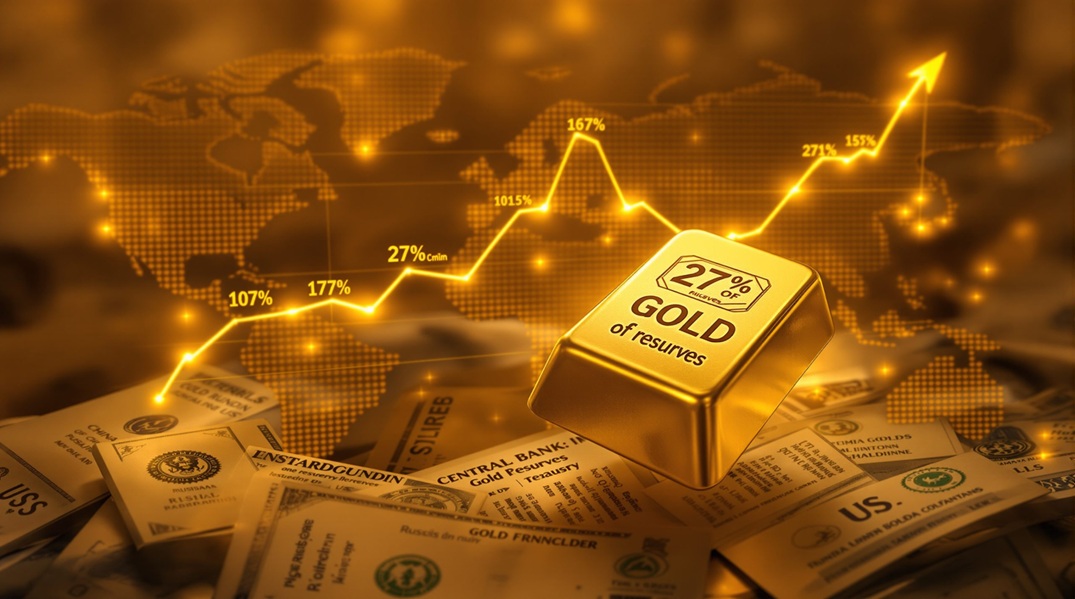
Gold prices have surged into uncharted territory, breaking decisively above $4,700 per ounce for the first time in history as investors worldwide scramble for safety amid escalating political and economic uncertainty. The powerful rally reflects a perfect storm of factors: renewed trade war fears, growing instability in U.S. monetary governance, persistent geopolitical risks, and expectations of lower interest rates.
The historic move underscores gold’s enduring role as a store of value during periods of turmoil. As confidence in political institutions and global trade frameworks weakens, demand for traditional safe-haven assets has accelerated dramatically—pushing gold to levels few analysts would have predicted just a year ago.
Gold Hits New All-Time Highs as Investors Flee Risk
During the latest trading session, spot gold jumped more than 1%, reaching levels above $4,720 per ounce after touching an intraday record near $4,740. U.S. gold futures followed suit, surging even more sharply as traders priced in growing uncertainty and rising hedging demand.
Silver, often viewed as gold’s more volatile counterpart, also participated in the rally. Prices hovered just below a fresh all-time high, reinforcing the broader strength across the precious metals complex. The synchronized move highlights the depth of investor concern and the scale of capital flowing into hard assets.
The rally has been particularly striking given its speed. Gold has gained nearly 10% in the first few weeks of 2026 alone, building on an already extraordinary run over the past year.
Trade War Fears Reignite After New Tariff Threats
One of the primary catalysts behind the latest surge has been renewed anxiety over global trade relations. U.S. President Donald Trump issued fresh warnings about imposing escalating tariffs on multiple European countries beginning in early February, reigniting fears of a broader and more disruptive trade conflict.
The proposed measures are tied to geopolitical disputes and access to strategic assets, adding another layer of uncertainty to already fragile international relations. Markets have responded swiftly, with risk-sensitive assets under pressure and capital flowing rapidly into perceived safe stores of value.
Historically, trade wars tend to undermine economic growth, disrupt supply chains, and increase inflationary pressures—all conditions that are supportive for gold. Investors appear to be positioning defensively in anticipation of prolonged friction rather than short-lived negotiations.
Political Instability and Monetary Policy Concerns Fuel Demand
Beyond trade tensions, broader political instability has played a crucial role in gold’s ascent. Investors are increasingly uneasy about the direction of U.S. economic governance, particularly regarding the independence of the Federal Reserve.
Markets are closely watching a U.S. Supreme Court case related to presidential authority over Federal Reserve governors. At stake is whether the executive branch could have expanded power to remove central bank officials, a development that would represent a significant shift in institutional norms.
Even the perception of weakened central bank independence can have profound market implications. Confidence in monetary policy credibility is a cornerstone of financial stability, and any threat to that foundation tends to drive demand for assets outside the traditional financial system—chief among them, gold.
Gold’s Stunning Performance Since Trump’s Second Term
Gold’s current levels are the culmination of a rally that has been building for over a year. Since the beginning of President Trump’s second term, the metal has gained more than 70%, marking one of the strongest bull markets in its modern history.
Several long-term drivers have aligned during this period:
- Heightened geopolitical tensions across multiple regions
- Persistent inflation concerns
- Growing government debt burdens
- Shifting expectations toward easier monetary policy
Together, these forces have created an environment in which gold has not only preserved value but delivered extraordinary returns.
Lower Interest Rates Strengthen the Case for Gold
Another key factor supporting gold prices is the outlook for lower interest rates. Gold does not generate yield, which traditionally makes it less attractive when interest rates are high. However, when rates fall—or are expected to fall—the opportunity cost of holding gold declines sharply.
Investor expectations that policymakers may prioritize economic support over inflation control have reinforced gold’s appeal. In an environment where real yields are compressed, gold’s lack of yield becomes far less of a disadvantage.
Analysts note that even the anticipation of looser policy, rather than confirmed rate cuts, can be sufficient to drive speculative and strategic demand for the metal.
Central Bank Buying and ETF Inflows Accelerate
Institutional demand has also played a critical role in gold’s meteoric rise. Central banks around the world have continued to accumulate gold reserves at a record pace, seeking diversification away from traditional reserve currencies and protection against geopolitical shocks.
At the same time, exchange-traded fund (ETF) inflows have surged as both institutional and retail investors seek convenient exposure to gold. These inflows amplify price movements by creating sustained demand that is less sensitive to short-term volatility.
The combination of official-sector buying and investor inflows has tightened supply conditions, further reinforcing upward price momentum.
Silver Follows Gold Higher but Faces Greater Volatility
Silver has also delivered exceptional performance, though with greater price swings. The metal rose sharply in 2025 and has continued to advance in early 2026, supported by both safe-haven demand and strong industrial usage.
Unlike gold, silver benefits from its designation as a critical mineral in the United States, reflecting its importance in renewable energy, electronics, and advanced manufacturing. Structural supply deficits have added to bullish sentiment, tightening the market and pushing prices toward record territory.
However, analysts caution that silver’s dual role as an industrial and monetary metal makes it more vulnerable to economic slowdowns. While it often follows gold higher during periods of stress, it can also experience sharper pullbacks if growth concerns intensify.
Other Precious Metals Join the Rally
Strength has not been limited to gold and silver. Platinum and palladium have also posted gains, benefiting from the broader shift toward hard assets and concerns over supply stability.
Platinum has drawn interest amid expectations of tighter market conditions, while palladium continues to be influenced by developments in the automotive sector and emissions regulations. Although these metals lack gold’s pure safe-haven status, they often benefit indirectly when investor appetite for tangible assets increases.
Can Gold Reach $5,000 an Ounce?
With gold already well above previous psychological milestones, attention is now turning to whether prices could extend toward $5,000 per ounce. Some analysts believe this target is achievable if current trends persist.
Factors that could support further upside include:
- Escalation of trade conflicts
- Additional geopolitical shocks
- Further erosion of confidence in monetary institutions
- Sustained central bank accumulation
That said, such elevated price levels also raise the risk of sharp corrections if sentiment shifts or tensions ease unexpectedly. Volatility is likely to remain high as markets react to political headlines and policy developments.
Conclusion: Gold Reasserts Its Role in a Fractured World
Gold’s surge beyond $4,700 per ounce marks more than just a new price record—it reflects a profound shift in investor psychology. In a world characterized by political uncertainty, trade fragmentation, and questions over institutional stability, gold has once again proven its relevance.
While short-term fluctuations are inevitable, the broader forces driving demand appear deeply rooted. For investors, gold’s performance serves as both a warning and a signal: confidence in traditional systems is being tested, and the appeal of tangible stores of value is stronger than it has been in decades.
As 2026 unfolds, gold is likely to remain at the center of global market discussions—not merely as a commodity, but as a barometer of trust in the world’s economic and political foundations.
About The Author