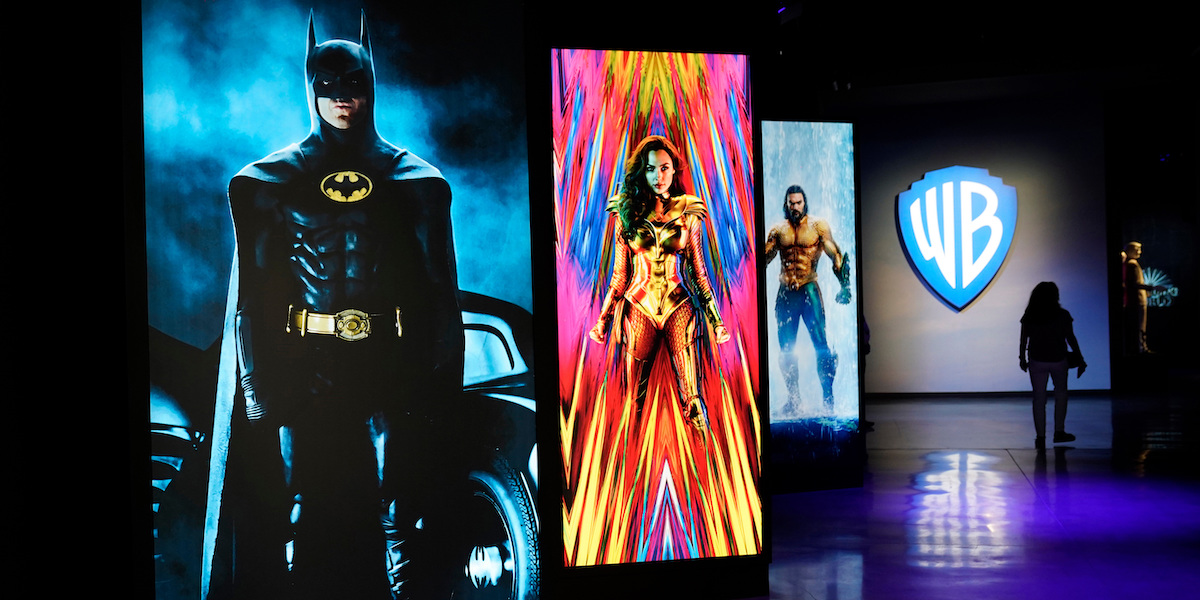
FILE - A visitor walks past portraits of DC Comics superheroes as she enters the "Action and Magic Made Here" interactive experience at the Warner Bros. Studio Tour Hollywood media preview on June 24, 2021, in Burbank, Calif. (AP Photo/Chris Pizzello, File)
Netflix’s unexpected $83 billion agreement to acquire Warner Bros. — including DC Studios, HBO Max, and some of the most valuable franchises in the world — could reshape the global film and streaming industry. But before any real change takes place, the acquisition must clear strict antitrust reviews, a process expected to take 12 to 18 months with no guaranteed outcome.
If approved, this merger would mark the most significant consolidation in modern Hollywood, surpassing even Disney’s purchase of 20th Century Fox in 2019. The stakes are enormous for cinema, streaming, and the future of iconic IPs like Harry Potter, The Lord of the Rings, Game of Thrones, Matrix, Batman, Dune, and many more.
Below are the three most likely scenarios for what Netflix may become after the Warner Bros. acquisition — and how each would radically reshape both companies and the entertainment industry.
Why This Acquisition Matters
Warner Bros. is one of the oldest and most prestigious film studios — and despite the financial struggles of Warner Bros. Discovery, its film division is healthy and profitable. The company holds a massive catalog of globally recognizable franchises, and HBO is consistently regarded as the highest-quality brand in prestige television.
Netflix, meanwhile, has spent the last two years reinventing itself:
- Ad-supported subscriptions
- Weekly releases instead of pure binge-drops
- Increased transparency around viewership
- Wider theatrical experimentation
The acquisition could accelerate a transformation already underway.
Scenario 1: Netflix Becomes a True Hybrid — Streaming + Major Theatrical Distributor
In this scenario, Netflix keeps Warner Bros. operating as a full theatrical studio, leveraging its brand, talent relationships, and distribution expertise. Warner films would continue to debut in cinemas — especially large-budget franchise titles like DC films, Dune, Barbie, and future Minecraft movies.
Implications
- Netflix finally gains credibility with top directors who insist on wide theatrical releases: Christopher Nolan, Steven Spielberg, James Cameron, Quentin Tarantino, and others.
- Netflix diversifies revenue by entering the box office market.
- Prestige directors continue to receive traditional theatrical runs, though smaller mid-budget films could be reduced or released directly on streaming.
- HBO Max remains separate, focusing on premium television and licensing.
This scenario would elevate Netflix into a full-scale Hollywood powerhouse, not just a streamer.
Scenario 2: Netflix Redefines Theatrical Windows — Cinema as Marketing for Streaming
Netflix might choose to keep theatrical releases extremely short, turning cinemas into high-profile promotional events instead of revenue drivers.
How It Would Work
- Blockbusters receive 10–15 day limited theatrical runs instead of the typical 45-day window.
- The priority becomes funneling audiences to Netflix, not maximizing box office earnings.
- HBO Max remains independent and becomes Netflix’s licensing engine, similar to how Warner Bros. has monetized Friends or Game of Thrones.
Implications
- Netflix gains a valuable library to license out — an area it has barely explored until now.
- The platform uses theatrical releases to generate buzz, then shifts audiences quickly to streaming.
- Netflix adopts Warner’s strategy of generating substantial revenue by renting out content.
This scenario aligns closely with comments made by Netflix leadership:
They do not oppose cinema — they oppose long theatrical windows.
Scenario 3: The Worst-Case Scenario — Netflix Slowly Absorbs and Dismantles Warner Bros.
This is the outcome feared by regulators, filmmakers, and Hollywood guilds.
In this scenario:
- Warner’s operations are gradually shut down.
- The studio’s iconic facilities and departments are sold off.
- Theatrical releases shrink to near-zero, replacing wide releases with token one-week screenings for awards eligibility.
- HBO Max is dissolved, with “HBO” becoming a quality label inside Netflix.
- Warner’s IP becomes fuel for an endless pipeline of Netflix-exclusive content.
Implications
- A significant decline in major theatrical releases worldwide.
- A huge increase in Netflix originals based on Warner IP.
- Regulators — especially in Europe — would almost certainly challenge this model.
- Competitors like Paramount (backed by billionaire David Ellison and politically aligned with the current White House) will aggressively lobby to block the acquisition.
This scenario would fundamentally transform Hollywood in a way regulators may not allow.
A Key Twist: What If the Deal Is Blocked?
If regulators reject the acquisition, Netflix must still pay Warner Bros. a $5 billion breakup fee.
That sum alone would stabilize Warner’s finances — enough to finance roughly ten major blockbuster films, including projects on the scale of Superman.
Some analysts believe Warner may even be counting on this outcome.
Conclusion: A Transformative Deal With an Uncertain Future
Netflix’s acquisition of Warner Bros. has the potential to reshape global entertainment more than any media merger in recent history. But the final outcome depends on regulatory approval — and on which strategic direction Netflix chooses to pursue.
Whether Netflix becomes a theatrical powerhouse, reinvents cinema as a marketing tool, or risks dismantling a century-old studio, the next 18 months will determine the future of Hollywood itself.
About The Author