Apple’s Next Big Move: From iPhones to Humanoid Robots
Apple (NASDAQ: AAPL) is best known for revolutionizing smartphones with the iPhone. But according to a recent report from Morgan Stanley, the company’s next multibillion-dollar opportunity may come from humanoid robotics.
The investment bank estimates that Apple’s early robotics efforts could eventually generate up to $133 billion in annual revenue by 2040, positioning the company as a major force in the emerging field of physical AI.
“We conservatively estimate Apple’s Robotics revenue can reach $130 billion by 2040 in our ‘median case,’ which assumes a 9% market share,” said Morgan Stanley analysts, including Apple specialist Erik Woodring.
The Rise of Humanoid Robots and the AI Revolution
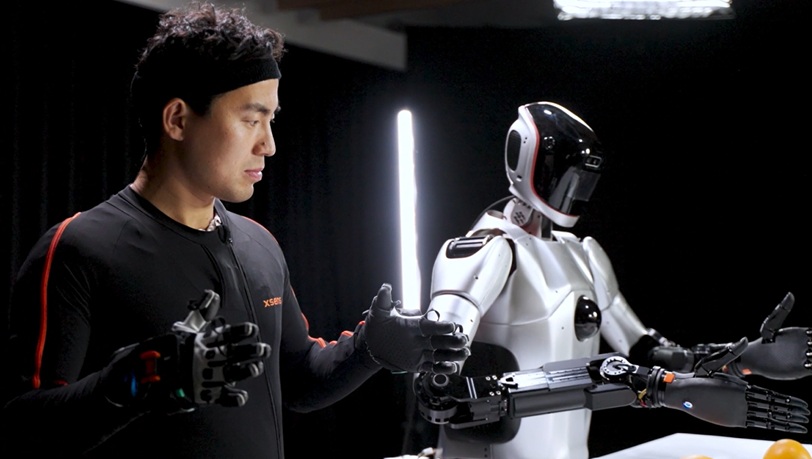
Humanoid robots — once the stuff of science fiction — are rapidly becoming a commercial reality. Thanks to breakthroughs in generative AI and advanced computing, tech giants are racing to develop robots that can think, move, and interact like humans.
Currently, most industrial robots are designed for specific tasks — moving products, assembling components, or managing logistics. But companies like Nvidia, Amazon, and Tesla are already exploring humanoid forms that can adapt to more complex human environments.
- Nvidia is developing “physical AI” platforms like its Isaac Gr00t and Jetson AGX Thor systems to power humanoid robots.
- Foxconn, one of Apple’s major suppliers, plans to use humanoid robots at its Nvidia AI server plant in Houston.
- Amazon has rolled out over a million warehouse robots globally and continues testing humanoid models such as Agility Robotics’ Digit.
- Tesla CEO Elon Musk believes humanoid robots — specifically Tesla’s Optimus line — will make up 80% of Tesla’s future value.
Inside Apple’s Robotics Ambitions
While Apple hasn’t officially announced a robotics product, reports suggest the company has quietly developed key technologies behind the scenes. According to Bloomberg’s Mark Gurman, Apple is experimenting with a tabletop robotic arm connected to a display that can track and interact with users in real time.
These efforts build on Apple’s years of research in AI, machine learning, and computer vision — technologies originally developed for projects like the self-driving car initiative.
Morgan Stanley estimates that by 2040, 1.6 million U.S. households could adopt humanoid robots, representing a 1.65% penetration rate. The analysts also predict an average selling price of around $30,000 per robot, which could drop as production scales.
Apple’s Advantages in the Humanoid Robotics Market
Apple’s entry into robotics could be uniquely powerful thanks to several major assets:
- 💰 $130 billion in cash reserves to fund R&D and acquisitions
- 📱 A global install base of over 2.3 billion devices
- 🔒 A reputation for privacy, ecosystem integration, and premium design
Together, these strengths could allow Apple to blend robotics with its existing ecosystem — from HomeKit automation to Siri’s AI capabilities — creating a seamless, intelligent assistant in physical form.
Challenges Ahead: Can Apple Make Robots Affordable?
Despite the massive potential, Apple and other robotics firms face significant obstacles.
Humanoid robots still struggle with computer vision, grip precision, and speed. Tasks like carrying glassware, avoiding pets, or navigating cluttered spaces remain difficult for even the most advanced models.
And then there’s the price factor — few consumers are likely to spend $30,000 or more on a household robot. To achieve mass adoption, companies must drive costs down to a level comparable to premium consumer electronics, not used cars.
The Future of Apple Robotics
If Apple succeeds, it could once again reshape an industry — just as it did with music, smartphones, and wearables.
With AI-driven humanoid robots, Apple has the potential to define what the smart home of the future looks like — one where technology not only listens and sees but also moves and acts.
By 2040, Apple may not just be known for its iPhone — it could be remembered as the company that made personal robotics mainstream.
Apple’s robotics vision could transform its business, with Morgan Stanley forecasting $133 billion in annual humanoid robot revenue by 2040. As AI and robotics converge, Apple’s ecosystem, cash power, and innovation may help it dominate the next wave of consumer technology.
About The Author