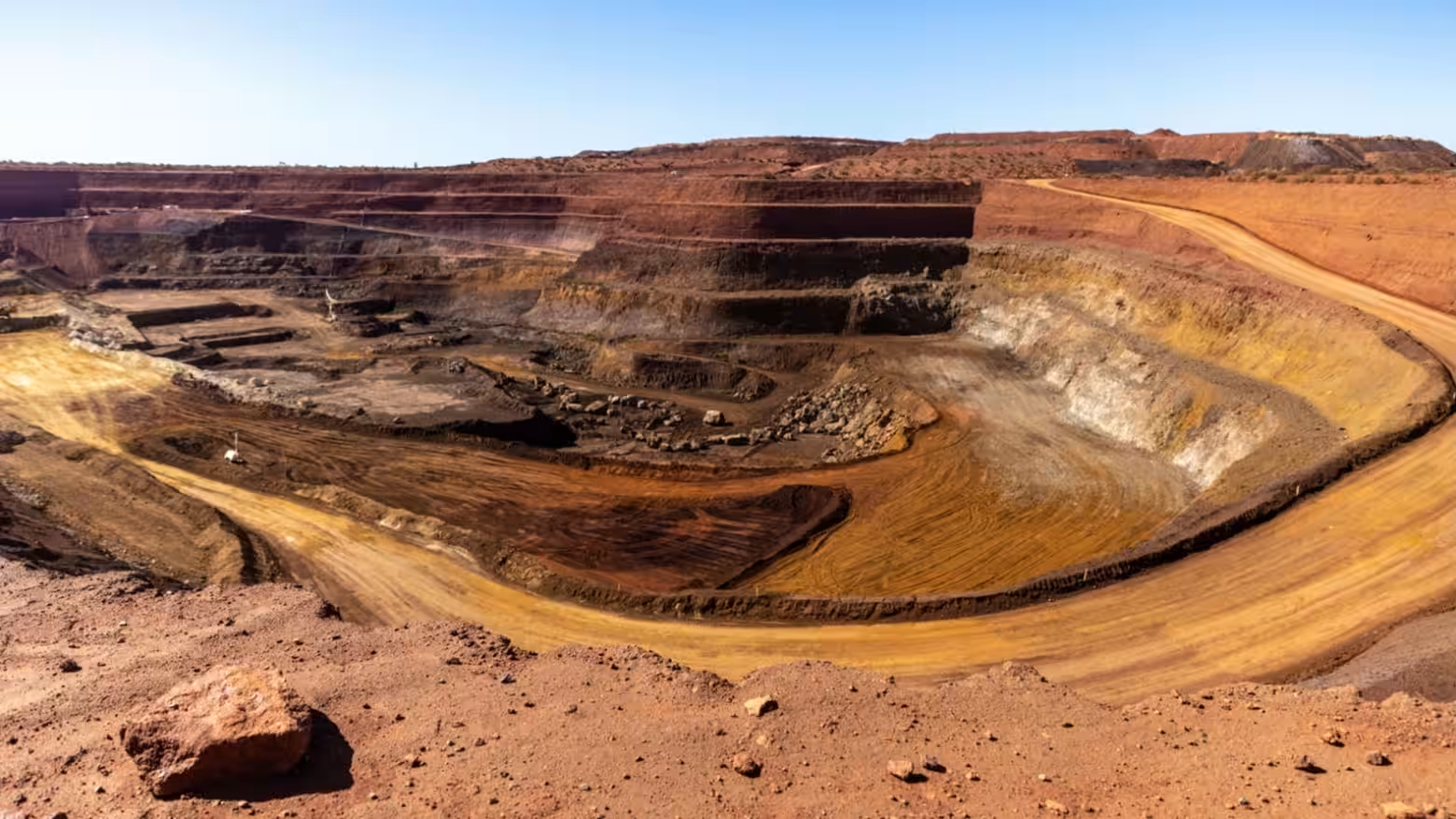
West Races to Secure Heavy Rare Earth Supply as China Tightens Control
As geopolitical tensions deepen, the West is accelerating efforts to build an independent rare earth magnet supply chain. But one critical obstacle continues to threaten progress: an acute shortage of heavy rare earth elements—particularly dysprosium and terbium, metals essential for producing heat-resistant permanent magnets used in EV motors, defense systems, electronics, and wind turbines.
China’s Grip on Heavy Rare Earths Tightens
For years, China has dominated the mining and processing of heavy rare earth elements (HREEs). Even with major U.S. government backing for companies like MP Materials, Western nations remain heavily dependent on China for these resources.
While the U.S. is aggressively funding domestic production—including billions of dollars recently committed to MP Materials—Western miners face a fundamental issue: HREE deposits are rare, scattered, and slow to develop. As of 2024, China still supplies 99% of the world’s processed heavy rare earths, a figure expected to fall only slightly to 91% by 2030.
Beijing’s export restrictions, introduced in April, disrupted global manufacturing—temporarily halting some automotive operations—and forced Western nations to rethink their mineral security strategies.
MP Materials Leads U.S. Push, But Heavy Rare Earths Remain the Weak Link
MP Materials, which operates the Mountain Pass mine in California, aims to build a “mine-to-magnet” pipeline and begin large-scale magnet production in the coming years. The company has successfully expanded processing of light rare earths, but its deposit contains only trace amounts of dysprosium and terbium, making external supply essential.
To fill the gap, MP is now:
- Engaging with global suppliers for heavy rare earth feedstock
- Partnering with Apple in a $500 million recycling and magnet supply deal
- Preparing to launch a heavy rare earth separation plant capable of producing 200 tons annually
However, even with these efforts, analysts warn that sourcing enough heavy material remains a significant challenge.
Brazil Emerges as a Key Heavy Rare Earth Supplier
As China restricts exports, Brazil is becoming an increasingly important supplier of heavy rare earth ore. Companies like Aclara Resources and Torngat Metals—both connected to major magnet producer Vacuumschmelze (VAC)—are securing long-term supply agreements.
VAC, which recently opened a magnet manufacturing facility in South Carolina, is aggressively locking in future heavy rare earth supply to insulate itself from geopolitical risk.
According to industry executives, “If there’s one true bottleneck, it’s the heavies.”
Why Heavy Rare Earths Are So Hard to Source
1. Natural scarcity
Heavy rare earths occur in far smaller concentrations than light rare earths. Their ratio in most deposits is only half of what magnet production requires.
2. Environmental concerns
Extraction methods—especially from ionic clay deposits—can result in deforestation, water contamination, and radioactive waste, making permitting difficult in countries with strict environmental regulations.
3. High global costs
Processing heavy rare earths outside China is 5–7 times more expensive, putting Western projects at a competitive disadvantage.
4. Years-long development timelines
Even the largest Western projects, such as Iluka Resources’ refinery in Australia, won’t be operational until 2027 or later.
Upcoming Projects Still Years From Impact
Several companies are racing to boost heavy rare earth production:
- Lynas Rare Earths has launched heavy rare earth separation in Malaysia and plans to expand dysprosium and terbium output—though timelines remain uncertain.
- Iluka Resources is building a major refinery in Western Australia, expected to process up to 750 tons of HREEs once operational in 2027.
- Northern Minerals aims to supply Iluka with material from a new Australian mine targeted for production in 2028.
But despite this activity, forecasts show a global deficit of 2,920 tons in dysprosium and terbium by 2035.
Can the West Overcome the Heavy Rare Earth Shortage?
Analysts agree that heavy rare earths remain the “missing piece” for a fully independent Western magnet industry. Without significant new mining capacity—and solutions to high costs and environmental concerns—heavy reliance on China will persist well into the next decade.
Some magnet producers can manufacture magnets without heavy rare earths, but only for low-temperature or slow-moving applications. High-performance technologies like EV motors and advanced defense systems will continue to require dysprosium and terbium.
In short: the race is on, but the gap is still wide.West Races to Secure Heavy Rare Earth Supply as China Tightens Control
As geopolitical tensions deepen, the West is accelerating efforts to build an independent rare earth magnet supply chain. But one critical obstacle continues to threaten progress: an acute shortage of heavy rare earth elements—particularly dysprosium and terbium, metals essential for producing heat-resistant permanent magnets used in EV motors, defense systems, electronics, and wind turbines.
China’s Grip on Heavy Rare Earths Tightens
For years, China has dominated the mining and processing of heavy rare earth elements (HREEs). Even with major U.S. government backing for companies like MP Materials, Western nations remain heavily dependent on China for these resources.
While the U.S. is aggressively funding domestic production—including billions of dollars recently committed to MP Materials—Western miners face a fundamental issue: HREE deposits are rare, scattered, and slow to develop. As of 2024, China still supplies 99% of the world’s processed heavy rare earths, a figure expected to fall only slightly to 91% by 2030.
Beijing’s export restrictions, introduced in April, disrupted global manufacturing—temporarily halting some automotive operations—and forced Western nations to rethink their mineral security strategies.
MP Materials Leads U.S. Push, But Heavy Rare Earths Remain the Weak Link
MP Materials, which operates the Mountain Pass mine in California, aims to build a “mine-to-magnet” pipeline and begin large-scale magnet production in the coming years. The company has successfully expanded processing of light rare earths, but its deposit contains only trace amounts of dysprosium and terbium, making external supply essential.
To fill the gap, MP is now:
- Engaging with global suppliers for heavy rare earth feedstock
- Partnering with Apple in a $500 million recycling and magnet supply deal
- Preparing to launch a heavy rare earth separation plant capable of producing 200 tons annually
However, even with these efforts, analysts warn that sourcing enough heavy material remains a significant challenge.
Brazil Emerges as a Key Heavy Rare Earth Supplier
As China restricts exports, Brazil is becoming an increasingly important supplier of heavy rare earth ore. Companies like Aclara Resources and Torngat Metals—both connected to major magnet producer Vacuumschmelze (VAC)—are securing long-term supply agreements.
VAC, which recently opened a magnet manufacturing facility in South Carolina, is aggressively locking in future heavy rare earth supply to insulate itself from geopolitical risk.
According to industry executives, “If there’s one true bottleneck, it’s the heavies.”
Why Heavy Rare Earths Are So Hard to Source
1. Natural scarcity
Heavy rare earths occur in far smaller concentrations than light rare earths. Their ratio in most deposits is only half of what magnet production requires.
2. Environmental concerns
Extraction methods—especially from ionic clay deposits—can result in deforestation, water contamination, and radioactive waste, making permitting difficult in countries with strict environmental regulations.
3. High global costs
Processing heavy rare earths outside China is 5–7 times more expensive, putting Western projects at a competitive disadvantage.
4. Years-long development timelines
Even the largest Western projects, such as Iluka Resources’ refinery in Australia, won’t be operational until 2027 or later.
Upcoming Projects Still Years From Impact
Several companies are racing to boost heavy rare earth production:
- Lynas Rare Earths has launched heavy rare earth separation in Malaysia and plans to expand dysprosium and terbium output—though timelines remain uncertain.
- Iluka Resources is building a major refinery in Western Australia, expected to process up to 750 tons of HREEs once operational in 2027.
- Northern Minerals aims to supply Iluka with material from a new Australian mine targeted for production in 2028.
But despite this activity, forecasts show a global deficit of 2,920 tons in dysprosium and terbium by 2035.
Can the West Overcome the Heavy Rare Earth Shortage?
Analysts agree that heavy rare earths remain the “missing piece” for a fully independent Western magnet industry. Without significant new mining capacity—and solutions to high costs and environmental concerns—heavy reliance on China will persist well into the next decade.
Some magnet producers can manufacture magnets without heavy rare earths, but only for low-temperature or slow-moving applications. High-performance technologies like EV motors and advanced defense systems will continue to require dysprosium and terbium.
In short: the race is on, but the gap is still wide.
About The Author