Everything We Thought Was Wrong: The Real Origin of the Moon Revealed
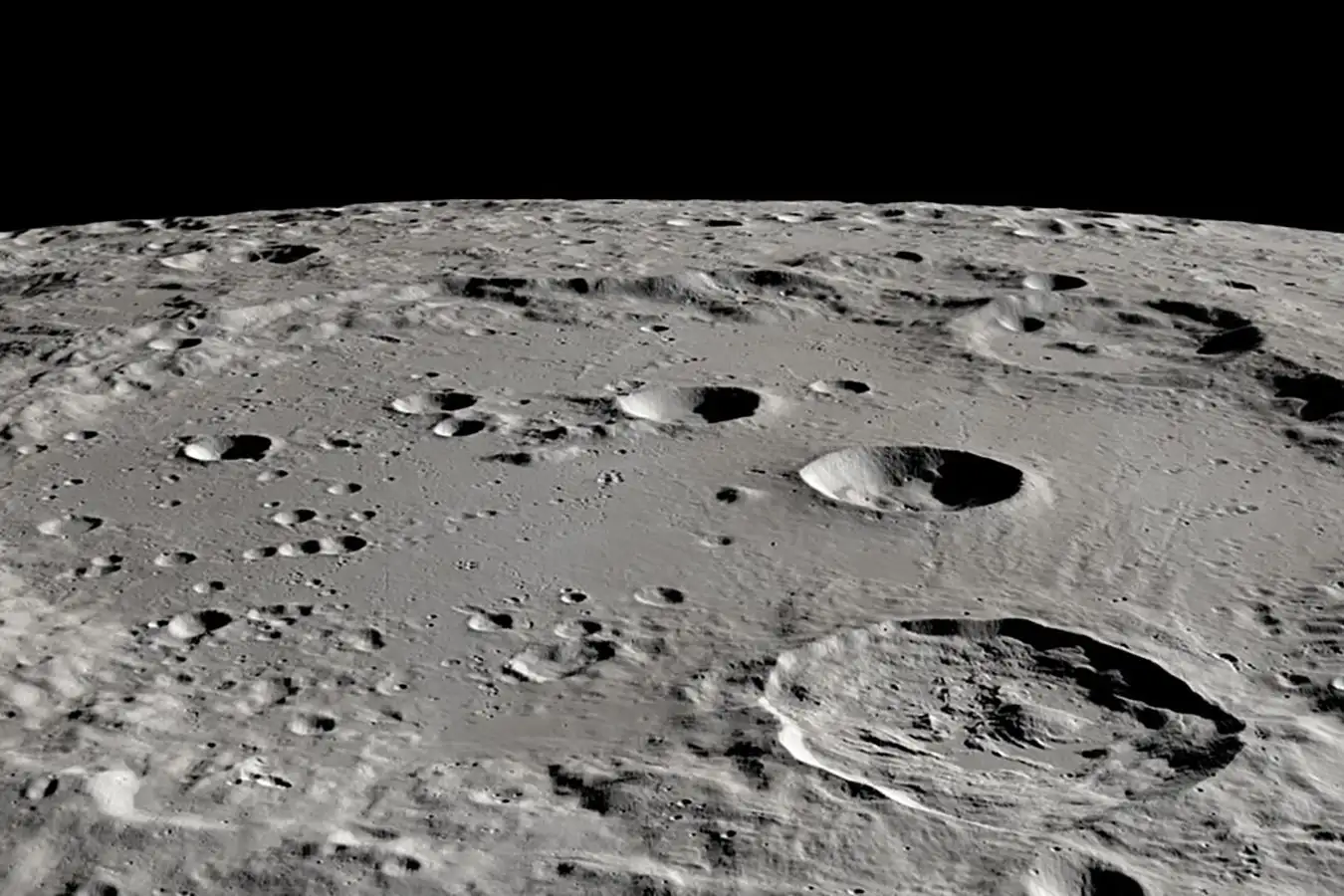
A stunning breakthrough in planetary science is rewriting what we believed about the Moon’s birth. A new high-precision chemical analysis—focused on three key elements: iron, molybdenum, and zirconium—has revealed that our satellite may have a far more intimate connection to Earth than previously assumed. Published in Science, the study challenges long-standing models and introduces a compelling new narrative about the Moon’s formation.
A Lunar Mystery Reconsidered
For years, scientists believed the Moon emerged from a giant collision between the early Earth and an unknown celestial body—possibly from the outer regions of the Solar System. But the latest research shatters this assumption.
Advanced isotopic measurements show that lunar and terrestrial samples share an extraordinarily similar composition, especially in iron isotopes. Because isotopic ratios vary depending on where material formed in the solar nebula, this near-perfect match suggests a shared birthplace. The results point to a dramatic collision not with a foreign intruder, but with Theia, a planetary embryo born in the same inner-Solar-System environment as Earth.
Computer simulations paired with refined isotopic data trace this event back more than 4 billion years. The findings imply that Theia had a mass equal to 5–10% of Earth and possessed a metallic core—meaning it was already internally differentiated before the catastrophic impact occurred.
Why Iron, Molybdenum, and Zirconium Mattered
Iron isotopes provided the strongest clues, but molybdenum and zirconium added vital constraints. Their chemical “fingerprints” allowed scientists to reconstruct how early materials condensed, mixed, and evolved within the protoplanetary disk.
The consistent signatures across both Earth and Moon samples strongly support the idea that planetary bodies forming in the inner Solar System share similar properties—upending theories that Theia originated from farther out in space.
Not Everyone Is Convinced—Yet
Although the evidence is compelling, some scientists urge caution. Alternative models, such as the synestia hypothesis—a donut-shaped vaporized structure produced after a colossal impact—or scenarios involving extreme post-impact mixing remain on the table.
Key open questions include:
- How thoroughly did Earth and Theia’s materials blend during the collision?
- What fraction of the Moon’s mass originally belonged to each body?
- How did heat from the impact shape Earth’s early evolution?
A New Era of Lunar and Planetary Science
Researchers now aim to extend isotopic examinations to additional elements and meteorites from diverse regions of the Solar System. Mapping this chemical diversity may reveal whether Earth-Moon “twin formation” events are common—and whether rocky planets with similar compositions could exist around distant stars.
If confirmed, the implications are profound: worlds like Earth may not be cosmic anomalies but natural products of inner-disk planetary formation.
A Shared Cosmic Heritage
The emerging picture is captivating. The Moon is no longer viewed as an alien body captured or forged from distant material. Instead, it appears to be Earth’s true sibling—born from the same primordial dust and shaped by the same violent processes that built our home planet.
As analytical tools grow more powerful, scientists expect to unlock even deeper clues within isotopes and minerals, bringing us closer to understanding not only the Moon’s origin but the origins of the entire Solar System—and perhaps life itself.
About The Author