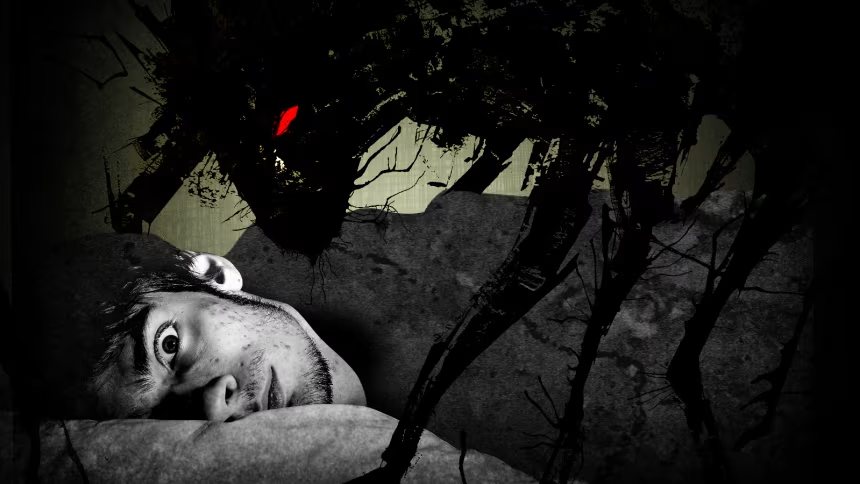
What Is a Sleep Paralysis Demon?
For many, sleep paralysis can feel like living through a real-life horror scene. One notable case is Baland Jalal, who at 19 experienced an episode where he was awake yet completely unable to move or speak. He described a presence that lifted his legs and felt like it was trying to strangle him, a phenomenon often called a sleep paralysis demon.
Episodes like this occur during transitions into or out of rapid eye movement (REM) sleep, when your brain is awake but your body is temporarily paralyzed. This prevents you from acting out dreams but can create terrifying experiences when consciousness returns before mobility.
The Science Behind Sleep Paralysis
REM sleep is crucial for memory, mood, concentration, and immune function. During REM:
- The body is paralyzed to prevent acting out dreams.
- Heart rate and breathing accelerate.
- Dreaming becomes vivid and lifelike.
Sleep paralysis occurs when consciousness returns before the muscles regain movement, leaving the person awake but immobilized. About 30% of people experience at least one episode in their lifetime, though recurring or severe cases are less common.
Hallucinations and Cultural Influences
Roughly 40% of sleep paralysis sufferers experience visual, auditory, or tactile hallucinations. About 90% of these are frightening, often interpreted as ghosts, monsters, or alien-like creatures.
Cultural background can shape the imagery:
- In Egypt and Italy, hallucinations are often seen as witches or evil genies.
- In Denmark, Poland, and parts of the U.S., the experiences are usually less supernatural.
Neuroscientists suggest that reduced activity in the prefrontal cortex and overactive amygdala amplify fear, making hallucinations extremely realistic.
Causes and Risk Factors
While the wake-sleep glitch is well understood, triggers for sleep paralysis include:
- Stress, anxiety, PTSD, bipolar disorder, panic disorder
- Sleep deprivation or irregular sleep schedules
- Jet lag
- Sleep disorders like narcolepsy
- Genetic factors
- Obstructive sleep apnea, substance use, or certain medications
Episodes often occur during high-stress periods, as Jalal experienced while in school.
Is Sleep Paralysis Dangerous?
Although terrifying, sleep paralysis is not physically harmful. However, frequent episodes can:
- Lead to sleep anxiety or insomnia
- Interfere with daily functioning and energy
- Cause trauma-like symptoms from recurring hallucinations
Sleep paralysis can also signal underlying sleep disorders that may require treatment.
How Sleep Paralysis Is Treated
Several strategies can reduce the frequency or severity of episodes:
1. Healthy Sleep Habits
- 7–9 hours of consistent sleep nightly
- Maintain a regular sleep schedule to prevent wake-sleep overlaps
2. Stress Management
- Mindfulness, relaxation exercises, and cognitive behavioral therapy (CBT)
- CBT for insomnia can address underlying triggers
3. Medication
- In severe cases, SSRIs or tricyclic antidepressants may help regulate sleep stages
- Rarely, long-term use has been linked to REM sleep behavior disorder
4. Meditation Relaxation Therapy (MRT)
Developed by Jalal, MRT reduced sleep paralysis by 50% in a small pilot study. Steps include:
- Cognitively reappraise the attack — remind yourself it’s common and not fatal.
- Emotionally distance yourself — recognize your brain is creating the hallucination.
- Focus on something positive — visualize loved ones or calming thoughts.
- Relax your muscles and remain still — avoid unnecessary movement that may trigger hallucinations.
Understanding the biology behind sleep paralysis can also help sufferers feel more in control during episodes.
About The Author