Climate Change Accelerates as the World Nears Critical Tipping Points
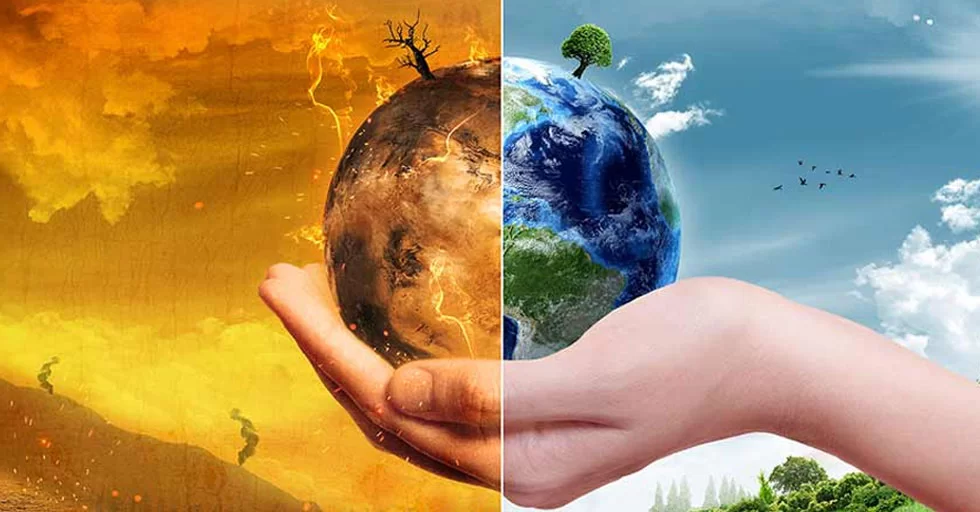
As the world prepares for COP30 in Brazil, new climate data paints a stark picture: global warming is accelerating faster than previously recorded, and multiple ecosystems are edging toward irreversible collapse.
From rapid sea-level rise to the mass die-off of coral reefs, scientists warn that the pace of change is outstripping earlier forecasts — putting unprecedented pressure on global policymakers to act.
“We are witnessing climate systems shifting before our eyes,” said one senior climate scientist contributing to this year’s IPCC-aligned studies.
Global Temperatures Rising Faster Than Ever
Recent research published ahead of COP30 found that global temperatures are now climbing by 0.27°C per decade — nearly 50% faster than during the 1990s and 2000s.
The world has already warmed 1.3°C to 1.4°C above pre-industrial levels, and experts now expect the 1.5°C threshold — a key Paris Agreement limit — to be crossed around 2030.
Meanwhile, sea levels are rising at 4.5 millimeters per year, up from just 1.85 mm per year over the past century. Scientists warn that this trend threatens to submerge coastal cities, displace millions, and intensify global weather disasters.
Coral Reefs Face Near-Irreversible Collapse
Warm-water coral reefs — vital ecosystems that support marine biodiversity — are suffering near-total collapse due to successive marine heatwaves. Researchers call this the first confirmed climate tipping point, where environmental systems shift into a new and likely irreversible state.
The loss of coral reefs not only devastates ocean ecosystems but also undermines food security and coastal protection for hundreds of millions of people worldwide.
Amazon Rainforest and Ocean Currents Under Threat
New studies have raised alarms about the Amazon rainforest, warning that unchecked deforestation combined with global warming could transform vast regions into savannah-like ecosystems much sooner than anticipated.
Simultaneously, the Atlantic Meridional Overturning Circulation (AMOC) — the ocean current responsible for Europe’s mild winters — is weakening. Scientists link this decline to Greenland’s ice melt, which disrupts ocean salinity and flow.
In Antarctica, shrinking sea ice is accelerating the planet’s overall warming by exposing darker waters that absorb more solar radiation. This also threatens phytoplankton, microscopic organisms that absorb massive amounts of CO₂ from the atmosphere.
Wildfires, Deadly Heat, and Economic Losses
The State of Wildfires Report 2025 shows that 3.7 million square kilometers — an area larger than India — burned between March 2024 and February 2025. Despite a slight drop in total burned land, the fires released more CO₂ than ever due to the destruction of carbon-rich forests.
Meanwhile, deadly heatwaves are becoming more frequent and intense. The Lancet estimated over 62,000 heat-related deaths across Europe last summer, with billions in lost productivity as labor output drops 2–3% for every degree above 20°C.
“Half the world’s population is already suffering from heat stress,” warned a joint report by the U.N. weather and health agencies.
U.S. Climate Science Faces Budget Threats
Despite growing urgency, the U.S. may soon see deep cuts to climate research. President Donald Trump’s 2026 budget proposal seeks to halve NASA Earth Science funding and slash NOAA’s budget by 25%, including the elimination of its climate research division.
Scientists warn that such cuts would weaken global monitoring networks and data collection, which are critical for predicting extreme weather and guiding adaptation strategies.
However, other nations are stepping up. China, the European Union, Japan, and the U.K. have all increased climate research funding, with the EU recently opening real-time weather data for public access — a major step toward transparency and collaboration.
The Road to COP30: A Test for Global Action
As world leaders gather in Belém, Brazil, for COP30, the science is clear: the planet is warming faster than expected, critical ecosystems are collapsing, and time is running short.
COP30 may represent the last opportunity to align global policies with the Paris targets — before irreversible climate tipping points reshape life on Earth.
About The Author