📉 A $830 Billion Hangover for the Global Alcohol Industry
The world’s biggest alcohol makers — from beer to spirits — have seen a staggering $830 billion erased from their market value in just four years.
A Bloomberg index tracking nearly 50 global beverage companies shows the sector is now 46% below its 2021 peak, reflecting deep challenges reshaping how the world drinks.
Rising health concerns, shifting cultural attitudes, and economic pressures are driving consumers away from alcohol — a structural change that analysts say could permanently reshape the $2 trillion industry.
🍷 Why Alcohol Stocks Are Falling Fast
Analysts say it’s not just short-term market turbulence — it’s a seismic behavioral shift.
“There is a structural change going on — people are drinking less,” said Sarah Simon, an analyst at Morgan Stanley.
From U.S. tariffs and high interest rates squeezing consumer budgets to China’s weak demand and official alcohol bans, the world’s leading brands are under pressure.
Major players like Diageo, Pernod Ricard, Remy Cointreau, and Kweichow Moutai have all hit decade lows in 2025, with some trading over 40% below their 2021 highs.
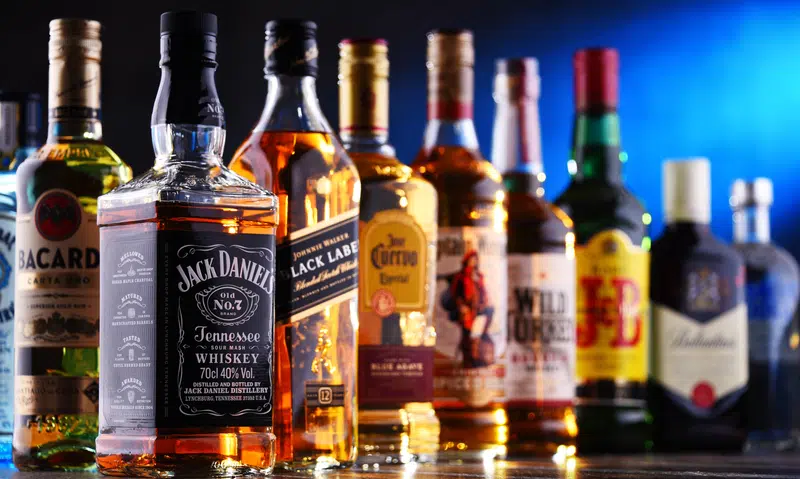
Even American icons such as Jack Daniel’s owner Brown-Forman and Molson Coors have seen steep declines — a sharp contrast to the record-breaking rallies in broader global equities.
🍹 Millennials, Gen Z, and the Rise of the “Sober Curious” Movement
The biggest disruptor? Younger generations.
A Gallup poll this year showed U.S. alcohol consumption hitting its lowest level since records began in 1939.
Gen Z and millennials are driving this change, fueled by growing health consciousness and the rise of non-alcoholic lifestyles.
Celebrities like Tom Holland and Katy Perry have popularized teetotal living, while GLP-1 weight-loss drugs (such as Ozempic) and cannabis alternatives further weaken alcohol’s appeal.
“The market believes there’s been a structural change — we’re not going back to the old growth rates,” said Barclays analyst Laurence Whyatt.
🧃 How Alcohol Giants Are Fighting Back
Facing declining sales, global beverage companies are racing to diversify.
- Carlsberg launched a non-alcoholic cider in 2025.
- Campari brought its zero-proof “Crodino” to the U.S. market.
- Diageo acquired Ritual Zero Proof, a non-alcoholic spirits brand.
- Moët Hennessy invested in French Bloom, a luxury alcohol-free sparkling drink.
At the same time, management shake-ups have hit nearly every major player — from Diageo and Campari in Europe to Treasury Wine Estates in Australia and Suntory in Japan.
The message is clear: adapt or fade.
💸 Value Trap or Buying Opportunity?
Despite the massive sell-off, some investors see a buying opportunity.
The Bloomberg Global Alcohol Index now trades at just 15x forward earnings — less than half its 2021 multiple.
Richard Cook of Cook & Bynum Capital has increased positions in Latin American brewers Ambev and Backus y Johnston, betting on growth in emerging markets.
“Humans aren’t going to stop drinking altogether,” Cook said. “In developing countries, people will drink more beer — and it’ll be more premium over time.”
Still, not everyone is optimistic. Even Warren Buffett’s Berkshire Hathaway has lost big on Constellation Brands (Corona Beer), down roughly 40% since 2024.
🚭 Is the Alcohol Industry the New Tobacco?
Some analysts draw uncomfortable comparisons between the alcohol and tobacco industries, warning that slowing volume growth and public health scrutiny could push alcohol companies down a similar path.
Andrew Gowen of Bell Asset Management notes that uncertainty has made alcohol stocks a tough sell:
“This industry’s been around for 7,000 years — but a lot can change.”
With falling consumption, rising regulation, and shifting lifestyles, the once “recession-proof” alcohol industry faces an identity crisis — one that may define its next decade.
🧾 Key Takeaways
- Global alcohol stocks have lost $830 billion since 2021.
- Health trends, Gen Z habits, and economic headwinds are reshaping demand.
- Major players are pivoting toward non-alcoholic drinks and premium markets.
- Investors are split — is this a value trap or the start of a new era for beverages?
About The Author